
A multi-trade handyman is a single professional who handles small-to-medium repair and maintenance tasks across several construction trades, including carpentry, painting, minor plumbing, and basic electrical fixture work, without holding a specialized contractor's license. Think of them as a generalist with real hands-on skills across multiple areas. The moment a job requires a building permit or falls under a licensed trade threshold, you need a licensed contractor instead, not a multi-skilled handyman.
Three situations where a multi-trade handyman is the right call:
- You have a mixed to-do list: a leaky faucet, a cracked drywall patch, and a ceiling fan swap, all in one visit
- The repairs are small and don't trigger a permit
- You want one professional to handle several minor jobs without coordinating multiple specialty trades
Table of Contents
- What a multi-trade handyman actually does on the job
- How people become multi-trade handymen
- Licensing, permits, and insurance: what the law actually says
- How multi-trade handymen price their work
- Handyman vs. contractor: how to decide who to call
- How to vet and hire a multi-trade handyman
- Is multi-trade work a good career path?
- Key Takeaways
- The part most homeowners get wrong
- Honestbuilders: professional handyman and renovation services
- Authoritative resources to check before you hire or start a career
What a multi-trade handyman actually does on the job
The everyday task list for a multi-skilled handyman covers a wide range of maintenance and repair work across several trades. According to BobVila, typical jobs include:
- Carpentry: door adjustments, trim repairs, shelf installation, furniture assembly
- Drywall and surface repairs: patching holes, skim coating, texture matching
- Painting: interior walls, trim, ceilings, touch-ups
- Minor plumbing: fixing leaky faucets, replacing toilet flappers, swapping out a showerhead or P-trap
- Basic electrical: swapping light fixtures, installing ceiling fans, replacing outlets and switches (existing circuits only)
- Tiling: replacing cracked tiles, re-grouting, small bathroom or kitchen tile repairs
- Appliance installs: mounting TVs, hooking up dishwashers, installing garbage disposals
- Exterior maintenance: caulking windows, patching siding, deck board replacements, gutter cleaning
Task durations vary more than most homeowners expect. A fixture swap typically takes under a couple of hours. A small drywall patch can take most of a workday once you factor in drying time. Painting a single room generally requires a full day. Knowing this helps you plan realistically and avoid scheduling conflicts.
Pro Tip: Bundle your repairs into a half-day or full-day block booking. Block-day pricing is common because travel and setup create overhead for the handyman. A single four-hour visit covering five small tasks almost always costs less per task than five separate one-hour calls.
How people become multi-trade handymen
There is no single degree or certification that produces a multi-trade handyman. The path is almost always built from experience, and it usually looks like one of three routes.

Former single-trade professionals who cross-trained. A carpenter who spent years on job sites picks up plumbing basics from watching plumbers work alongside him. An electrician's helper learns drywall repair between rough-in and finish work. Over time, these workers accumulate enough competence across trades to market themselves as generalists.
Apprenticeship graduates who stayed broad. Some tradespeople complete a formal apprenticeship in one area, then deliberately avoid specializing. They take on varied residential maintenance work and build a portfolio across multiple categories.
Vocational program graduates with supplemental on-the-job learning. Community colleges and trade schools offer programs in construction technology, building maintenance, and facilities management. These give a structured foundation, but the multi-trade depth usually comes from years of varied field work afterward.
When you are hiring, the credentials that actually signal competence are:
- A portfolio of photos showing completed work similar to your job
- Verifiable references from past clients (not just names, actual conversations)
- Demonstrated familiarity with the tools and materials the job requires
- Specific training or certifications where the work touches regulated systems (e.g., EPA 608 certification for anyone handling refrigerants)
The absence of a formal license is normal for a handyman. The absence of a portfolio and references is a red flag.
Licensing, permits, and insurance: what the law actually says
"Multi-trade" is a service description, not a U.S. licensing category. No state issues a "multi-trade handyman license." What states and municipalities do is define the boundary between unlicensed handyman work and licensed contractor work, and that boundary is set by permit triggers and trade thresholds.
Common permit triggers that take a job out of handyman territory:
- New electrical circuits or any panel work
- New plumbing supply runs or drain line relocations
- Structural changes (removing load-bearing walls, adding openings)
- HVAC refrigerant handling (requires EPA 608 certification at minimum)
- Gas line work of any kind
- Room additions or conversions
Attempting to bypass permit and licensing rules with an unlicensed provider can void your home insurance and create legal and safety liabilities that fall entirely on the homeowner. If a job requires a permit, the person doing it must be licensed to pull that permit — no exceptions.
The insurance picture is equally important. Licensed contractors typically carry general liability insurance and workers' compensation. Many independent handymen carry neither, which means if a worker is injured on your property or causes damage, you may be financially responsible. Before any work begins, ask for a certificate of insurance and verify it is current.
Pro Tip: Before authorizing any work that touches your home's systems, ask for proof of insurance in writing and call your local building department to confirm whether the specific task requires a permit. This takes ten minutes and can save you thousands.
For electrical work specifically, the risks of using an unlicensed worker go beyond failed inspections. Faulty wiring is a leading cause of residential fires, and insurance companies investigate the work history when claims are filed.
How multi-trade handymen price their work
Pricing follows three basic models, and knowing which one applies to your job helps you avoid overpaying.

Handyman pricing follows several common models including hourly rates, flat fees per task, and half-day or full-day block bookings. Rates vary widely by location and factors like skill, experience, and insurance status, with urban areas typically costing more than rural.
A few factors that push costs up: jobs requiring specialty tools the handyman must rent, tasks that need two people, and anything that involves material sourcing on short notice. Permit work is always excluded from handyman pricing because it requires a licensed contractor.
Pro Tip: Give your handyman a written task list before the visit and ask for a flat-rate or block-day quote. Bundling tasks into a single visit consistently produces a lower per-task cost than booking separate appointments, and it gives both sides a clear scope to work from.
Handyman vs. contractor: how to decide who to call
The decision comes down to three questions: Does the job require a permit? What is the project scale? And what happens if something goes wrong?
According to Nationwide, handymen are well-suited to small repairs, while major renovations typically require a licensed contractor who handles permitting and multiple subcontractors. Here is how that plays out in practice:
-
Small fixture swaps and minor repairs: Ceiling fan replacement, faucet swap, drywall patch, interior painting. No permit required. A multi-trade handyman is the right call. Faster, cheaper, and no contractor overhead.
-
Bathroom re-pipe or new supply lines: Moving or adding plumbing supply lines requires a permit in virtually every U.S. jurisdiction. This is licensed plumber territory. A handyman can replace a faucet or a toilet; they cannot legally relocate the supply lines feeding them.
-
Full kitchen or bathroom remodel: Structural changes, new circuits, relocated plumbing, and code inspections all come into play. A general contractor who manages licensed subcontractors is the right choice. Trying to piece this together with a handyman creates permit, inspection, and insurance problems.
A useful shortcut: if the job would require you to open a wall and leave it open for an inspection, you need a licensed contractor. If the job starts and finishes in a single visit with no inspection required, a qualified handyman can likely handle it.
For complex door system installations, the same logic applies. Specialized door installations carry their own set of pitfalls that go beyond a generalist's scope, particularly when structural framing or automated systems are involved.
How to vet and hire a multi-trade handyman
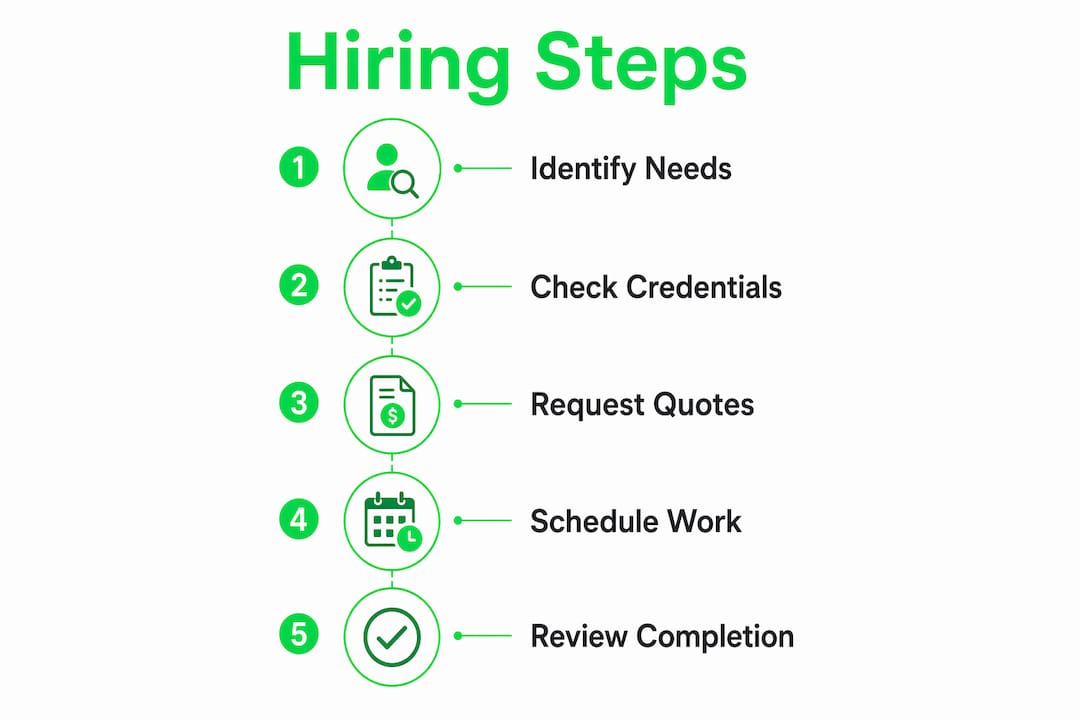
The hiring process matters as much as the skill level. A capable handyman who won't provide a written quote is a liability. Here is a practical checklist before any work begins.
Before you book:
- Confirm identity (name, contact, business name if applicable)
- Request a certificate of general liability insurance
- Ask specifically whether they carry workers' compensation
- Check reviews on platforms like Angi or Google, and call at least one reference
- Ask for photos of past work similar to your job
Getting the quote:
- Provide a written task list and request a written quote in return
- Confirm whether materials are included or billed separately
- Agree on payment terms in writing (deposit, milestone, or on completion)
- Set a clear timeline and confirm availability
Red flags to walk away from, per Angi:
- Refuses to provide a written quote
- Insists on cash only with no receipt
- Claims they can do permitted work without a license
- Cannot name a reference or provide photos of past work
- Pressures you to decide immediately or pay a large upfront deposit
Sample questions to ask on the call:
- "Can you walk me through a similar job you've done recently?"
- "Do you carry liability insurance? Can you send me the certificate?"
- "Which of these tasks on my list are you most and least comfortable with?"
- "Have you pulled permits for work like this before, or would this job require one?"
That last question is particularly revealing. A trustworthy handyman knows exactly where their legal scope ends and will tell you directly when a job needs a licensed contractor.
Is multi-trade work a good career path?
The honest answer is: yes, with clear-eyed expectations about the ceiling and the floor.
Advantages of the multi-trade path:
- Consistent demand across residential and commercial maintenance markets
- Flexibility to work independently, join a provider network, or take salaried maintenance roles
- Variety keeps the work from going stale
- Lower barrier to entry than a licensed trade
Real limitations to plan around:
- Income is variable, especially when self-employed
- Licensing limits cap the complexity of jobs you can legally take
- No license means no ability to pull permits, which excludes higher-value renovation work
- Health insurance, retirement, and slow seasons are entirely your problem if you're independent
Typical employment settings include self-employment, property management companies, franchise handyman networks, and facilities maintenance teams for commercial buildings. Pay progression usually follows one of two paths: adding certifications that justify higher rates, or converting to a licensed trade that opens permit-required work.
Adding an EPA 608 certification opens HVAC maintenance work. A journeyman electrician's license, earned through an apprenticeship program, moves you into a different income bracket entirely. Career data from the credentialing side (sourced from the UK, but the principle applies in the U.S.) consistently shows that multi-trade workers who add formal credentials increase both their rate and their job options.
For those considering a provider network rather than going fully independent, handyman provider models offer a middle path: steady work flow, some brand backing, and less time spent on marketing.
Key Takeaways
A multi-trade handyman covers small-to-medium repairs across several trades legally, but the moment a job triggers a permit, a licensed contractor is required with no exceptions.
| Point | Details |
|---|---|
| Core definition | A multi-trade handyman handles repairs across carpentry, painting, minor plumbing, and basic electrical without a specialty license. |
| Permit boundary | Any job requiring a building permit must go to a licensed contractor; bypassing this can void home insurance. |
| Pricing tip | Block-day bookings consistently lower the per-task cost compared to single-visit appointments. |
| Vetting must-do | Always request a written quote and a certificate of liability insurance before authorizing any work. |
| Honestbuilders | Honestbuilders provides professional handyman and renovation services backed by workmanship accountability and transparent pricing. |
The part most homeowners get wrong
Most people treat the handyman-vs.-contractor decision as a skill question. It is not. It is a permit question.
A skilled multi-trade handyman can do genuinely impressive work across a wide range of tasks. The legal boundary has nothing to do with whether they are capable. It exists because permitted work gets inspected, and inspections protect you. A new circuit wired by an unlicensed worker might function perfectly for five years, then cause a fire. When the insurance company investigates, they will find the unpermitted work, and your claim will be denied.
The other thing homeowners consistently underestimate is the insurance gap. Many independent handymen carry no liability insurance and no workers' comp. If someone is injured on your property during unpaid work, your homeowner's policy may not cover it. Asking for a certificate of insurance feels awkward. It is not optional.
The practical upshot: use a multi-trade handyman for what they are genuinely good at, which is a lot. Package your to-do list, book a block day, and get everything done efficiently. But when a job touches your home's systems in a way that requires a permit, stop and call a licensed contractor. The two roles complement each other when used correctly.
Honestbuilders: professional handyman and renovation services
If you are working through a to-do list of home repairs and want one reliable team to handle it properly, Honestbuilders covers the full range of handyman work and residential renovation, from furniture assembly and fixture installs to tiling, carpentry, painting, and full-space renovation.

What sets Honestbuilders apart from booking a random independent handyman is accountability. Every job comes with transparent pricing, no hidden charges, and workmanship you can verify. For homeowners who have dealt with no-shows, vague quotes, or work that had to be redone, that consistency matters. Honestbuilders serves HDB, condo, landed, and commercial properties, and the team is equipped to handle the kind of mixed task lists this article describes, done in a single visit, done right.
Get a free quote by reaching out via WhatsApp at +65 9447 9696. No obligation, no runaround.
Authoritative resources to check before you hire or start a career
The right resource depends on the specific question you are trying to answer.
- Permit triggers and local rules: Your city or county building department is the primary source. Search "[your city] building department permit requirements" for the official list.
- Contractor licensing verification: Every U.S. state has a contractor licensing board. Search "[your state] contractor licensing board lookup" to verify any license number a contractor gives you.
- Insurance basics: The Nationwide resource on handyman vs. contractor explains the insurance accountability gap clearly.
- Task scope and red flags: Angi's guidance on hiring covers the practical hiring decision and common red flags in plain language.
- General handyman scope: The Wikipedia entry on handymen provides a useful overview of the role's historical and practical scope.
- Licensing boundary between handyman and contractor: Checklicensed.com explains how state law draws the line and what happens when it is crossed.
- Career credentials: For U.S. tradespeople looking at formal certification paths, the Department of Labor's apprenticeship finder (apprenticeship.gov) lists registered programs by trade and state.