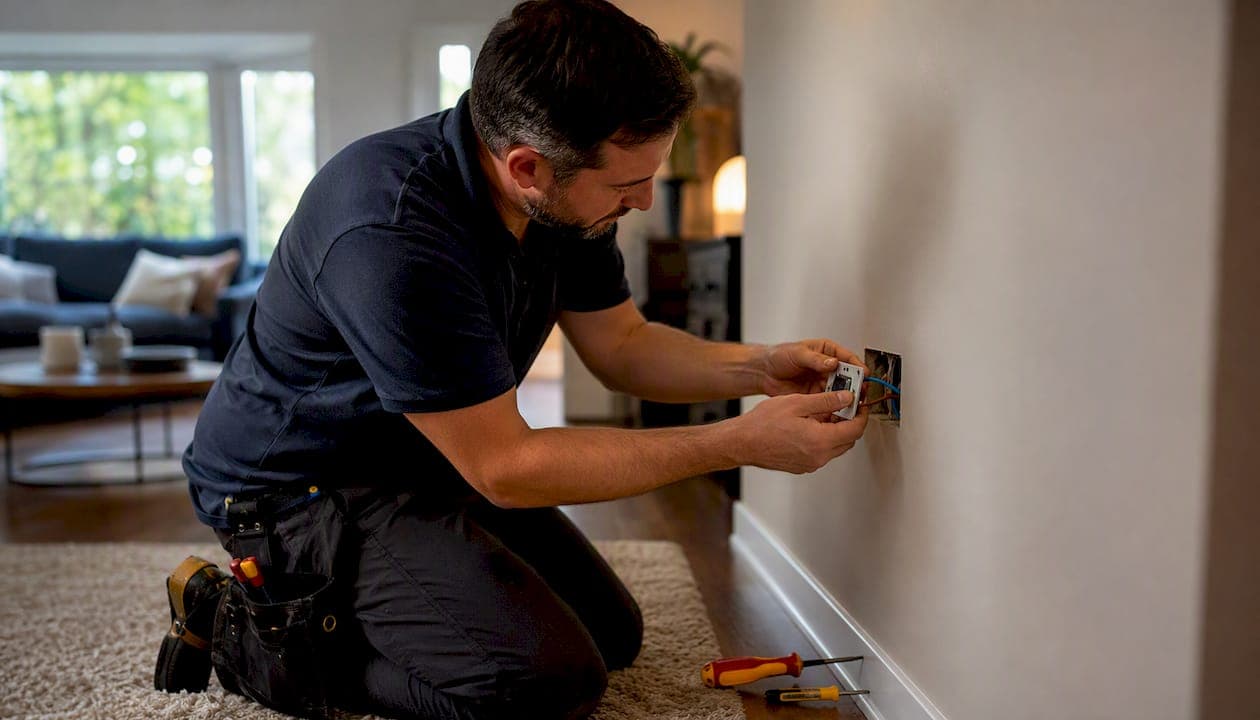
Installing a new power socket in a U.S. home typically runs from a low price to a higher price per outlet, according to Angi's 2026 data. Most homeowners land closer to the middle of that range. HomeGuide puts the national average at $150–$350 for a new outlet install, with replacements coming in lower at $80–$200. Complex jobs, like adding a 240V outlet or running wire through finished walls, push well past $450.
- Low end ($100–$150): Replacing an existing outlet in an accessible location, no new wiring needed
- Typical ($150–$350): New standard or GFCI outlet added to an existing circuit, drywall repair included
- High end ($450+): New dedicated circuit, 240V outlet, panel upgrade, or difficult wall access
Get two or three written quotes before booking anyone, and confirm upfront whether permits and inspection fees are included in the price.
Key Takeaways
Most U.S. homeowners pay $150–$350 per outlet for a standard new install, with the total job cost driven primarily by circuit work, wall access, and permit requirements.
| Point | Details |
|---|---|
| Typical cost range | $100–$450 per outlet nationally; most standard installs land at $150–$350. |
| Biggest cost drivers | New circuits, finished-wall wire runs, and panel upgrades push totals highest. |
| Outlet type matters | GFCI and AFCI outlets cost $30–$90 more than standard duplex installs due to device cost and NEC requirements. |
| Always confirm permits | Permit fees add $50–$150 but protect your insurance coverage and home resale value. |
| Honestbuilders | Provides itemized written quotes covering electrical work, permits, and drywall repair in one visit. |
Table of Contents
- What does the power socket installation cost actually cover?
- How much does each outlet type cost to install?
- Sample totals for common job scenarios
- What factors raise or lower your outlet installation quote?
- Permits, inspections, and U.S. electrical code basics
- DIY vs. hiring a licensed electrician: where's the real line?
- How to get accurate, comparable quotes from electricians
- How long does an outlet installation take?
- How these 2026 estimates were compiled
- The part most homeowners underestimate about outlet costs
- Honestbuilders can handle your outlet install from quote to inspection
- Primary sources and further reading
- Sources
What does the power socket installation cost actually cover?
Most homeowners see a single line item on a quote and assume it's all labor. It isn't. A typical outlet install breaks into four distinct cost buckets, and knowing which one is driving your quote helps you compare bids fairly.
Homewyse's cost calculator breaks out a mid-range national example with a typical per-outlet cost for readily serviceable conditions in May 2026, itemizing materials, labor, and supplies separately.
| Cost Component | Typical Range | Notes |
|---|---|---|
| Outlet device (materials) | $5–$50 | Standard duplex to USB or GFCI; GFCI devices run $15–$40 at Home Depot or Lowe's |
| Labor | $50–$200 | Electrician time on-site; most of the total cost |
| Permit and inspection | $50–$150 | Required for new circuits in most jurisdictions |
| Drywall repair and finishing | $50–$150 | Patching, taping, and painting after wire runs |
| Trip/minimum charge | $50–$100 | Flat fee many electricians charge per visit |
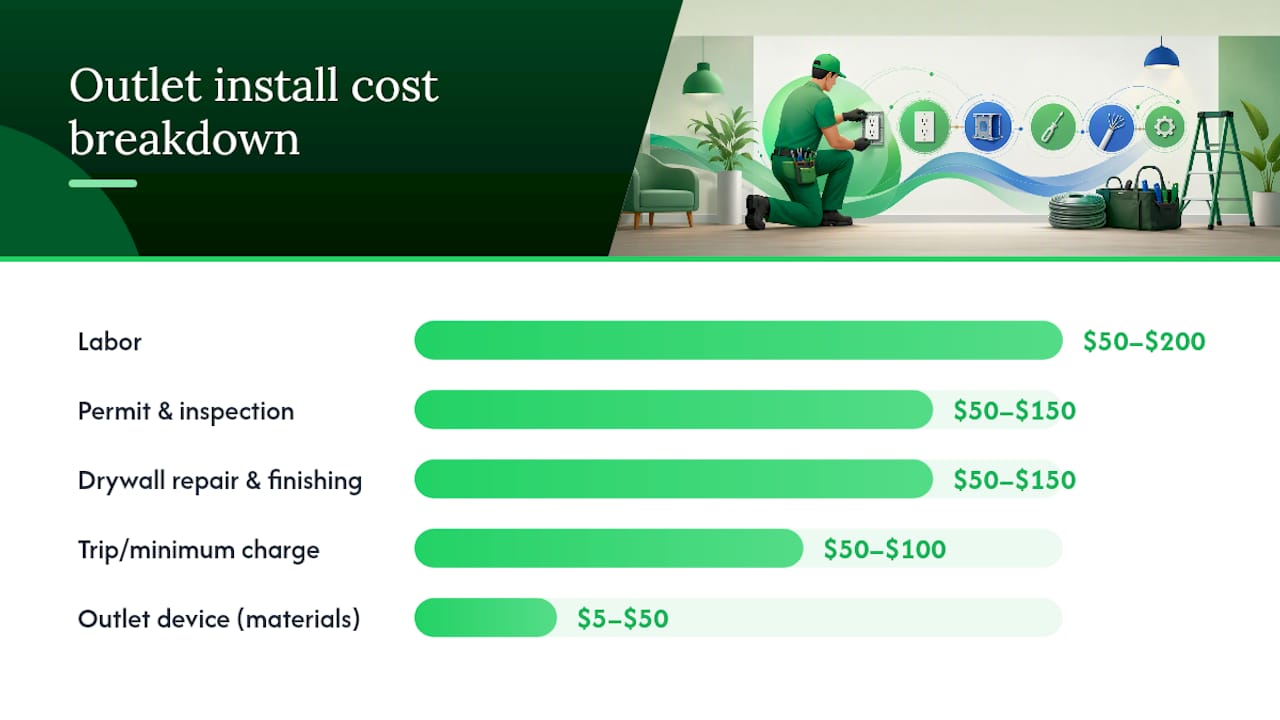
The outlet device itself is cheap. A standard duplex receptacle costs $3–$8 at a big-box retailer; even a smart USB outlet tops out around $30–$50. What you're paying for is the electrician's time, the wire run, and the code-compliant finish.
Pro Tip: Schedule two or three small electrical tasks in the same visit. Trip and minimum charges are flat fees, so adding a second outlet to the same appointment often costs far less than booking a separate job.
How much does each outlet type cost to install?
The type of outlet you need is one of the biggest variables in electrical socket installation pricing. A standard 120V duplex in a bedroom costs a fraction of what a 240V outlet for a dryer or EV charger runs.
CurrentCost's per-socket pricing data gives a useful baseline showing that standard duplex and GFCI outlets vary in price depending on wiring distance and panel access.
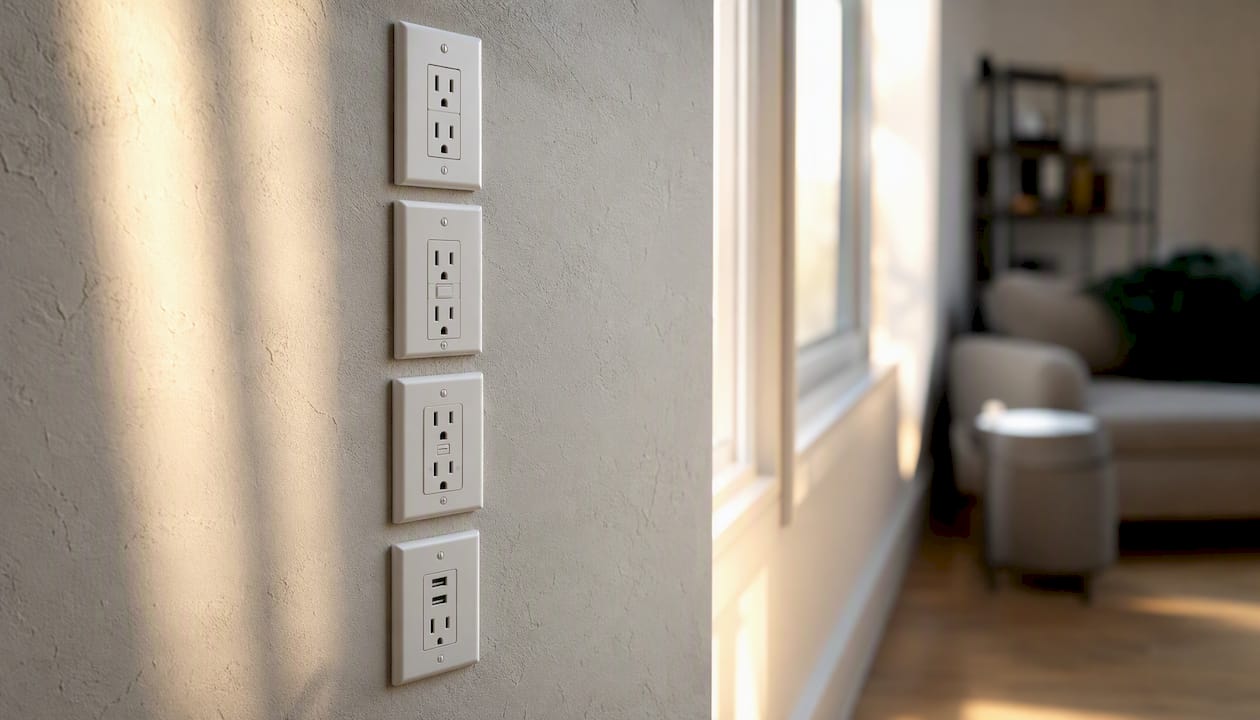
- Standard 120V duplex: $90–$200 installed. The baseline. Works for most living areas, bedrooms, and hallways.
- GFCI outlet: $120–$230 installed. Required by the National Electrical Code (NEC) in bathrooms, kitchens, garages, and outdoor locations. The device itself costs more, and inspectors will flag missing GFCI protection.
- AFCI outlet or breaker: $130–$250 installed. NEC requires arc-fault protection in bedrooms and most living areas in newer construction and major renovations. Often handled at the breaker panel rather than the device.
- USB combination outlet: $130–$250 installed. Device costs more ($25–$50 retail), but the wiring is standard 120V.
- Outdoor/weatherproof outlet: $150–$300 installed. Requires a weatherproof cover, in-use cover, and GFCI protection per NEC. Conduit or exterior-rated wire adds cost.
- Floor outlet: $200–$350 installed. Specialized box, cover plate, and often a longer wire run. Common in open-plan living rooms and home offices.
- Recessed outlet: $150–$280 installed. Sits flush with the wall, popular behind TVs. Slightly more complex box installation.
- 240V outlet (dryer, range, EV charger): $300–$800+ installed. Requires a dedicated 240V circuit, heavier gauge wire (typically 10/3 or 6/3), and a double-pole breaker. Panel capacity matters here.
GFCI vs. standard cost gap: GFCI outlets average $30–$90 more than a standard duplex install. That premium is mostly the device cost and the additional testing time, not extra wiring.
The NEC location rules aren't optional. If an inspector finds a standard outlet where a GFCI is required, the homeowner pays to fix it. Budget for the right device from the start.
Sample totals for common job scenarios
Per-outlet ranges are useful for rough budgeting, but most jobs involve more than one line item. Thumbtack's aggregated user data shows combined switch and outlet jobs ranging widely, with scope as the main variable.
Regional labor rates shift these numbers meaningfully. Electricians in San Francisco, New York, or Boston typically charge $100–$150/hour; in rural Midwest or Southeast markets, $50–$80/hour is more common, per BLS occupational wage data. A job that costs $350 in Memphis might run $600 in Seattle for the same scope.
Three scenarios consistently push jobs into the high range: a panel upgrade (which requires a permit, utility coordination, and often a full-day shutdown), long wire runs through finished walls (which means more drywall repair), and 240V installs that require heavier gauge wire and a new double-pole breaker slot.
What factors raise or lower your outlet installation quote?
Two electricians can quote the same job and come back $200 apart. Here's what's actually driving that gap, and what to tell each contractor so you get comparable bids.
- Distance from the panel. Longer wire runs mean more materials and more labor. A 5-foot run from an existing outlet is cheap; a 40-foot run from the panel through two walls is not.
- Wall type and access. Open-stud construction (unfinished basement, garage) is the easiest and cheapest. Finished drywall requires fishing wire, cutting access holes, and patching. Plaster walls and tile add even more time.
- New circuit vs. existing circuit. Adding to an existing circuit with capacity is straightforward. A new circuit means a new breaker, a full wire run to the panel, and usually a permit.
- Outlet type and device. GFCI, AFCI, USB, and 240V devices all cost more than a standard duplex, both in materials and in testing/inspection time.
- Exterior locations. Outdoor outlets need weatherproof covers, in-use covers, GFCI protection, and sometimes conduit. That's more parts and more time.
- Drywall repair. Many electricians don't do drywall. If yours doesn't, budget separately for a handyman or painter to patch and finish.
- Permit fees. These vary by jurisdiction from $0 (some localities don't require permits for outlet replacements) to $150+ for new circuit work.
- Electrician hourly rate and trip charge. Rates vary by region and by whether you're booking an independent electrician or a larger firm. Trip/minimum charges ($50–$100) hit hardest on single-outlet jobs.
- Panel capacity. If your panel is full or undersized, any new circuit triggers a panel upgrade conversation.
- Access limitations. Crawl spaces, cathedral ceilings, and concrete walls all add time.
Pro Tip: Group all your outlet installs into one visit. The marginal cost of a second or third outlet on the same trip is mostly just materials and a little extra labor, not another trip charge or minimum fee.
Permits, inspections, and U.S. electrical code basics
Skipping a permit to save $75 is one of the more expensive mistakes a homeowner can make. If unpermitted work causes a fire or injury, homeowner's insurance can deny the claim. When you sell, an inspector will flag it.
HireElectrical notes that permit fees commonly add $50–$150 or more depending on jurisdiction, and that new circuits and altered circuits almost always require a permit. Some jurisdictions require a permit for any electrical work beyond a straight device swap.
Key NEC-driven requirements that affect cost:
- GFCI protection is required in bathrooms, kitchens (within 6 feet of a sink), garages, unfinished basements, outdoor locations, and crawl spaces. Any outlet in these areas must be GFCI-protected, either at the device or upstream at the breaker.
- AFCI protection is required in bedrooms, living rooms, hallways, and most habitable spaces in new construction and significant renovations. This is typically handled with an AFCI breaker.
- Dedicated circuits are required for large appliances (refrigerators, dishwashers, microwaves, HVAC equipment). Adding an outlet for one of these almost always means a new circuit.
- Weatherproof and in-use covers are required for all outdoor outlets. In-use covers keep the cover closed even with a plug inserted.
- Tamper-resistant receptacles are required in all new residential construction and renovations.
On any written quote, confirm: who pulls the permit (it should be the licensed electrician, not you), whether inspection fees are included, and whether the electrician provides a written warranty on the work.
DIY vs. hiring a licensed electrician: where's the real line?
Replacing a like-for-like outlet on an existing circuit is within reach for a careful DIYer who knows how to turn off the breaker and verify the circuit is dead with a non-contact voltage tester. The savings are real: you pay for the $5 device and nothing else.
But the risk profile changes fast once you move beyond a straight swap.
Where DIY is reasonable:
- Replacing a standard outlet with an identical device on an existing circuit
- Swapping a standard outlet for a GFCI device on an existing circuit (same wiring, no new runs)
- Installing a smart plug or USB outlet in place of an existing standard outlet
Where you should hire a licensed electrician:
- Any new circuit from the panel
- 240V outlets (dryer, range, EV charger)
- Outdoor outlet installs
- Any work in a wet area (bathroom, kitchen near sink)
- Situations where you can't identify the existing wiring gauge or age
- Aluminum wiring (common in homes built 1965–1973), which requires special connectors and expertise
- Any job that requires a permit
Safety note: Electrical shock and house fires are the two real risks of DIY electrical work done wrong. The NFPA reports that electrical failures and malfunctions are a leading cause of U.S. home fires. Beyond physical risk, unpermitted work done by an unlicensed person can void homeowner's insurance coverage and create liability at resale. The case for hiring a licensed electrician comes down to three things: code compliance, insurance protection, and a workmanship warranty.
How to get accurate, comparable quotes from electricians
Vague requests get vague quotes. Give every electrician the same information and you'll get bids you can actually compare side by side.
What to include in your quote request:
- Outlet type needed (standard 120V, GFCI, AFCI, USB, 240V, outdoor)
- Exact location (room, wall, height, and a photo if possible)
- Distance from the nearest existing outlet and approximate distance to the panel
- Wall type (finished drywall, plaster, tile, open studs)
- Whether you want drywall repair included or will handle it separately
- Specific device model if you have a preference
- Whether you expect a permit to be pulled
Questions to ask each electrician:
- Is the permit included, and who pulls it?
- What is your hourly rate and estimated hours for this job?
- Do you charge a trip or minimum fee?
- Does your quote include drywall patching and finishing?
- Does the existing circuit have capacity, or will a new circuit be needed?
- What warranty do you provide on labor?
Ask for the quote itemized: materials, labor, permit, and drywall repair as separate line items. That format makes it easy to spot where one bid is higher than another and whether you're comparing the same scope.
How long does an outlet installation take?
Most single-outlet jobs are done in an afternoon. The permit and inspection process is usually what adds days or weeks, not the physical work.
- Single outlet, accessible location (open wall or easy existing circuit): 1–2 hours on-site
- Single outlet, finished wall with wire fishing: 2–4 hours, including patching
- Multiple outlets in one room, same circuit: half-day (3–5 hours)
- New circuit from the panel, no panel upgrade: 4–8 hours depending on wire run length
- 240V outlet with new circuit: 4–8 hours; panel scheduling may add a day
- Panel upgrade: full day on-site, plus utility coordination (can add 1–5 business days)
- Permit and inspection: 1 day to 2 weeks depending on the jurisdiction and inspector availability
Seasonal demand matters. Spring and summer are peak renovation seasons, and licensed electricians book out faster. If you're planning a multi-outlet install as part of a larger renovation timeline, schedule the electrical work early in the project sequence, before drywall and painting.
How these 2026 estimates were compiled
The ranges in this guide come from a synthesis of national cost guides, online calculator outputs, and aggregated user-reported data, cross-referenced against each other for consistency.
Primary sources used:
- Angi ($100–$450 per outlet): large contractor marketplace with aggregated project data
- HomeGuide ($150–$350 new, $80–$200 replacement): national averages from contractor-reported pricing
- Homewyse ($297–$360 mid-range calculator output): itemized line-item calculator using national labor and materials data
- CurrentCost (per-type ranges): per-socket pricing with driver analysis
- HireElectrical (timeline and permit data): contractor-focused pricing and job-time estimates
- Thumbtack ($253–$711 combined jobs): user-reported totals for switch and outlet work
- BLS Occupational Employment and Wage Statistics: background on regional electrician labor rate variation
- Home Depot and Lowe's product listings: device and materials pricing for the materials line item
All ranges assume standard 14/2 or 12/2 NM-B (Romex) wiring, a single outlet per visit unless noted, and drywall repair included where wire fishing is required. Figures reflect national averages; your local market will vary. Regional labor rates, local permit fees, and the specific conditions of your home are the biggest sources of deviation from these averages.
These estimates are a starting point for budgeting, not a substitute for a written quote from a licensed electrician who has seen your home.
The part most homeowners underestimate about outlet costs
The sticker price on a single outlet install isn't where most people go wrong. The surprise comes from scope creep: you ask for one outlet, the electrician opens the wall, finds aluminum wiring or a circuit already at capacity, and suddenly you're looking at a panel upgrade conversation.
The smarter move is to do a rough audit of your electrical needs before calling anyone. How many outlets do you actually want? Which rooms are underserved? Are there appliances that need dedicated circuits? Answering those questions before the first call lets you request a comprehensive quote rather than a piecemeal one, which almost always costs less per outlet when bundled.
The other thing worth saying plainly: the cheapest quote is rarely the best one. An electrician who skips the permit saves you $75–$150 upfront and potentially costs you your insurance coverage or a failed home inspection years later. Itemized quotes from licensed electricians who pull their own permits are worth the extra scrutiny.
Honestbuilders can handle your outlet install from quote to inspection
Sorting through quotes, chasing permit paperwork, and coordinating drywall repair after an electrician leaves are the parts of an outlet install that eat up a homeowner's time. Honestbuilders handles the full scope: on-site electrical work, permit coordination, and drywall finishing in a single visit, so you're not managing three separate contractors for one job.

Whether you need a single GFCI outlet in a bathroom, a set of USB outlets across a home office, or a 240V circuit for an EV charger, Honestbuilders provides written quotes that itemize materials, labor, and permit fees before any work starts. No hidden charges, no runaround. Request a written quote and get a clear number you can actually budget from.
Primary sources and further reading
The figures in this guide draw from the following national cost resources. Local permit offices and licensed electricians in your area remain the final authority on current fees and code requirements.
- Angi: Cost to Install an Outlet (2026) — national per-outlet ranges and high-end scenario data
- HomeGuide: Cost to Install an Electrical Outlet (2026) — national averages for new installs and replacements
- Homewyse: Cost to Install Electrical Outlet (2026 Calculator) — itemized materials, labor, and supplies calculator
- CurrentCost: Electrician Price Per Socket (2026) — per-type installed cost ranges and cost driver analysis
- HireElectrical: Cost to Add an Outlet (2026) — job timeline estimates and permit cost data
- Thumbtack: Switch and Outlet Installation Costs — aggregated user-reported totals for combined outlet and switch work
- BLS Occupational Employment and Wage Statistics — regional electrician labor rate data
- Local building and permit offices in your jurisdiction for current permit fees and inspection requirements
Sources
- Cost To Install Outlet 2026 Data | Angi
- How Much Does It Cost to Install an Electrical Outlet? (2026)
- Cost To Install Electrical Outlet - 2026 Cost Calculator (Customizable)
- Electrician Price Per Socket: How Much Each Electrical Outlet Costs in the U.S. 2026 – Current Cost
- How Much Does It Cost to Add an Outlet? (2026 Pricing)
- Switch and outlet installation costs