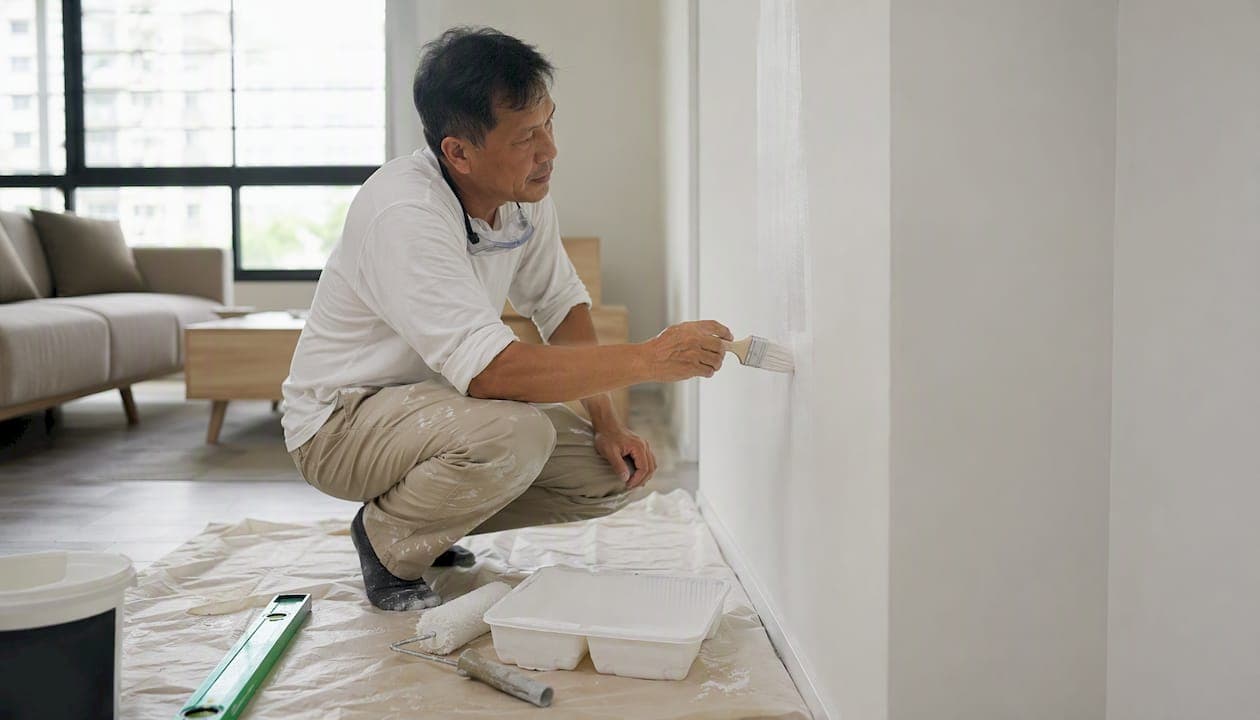
The right reinstatement method depends on one thing above all else: what your wall is made of and how badly it's been damaged. A patch-and-skim works on a hairline crack in plaster. A hacked-out Ferrolite partition needs a full rebuild to original spec. Whatever the scope, HDB rules require you to use a contractor from the Directory of Renovation Contractors (DRC), keep hacking to weekdays between 9:00 AM and 5:00 PM, and never exceed a total wall finish thickness within the HDB's specified limit.
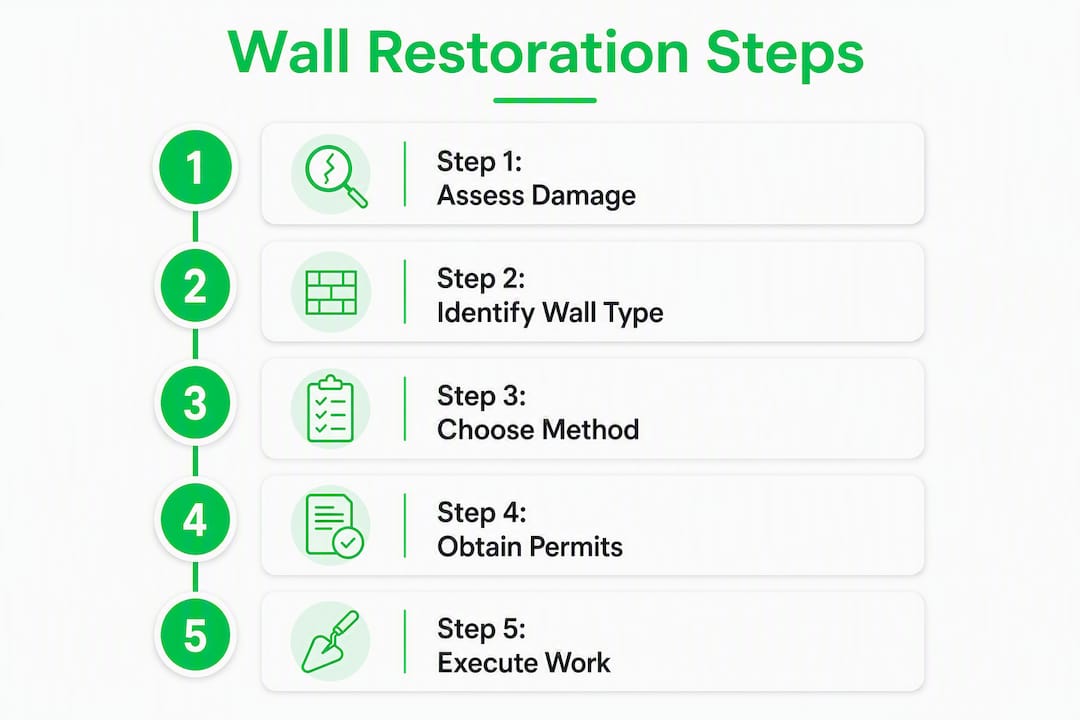
Before you call anyone, take three steps:
- Stop any ad hoc patching or hacking immediately.
- Pull up the HDB Directory of Renovation Contractors and verify your contractor is listed.
- Gather your renovation permit, floor plan, and photos of the damage.
Pro Tip: Photograph every wall surface before and after any contractor visits. HDB can request evidence of pre-works conditions during permit checks, and photos protect you if a dispute arises.
Table of Contents
- What are the best wall restoration options by wall type?
- How do you decide which reinstatement method fits your situation?
- What permits and HDB rules apply before you start restoring?
- What do typical reinstatement jobs cost and how long do they take?
- What should you verify before hiring a reinstatement contractor?
- What red flags should you watch for during reinstatement?
- How can you avoid reinstatement orders during your renovation?
- Key Takeaways
- The part most owners find out too late
- Honestbuilders handles reinstatement so you don't have to manage it alone
What are the best wall restoration options by wall type?
Matching the reinstatement method to the wall type is the single most important decision you'll make. Here's how the main categories break down.
Non-load-bearing partitions (Ferrolite and panel systems)
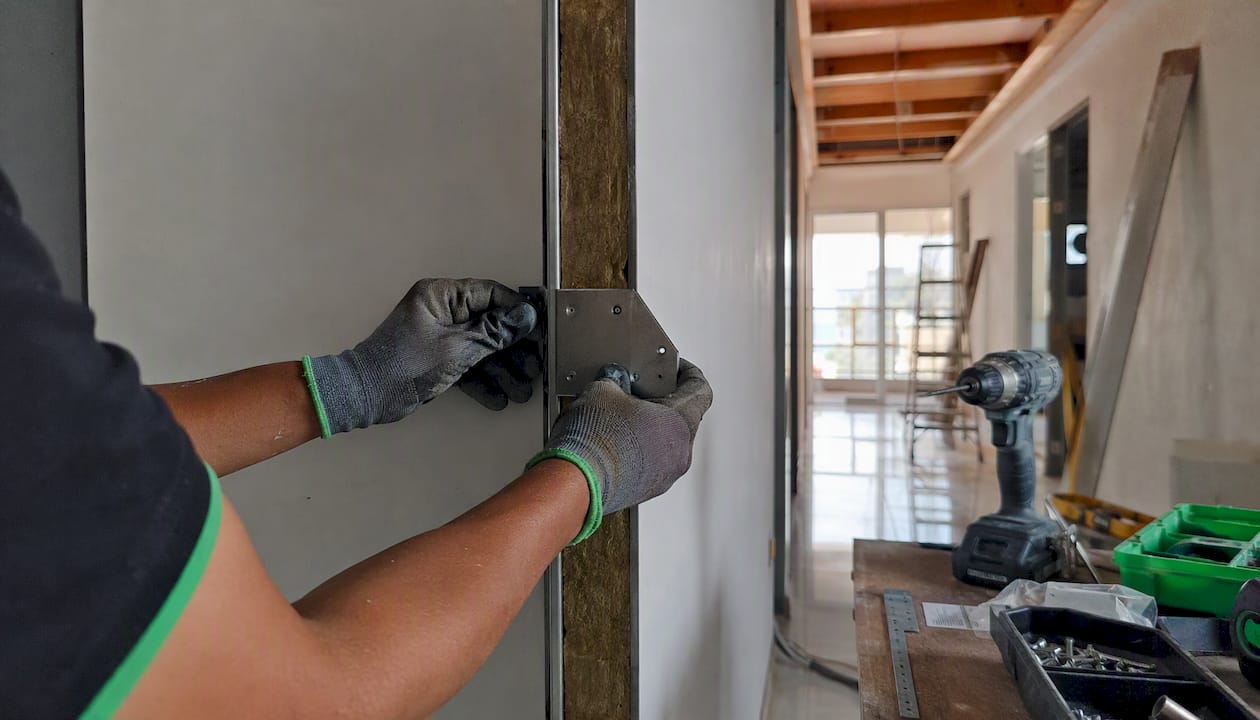
Ferrolite panels are a common HDB partition system joined with steel angle plates and built with a sound-insulation core. Removing or modifying them requires HDB prior approval and must be carried out by a DRC-listed contractor. Reinstatement means rebuilding to the original panel configuration using approved methods. Partial patching is rarely accepted as being compliant.
Drywall and gypsum board systems
Drywall is common in condos and commercial spaces. Localized damage responds well to patch-and-skim: cut out the damaged section, install a backing board, apply joint compound, and skim coat to match. For larger breaches, a partial or full panel replacement is cleaner and easier to finish seamlessly. Finish matchability is high when the same board thickness and skim compound are used.
Traditional plaster over masonry or concrete
Plaster reinstatement is where the 25 mm finish-thickness rule bites hardest. If existing plaster is already near that limit, you cannot simply add another layer. The correct approach is to hack off the damaged plaster back to the substrate, apply a scratch coat, then a finish coat, ensuring the total finish thickness does not exceed 25 mm as required by HDB. Durability is excellent when done correctly; the main risk is poor adhesion if the substrate isn't cleaned and primed properly.
Tiled wet walls (bathrooms and kitchens)
HDB-provided bathroom tiles carry a three-year restriction period from the date of TOP. During that window, you cannot replace them; new finishes may only be laid over existing tiles using approved adhesives. After the restriction period, full tile removal and re-laying is permitted, but hacking RC walls to create tile keys is prohibited. Spatterdash or an approved equivalent must be used for adhesion. Always test and document the existing waterproofing membrane before removing any tiles — disturbing it can trigger a full reinstatement requirement.
Structural RC walls
These are off-limits for hacking, cutting, or modification of any kind. If damage is confined to the surface finish on an RC wall, the only permitted work is cosmetic: skim, paint, or apply an approved finish, keeping the total finish thickness within the 25 mm HDB limit. Any contractor who suggests otherwise is a red flag.
How do you decide which reinstatement method fits your situation?
Run through these four diagnostics before you call a contractor.
- Wall material: Partition panel, drywall, plastered masonry, tiled wet area, or RC wall? The material determines which methods are even on the table.
- Load-bearing status: RC structural walls cannot be hacked. Non-load-bearing partitions can be removed with prior HDB approval.
- Damage extent: Surface crack or spalling? Patch and skim. Through-thickness breach or exposed reinforcement? Partial or full rebuild. Waterproofing membrane disturbed? Full wet-area reinstatement.
- Embedded services: Are pipes or conduits running through the wall? Their location affects how and where you can cut.
From there, the decision flows like this: minor surface damage leads to patch and skim; deeper plaster failure leads to full replastering within the 25 mm limit; structural breach or non-compliant modification leads to full reinstatement to original spec. For HDB renovation permit requirements, your contractor needs photos of the damage, your renovation permit copy, and original layout drawings if available.
What permits and HDB rules apply before you start restoring?
HDB's rules aren't suggestions. Breaching them can cost you a court fine of up to S$5,000 and a mandatory reinstatement order on top of whatever you already spent.
Key rules to know:
- Hacking and demolition must be carried out by a DRC-listed contractor, with certified workers holding a BCA Certificate of Successful Completion (CSC) in Demolition Works.
- Noisy demolition is restricted to weekdays during working hours with limits on consecutive days. No weekends, no public holidays.
- Total wall finish thickness, including all plaster layers, must not exceed 25 mm as required by HDB guidelines.
- RC walls cannot be hacked to form tile keys. Use spatterdash or an approved adhesion system as required by HDB.
- If HDB or the Town Council needs to access your flat for repairs, you must remove any renovation works obstructing that access at your own cost.
Resale implications are real. Unapproved structural modifications discovered during a resale transaction must be fully reinstated before the sale can proceed. That can delay completion or depress your offer price significantly. For owners planning to sell, see the resale permit and reinstatement guide for what buyers' agents typically flag.
What do typical reinstatement jobs cost and how long do they take?
These are estimate bands only. Final pricing requires an itemized quote and site inspection.
| Job Type | Cost Band (SGD) | Typical Timeline | Finish Matchability |
|---|---|---|---|
| Patch and skim (small area) | moderate cost range | short timeline | High |
| Full replastering (one wall) | moderate cost range | a few days timeline | High |
| Partial partition rebuild | higher cost range | several days timeline | Medium–High |
| Tiled wet-wall re-laying | higher cost range | about a week timeline | Medium (tile matching varies) |
| Full partition reinstatement | top cost range | one to two weeks timeline | High (to original spec) |
The three-day hacking limit shapes scheduling. Larger jobs often require phased work across multiple permit windows, which extends the overall timeline. Mandatory reinstatement orders, when triggered by non-compliant work, can be costly depending on the scope. — far more than doing it right the first time.
What should you verify before hiring a reinstatement contractor?
Hiring the wrong contractor is the single most expensive mistake in reinstatement. Here's what to check before signing anything.
- Confirm the contractor appears in the HDB DRC. This is non-negotiable for any hacking or demolition work.
- Ask for proof that demolition workers hold a BCA CSC in Demolition Works. HDB requires contractors to notify them at least 24 hours before any personnel change on-site.
- Verify public liability insurance is current.
- Review the contract for: itemized scope of work, HDB permit responsibility (contractor handles it), warranty period, payment milestones tied to inspected work stages, and a remediation clause covering any HDB enforcement demand caused by contractor error.
- Request before-and-after photos from two past reinstatement projects and at least two client references.
Pro Tip: Insist on a written clause stating the contractor will handle all HDB permit liaison and will cover costs if works are found non-compliant due to their error. Any contractor who balks at that clause is telling you something.
What red flags should you watch for during reinstatement?
A few warning signs are worth knowing before work starts.
Unpermitted hacking is the most common trigger for enforcement action. If a contractor suggests starting demolition before the permit is confirmed, stop. Non-certified workers on-site for demolition work is a direct HDB violation. Mismatched finish thickness — adding plaster over existing layers without checking the cumulative depth — can push the wall past the 25 mm limit and require full removal.
In wet areas, skipping a waterproofing check before tile removal is a shortcut that routinely ends in a full reinstatement requirement. Demand moisture readings and a documented waterproofing inspection before any tiles come off. And if a quote looks suspiciously low, it usually means something is being skipped: permits, certified labor, or proper substrate preparation. The long-term cost of those shortcuts, including reinstatement orders and resale delays, consistently outweighs the upfront savings.
How can you avoid reinstatement orders during your renovation?
Prevention is cheaper than any reinstatement job. A few owner-side steps go a long way.
- Get HDB permit confirmation in writing before any work begins.
- Hire only from the DRC and keep a copy of the contractor's registration.
- Photograph all walls in pre-works condition, including existing finishes and any existing damage.
- Require daily site log entries and confirm CSC-certified workers are present on-site for all demolition days.
- Keep hacking strictly within the 9:00 AM to 5:00 PM weekday window. Violations are your liability as the flat owner.
- Never allow work on RC walls beyond surface finishing.
- Before any final finish is applied, check for damp, mold, or old paint that could cause adhesion failure and require rework later.
For a full pre-renovation checklist, the HDB flat renovation checklist covers the permit and documentation steps in detail.
Key Takeaways
Matching the reinstatement method to your wall type and getting a DRC-listed contractor with a written warranty and permit-handling clause is the most cost-effective path through any HDB reinstatement job.
| Point | Details |
|---|---|
| Match method to wall type | Partition, drywall, plaster, tiled wet area, and RC walls each require a different reinstatement approach. |
| Know the HDB limits | Total finish thickness must not exceed 25 mm; hacking is capped at 3 consecutive weekdays, 9 AM–5 PM only. |
| Verify contractor credentials | Confirm DRC listing, BCA CSC certification for demolition workers, and current public liability insurance before signing. |
| Get the contract right | Require itemized scope, HDB permit responsibility, warranty, and a remediation clause for contractor-caused non-compliance. |
| Honestbuilders for reinstatement | Honestbuilders handles HDB-registered reinstatement and renovation island-wide, including permit liaison and written warranty. |
The part most owners find out too late
Most reinstatement problems aren't caused by bad luck. They're caused by owners who treated reinstatement as a casual repair job and contractors who let them.
The distinction matters legally. HDB treats reinstatement as a construction project requiring exact restoration to original structural and finish specifications. A coat of paint over a hacked wall doesn't satisfy that. Neither does a quick tile patch over a disturbed waterproofing membrane. The standard is restoration to original condition, and the burden of proving that falls on the owner.
What I see repeatedly is owners who focus on the visible finish and miss the substrate. A wall can look perfect and still fail an HDB inspection because the plaster thickness is over 25 mm, the tile adhesion system isn't approved, or the demolition worker wasn't CSC-certified. Those aren't cosmetic issues. They're the kind that generate enforcement letters.
The one thing that consistently saves owners from that outcome is a contractor who handles permit liaison as part of the job, not as an afterthought. When the contractor owns the permit process, they have skin in the game. When they don't, you do.
Honestbuilders handles reinstatement so you don't have to manage it alone
Reinstatement done right means more than patching a wall. It means navigating HDB permit requirements, scheduling within hacking windows, matching original finishes, and documenting everything for resale. That's a lot to coordinate when you're already dealing with a damaged flat.

Honestbuilders is Singapore's trusted renovation and handyman specialist for exactly this kind of work. The team handles HDB-registered reinstatement across HDB, condo, landed, and commercial properties island-wide, including permit liaison, certified demolition workers, and written warranties on every project. No hidden charges, no runaround.
WhatsApp Honestbuilders at +65 9447 9696 or request a free quote to get an itemized scope and site inspection scheduled.