
A renovation checklist for a new HDB flat is a structured plan that guides first-time homeowners through every stage of remodeling, from defect inspection to final finishes. Without one, you risk missing critical compliance steps, blowing your budget, or creating costly rework. This guide covers the full HDB renovation process, including the Defects Liability Period, HDB Renovation Control Rules, and how to work with HDB-registered renovation contractors. Follow it in sequence and you will avoid the most common mistakes first-time owners make.
1. What to do immediately after collecting your HDB keys
The first seven days after key collection are the most important window in your entire renovation. Early defect reporting can prevent up to 65% of hidden defects from escalating into expensive repairs later. Act fast, because missing this window means you lose eligibility for free repairs under the Defects Liability Period.
Here is what to do in that first week:
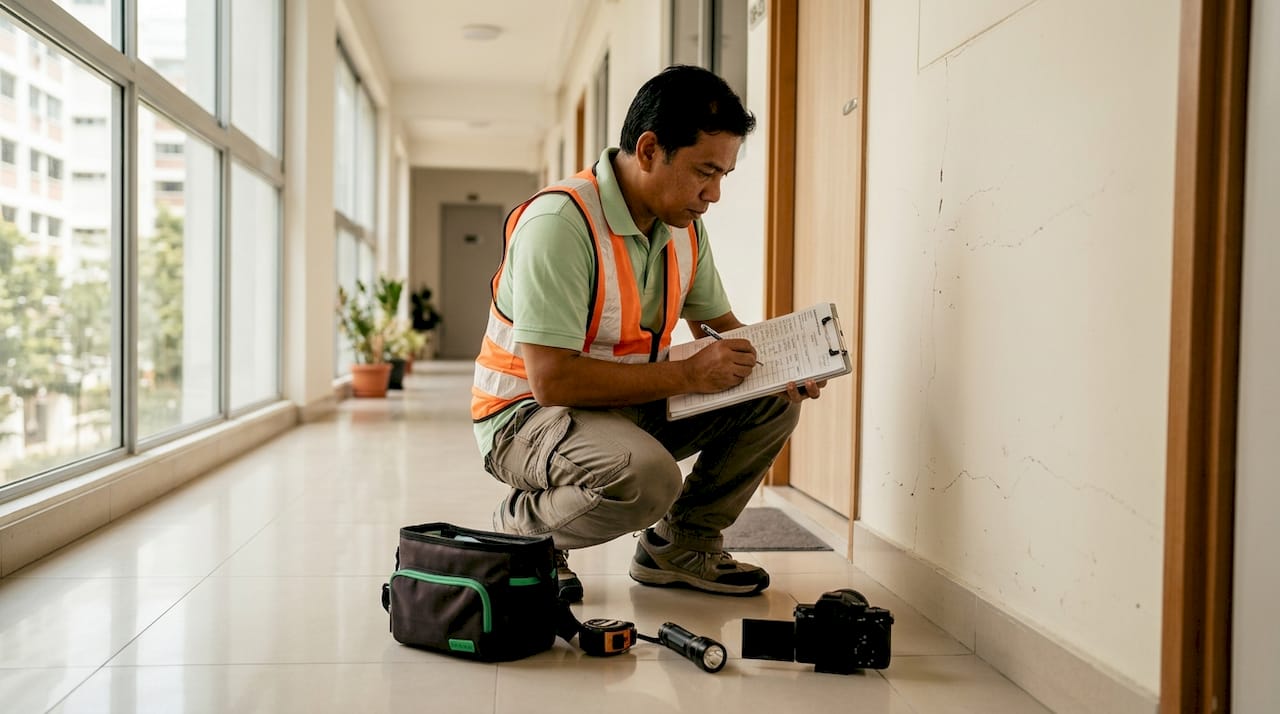
- Conduct a full defect inspection. Bring a tapping stick and a spirit level. Tap every tile to check for hollow spots, and use the level to check walls and floors for unevenness. Inspect within 7 days of key collection to qualify for DLP coverage.
- Document everything. Photograph every defect with timestamps. Write descriptions alongside each photo.
- Report to HDB's Building Service Centre. Submit your defect list promptly. Delays reduce your legal protection.
- Activate utilities. Set up SP Group electricity and water accounts before contractors arrive.
- Purchase mandatory fire insurance. HDB requires this before renovation works begin.
- Secure your unit. Change the door lock immediately. A digital lock gives you temporary access codes for contractors without handing over physical keys.
Pro Tip: Hire a professional defect inspector for around S$200–S$300. They catch issues an untrained eye misses, and their report carries more weight when you submit to HDB.
2. How to hire HDB-registered contractors and get permits
Every homeowner must hire only HDB-registered contractors listed in HDB's official Directory of Renovation Contractors. Using an unlicensed contractor exposes you to fines up to S$5,000 and mandatory reinstatement costs. That means you pay to undo the work and redo it correctly.
Follow these steps to stay compliant:
- Search the HDB Directory. Go to HDB's official website and verify your contractor's registration status before signing any contract.
- Get at least three quotes. Compare scope, materials, and payment terms, not just the final price.
- Check the contractor's permit history. Ask directly whether they have managed HDB permit applications before.
- Have your contractor submit the permit application. Only registered contractors can apply through HDB's InfoWEB or MyHome portal. The permit approval process typically takes 1–3 weeks.
- Confirm permit coverage. The permit must cover all structural and wet works, including hacking, plumbing, and electrical rewiring.
- Never start structural or wet works without an approved permit. Starting early is a violation, regardless of how confident your contractor sounds.
Pro Tip: Ask your contractor to share the permit approval confirmation in writing before any physical work begins. This protects you if disputes arise later.
Understanding renovation progress payments is equally important at this stage. Tie each payment milestone to a completed and inspected phase, not to a calendar date.
3. What are the typical renovation phases and timelines?
A typical HDB BTO renovation runs 3–5 months from planning to handover. Three-room flats average around 3 months, while 5-room flats can take up to 5 months depending on scope. Knowing the sequence prevents you from rushing a phase and creating expensive rework.
| Phase | Typical Duration | Key Milestone |
|---|---|---|
| Planning and design | 2–4 weeks | Final floor plan signed off |
| Permit application and approval | 1–3 weeks | Permit confirmed in writing |
| Hacking and demolition | 1–2 weeks | Site cleared and inspected |
| Plumbing and electrical rough-in | 1–2 weeks | Rough-in inspected before concealment |
| Waterproofing and tiling | 2–3 weeks | Waterproofing tested before tiling |
| Carpentry and joinery | 3–5 weeks | Cabinets fitted and checked |
| Painting and finishing | 1–2 weeks | Done after all hard works complete |
| Snagging and handover | 1 week | Final walkthrough with contractor |
The sequencing matters as much as the timeline. Waterproofing must be tested and approved before any tiles go down. Painting always comes last, after carpentry and electrical fittings are in place. Setting clear decision gates, such as "no demolition until all materials are ordered," prevents costly project pauses mid-build.
One regulation that surprises many first-time owners: wet area renovations are restricted by a 3-year rule counted from the block's completion date, not your key collection date. Attempting wet works before this window closes will result in permit rejection.
4. How to budget and plan your renovation without regret
Renovation costs for a 4-room HDB flat range from S$15,000 for a cosmetic refresh up to S$80,000 for an extensive overhaul. A 5-room flat can reach S$100,000 for major works. Those numbers are wide for a reason: scope is the biggest cost driver, and scope creep is the biggest budget killer.
Build your budget around these categories:
- Hard costs. Hacking, tiling, plumbing, electrical, and waterproofing. These are non-negotiable and hard to cut once started.
- Carpentry. Custom built-ins are the single largest line item for most homeowners. Price them early.
- Finishes. Paint, flooring, fixtures, and fittings. This is where you can flex up or down.
- Contingency. Set aside 10–15% of your total budget for unexpected costs. Walls hide surprises.
- Furniture and appliances. Many first-time owners forget these until the renovation is done. Budget for them upfront.
Good space planning prevents expensive late changes. Decide on storage, lighting zones, and traffic flow before your contractor starts. Changing your mind after hacking begins costs money every time.
Pro Tip: Lock your scope before signing the contract. Every addition after signing is a variation order, and variation orders always cost more per unit than the original quote.
5. Why physical measurements matter more than floor plans
Official HDB floor plans show room dimensions that include wall thickness. Actual usable space is typically 20–30cm narrower than what the plan shows. That gap is enough to make a custom wardrobe or kitchen cabinet a misfit.
Always measure your actual space on site before ordering any carpentry. Bring a laser measure and record every dimension yourself. Do not rely on your contractor's measurements alone. Cross-check against the floor plan and flag any discrepancy before fabrication begins.
"Measure twice, order once. A 20cm error on a built-in wardrobe means the whole unit goes back to the workshop. That delay costs you two weeks and a reinstatement fee."
A few more design and finishing tips that save money and frustration:
- Install lighting points before ceilings are closed. Retrofitting recessed lights after plastering is expensive.
- Choose durable materials for high-traffic areas. Homogeneous tiles outperform vinyl in wet zones and last longer under HDB conditions.
- Paint after all hard works are complete. Carpentry installation scratches walls. Paint is the last trade in for a reason.
- Plan your storage early. HDB flats are compact. Built-in storage designed at the planning stage costs less than freestanding furniture added later.
The role of interior design goes beyond aesthetics. A good interior designer coordinates trades, catches sequencing errors, and keeps your project on schedule.
Key takeaways
A successful HDB flat renovation depends on acting fast after key collection, hiring only registered contractors, and following a phased sequence with clear decision gates at every stage.
| Point | Details |
|---|---|
| Inspect within 7 days | Report all defects to HDB's Building Service Centre to secure DLP coverage. |
| Use registered contractors only | Unlicensed contractors expose you to fines up to S$5,000 and reinstatement costs. |
| Permit before physical works | Structural and wet works require an approved HDB permit before starting. |
| Budget with contingency | Set aside 10–15% above your quoted cost for unexpected expenses. |
| Measure on site | Floor plans overstate usable space by 20–30cm; always measure before ordering carpentry. |
What I've learned from watching first-time owners renovate their HDB flats
The homeowners who finish on time and on budget share one habit: they treat the first week after key collection as seriously as the renovation itself. Most people are excited to start designing. The ones who skip the defect inspection and rush into contractor meetings almost always pay for it later, either through disputes with HDB or through defects that resurface after renovation covers them up.
The second pattern I see repeatedly is underestimating the permit process. Homeowners assume their contractor handles everything. They do, but only if you have verified their registration status and confirmed the permit is approved before work starts. I have seen projects stalled for weeks because a contractor started hacking before the permit came through.
My honest advice: treat your renovation checklist as a legal document, not a to-do list. Every item on it exists because someone before you skipped it and paid the price. The renovation process for HDB owners is well-defined. Follow the sequence, set your decision gates, and do not let enthusiasm override process.
— Rayner
Honestbuilders can take the complexity out of your HDB renovation
Navigating HDB permits, contractor vetting, and renovation sequencing is a full-time job on top of your actual life. Honestbuilders specializes in exactly this work for HDB flat owners across Singapore.

Honestbuilders handles residential renovation services covering hacking, electrical, plumbing, tiling, carpentry, painting, and space planning. Every contractor on the team is HDB-registered, and every project comes with transparent pricing and no hidden charges. Whether you need a cosmetic refresh or a full overhaul, the team shows up, does the job right, and stands behind the work. WhatsApp Honestbuilders at +65 9447 9696 for a free, no-obligation quote.
FAQ
How long does a new HDB flat renovation take?
Most HDB BTO renovations take 3–5 months from planning to handover. Three-room flats typically finish in around 3 months, while 5-room flats can take up to 5 months depending on scope.
What happens if I hire an unlicensed renovation contractor?
You face fines up to S$5,000 and are required to pay for mandatory reinstatement of any unauthorized works. Always verify your contractor's registration in HDB's official Directory of Renovation Contractors.
Can I start wet works immediately after collecting my keys?
No. Wet area renovations are subject to a 3-year restriction counted from the block's completion date, not your key collection date. Starting early will result in permit rejection.
Do I need a permit for all renovation works in my HDB flat?
Structural and wet works, including hacking, plumbing, and electrical rewiring, require an approved HDB permit before starting. Your registered contractor submits the application through HDB's portal.
How much should I budget for a 4-room HDB flat renovation?
Costs range from S$15,000 for a cosmetic refresh to S$80,000 for an extensive overhaul. Add a 10–15% contingency buffer to your quoted cost to cover unexpected expenses.