
An interior designer (ID) is defined as a professional who shapes how a space looks, feels, and functions through expert planning, material selection, and project coordination. The role of ID in home renovation goes far beyond choosing paint colors or furniture. IDs manage spatial flow, finishes, lighting, and the cohesion of every design decision from the first sketch to the final walkthrough. Homeowners who bring an ID in early gain a creative and administrative partner who reduces stress, prevents costly mistakes, and delivers a finished home that genuinely fits how they live.
How does an interior designer influence space, aesthetics, and functionality?
Interior designers shape the three dimensions of a successful renovation: how a space is laid out, how it looks, and how well it works for daily life. Their influence starts at the floor plan and runs through every finish, fixture, and furniture choice.
Space planning is the foundation of good design. An ID analyzes traffic flow, natural light, and how rooms connect to each other. A well-planned layout prevents the common problem of a beautiful room that feels cramped or awkward to move through. Effective space planning in renovation reduces mental load and improves how comfortable a home feels day to day.

The aesthetic side of an ID's work is more technical than most homeowners expect. Designers coordinate finishes across flooring, cabinetry, walls, and fixtures so that every material choice reinforces a single visual direction. Without that coordination, renovations often end up with mismatched tones, clashing textures, or a room that looks assembled rather than designed.
Functionality goes deeper than aesthetics. Good interior design balances comfort, function, and style naturally, supporting daily routines and emotional wellbeing rather than imposing a fixed style. Experienced designers also address diverse needs, including elderly accessibility and family ergonomics, treating design as a practical necessity rather than a luxury.
Key ways an ID improves your renovation outcome:
- Layout optimization: Positions rooms, storage, and circulation paths for maximum usability before walls go up.
- Material coordination: Selects finishes that work together visually and hold up under real use conditions.
- Lighting design: Plans ambient, task, and accent lighting as a system, not as an afterthought.
- Emotional alignment: Designers ask clients how they want to feel in each room, then use that as a filter for every material and layout decision.
- Property value: Well-designed interiors improve property value, with homes selling faster and at higher prices when optimally designed.
Pro Tip: Before your first meeting with an ID, write down three words that describe how you want each room to feel. That emotional brief gives your designer a clearer starting point than any Pinterest board.
What project management roles do interior designers take on?
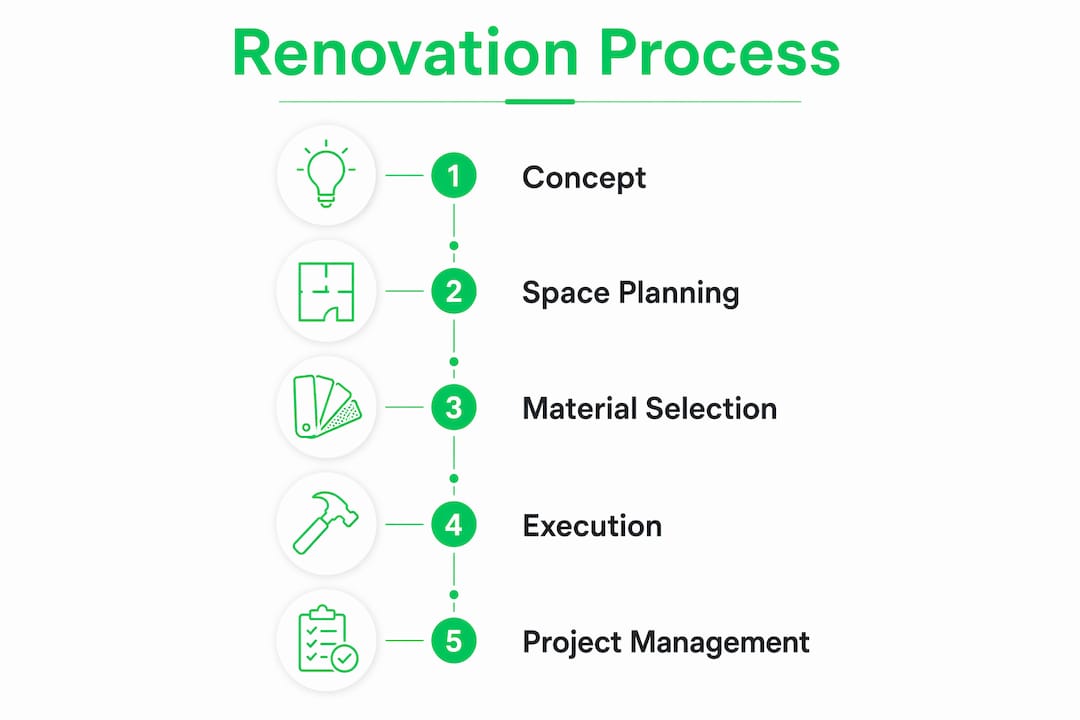
Interior designers do not just design. They manage the flow of decisions, people, and information that keeps a renovation on track. For homeowners, this is often the most underestimated benefit of hiring an ID.
Here is how an ID functions as a project manager during renovation:
- Single point of contact. Your ID fields questions from contractors, suppliers, and tradespeople so you do not have to. Instead of receiving daily calls about grout color or fixture placement, you get a summary update from one person.
- Design documentation. A good ID produces detailed drawings and specifications before construction begins. This prevents contractors from making guesses on site, which is where costly errors and change orders originate.
- On-site decision management. Interior designers act as an administrative shield, handling technical questions and minor choices under time pressure so homeowners are not forced into rushed decisions while contractors wait.
- Contractor liaison. The ID translates design intent into construction language. Contractors understand dimensions, materials, and sequences. Designers bridge the gap between a homeowner's vision and what a builder needs to execute it.
- Preventing delays. Finalizing design decisions before construction prevents on-site fixture decisions under time pressure. When a contractor has to stop and wait for a homeowner to choose a tile, the project stalls and costs rise.
Pro Tip: Ask your ID to produce a design decision log before construction starts. This document records every confirmed material, finish, and fixture choice so there is no ambiguity on site.
When should homeowners engage an interior designer?
The timing of your ID engagement determines how much value they can deliver. Bring an ID in too late and their influence shrinks to surface-level choices. Bring them in early and they shape the bones of your renovation.
The right time to hire an ID is before any of the following are finalized:
- Plumbing and electrical layouts. Moving pipes and wiring after they are installed is expensive. An ID who reviews these plans early can reposition a bathroom vanity or kitchen island before the work begins.
- Cabinetry and built-in storage. Early ID involvement allows optimizing spatial flow, lighting, and cabinetry integration as foundational architecture. Cabinetry defines a room's proportions. Changing it mid-project is one of the most expensive mistakes in renovation.
- Lighting rough-in. Ceiling light positions are set during the rough-in phase. An ID who is not involved at this stage cannot design a proper lighting plan.
- Structural changes. If walls are being hacked or openings widened, an ID needs to be part of that conversation from the start.
Late ID involvement restricts spatial optimization to furniture arrangement and soft furnishings. That is a fraction of what a designer can contribute. Homeowners who renovate before moving in gain the most from early ID engagement, since no existing furniture or occupancy constraints limit the design process. A guide on renovating before moving in covers this timing advantage in detail.
The design process typically runs through three phases: concept and space planning, material and finish selection, and construction documentation. All three phases should be complete before contractors begin work. That sequence protects both the homeowner's budget and the designer's intent.
How do interior designers and contractors collaborate?
The ID and contractor relationship is a division of expertise, not a competition for authority. Each professional owns a distinct part of the project, and the renovation succeeds when their responsibilities are clearly defined from the start.
A well-coordinated workflow between an ID and contractor aligns scheduling, cost control, and design intent, reducing surprises and rework. The table below shows how responsibilities split between the two roles.
| Responsibility | Interior designer | Contractor |
|---|---|---|
| Space planning and layout | Owns and leads | Executes per drawings |
| Material and finish selection | Specifies and coordinates | Sources and installs |
| Construction sequencing | Advises on design impact | Plans and manages |
| On-site daily decisions | Handles design-related choices | Handles build-related choices |
| Budget tracking | Monitors design costs | Monitors build costs |
| Homeowner communication | Design updates and decisions | Progress and site updates |
The critical handoff point is the design documentation package. When an ID delivers complete drawings, specifications, and a materials schedule before construction starts, contractors can price accurately and build without interruption. When documentation is incomplete, contractors fill gaps with their own judgment, and the result rarely matches the homeowner's vision.
Collaboration between designers and contractors prevents costly project disruptions and removes administrative burden from homeowners. The most effective ID-contractor workflows share a single project timeline, hold regular coordination meetings, and resolve conflicts on paper before they become problems on site.
Key Takeaways
Interior designers deliver the most value when engaged before construction begins, shaping layout, materials, and lighting as permanent architectural decisions rather than afterthoughts.
| Point | Details |
|---|---|
| Engage early | Hire your ID before plumbing, cabinetry, and lighting are finalized to maximize design impact. |
| Design shapes wellbeing | Well-designed interiors improve daily comfort, mental load, and long-term property value. |
| IDs manage decisions | Designers act as an administrative shield, handling on-site choices so homeowners avoid pressure. |
| Documentation prevents delays | Complete design specs before construction starts eliminate costly change orders and contractor guesswork. |
| ID and contractor roles are distinct | Designers own layout and finishes; contractors own build execution. Clear division prevents conflict. |
Why I think most homeowners underestimate their interior designer
Most homeowners I have spoken with think of an interior designer as someone who picks colors and arranges furniture. That framing costs them money. The real value of an ID sits in the decisions made before a single wall is hacked: where the cabinetry goes, how the lighting is zoned, whether the kitchen island actually fits the way the family moves through the space.
The insight that changed how I think about this comes from experienced designers who treat fixed cabinetry and lighting as permanent architecture, not decoration. Textiles and accessories can be swapped out in five years. A badly positioned kitchen cabinet cannot. That distinction should drive every renovation budget conversation.
The other thing homeowners consistently miss is the administrative relief. A renovation without an ID means you are the decision-maker for every minor choice on site, often while a contractor is standing there waiting. That pressure produces bad decisions. An ID absorbs that pressure and gives you considered answers instead of rushed ones.
My honest advice: prioritize how you want to live in the space over how you want it to look in photos. The best design, as Nina Campbell's sixty-year career demonstrates, is invisible. You do not notice it. You just feel at home.
— Rayner
Honestbuilders and your renovation, working together
Honestbuilders is Singapore's trusted renovation and handyman specialist, serving HDB, condo, landed, and commercial properties island-wide. The team handles hacking, electrical, plumbing, tiling, carpentry, painting, and space planning under one roof, which means your contractor and your design intent stay aligned throughout the project.

When your ID has finalized the design documentation, Honestbuilders executes it with the workmanship and accountability that Singapore homeowners rely on. No hidden charges. No runaround. Every project is backed by a team that shows up and does the job right. Visit Honestbuilders.sg to get a free, no-obligation quote, or WhatsApp the team directly at +65 9447 9696.
FAQ
What is the role of an ID in home renovation?
An interior designer shapes space planning, material selection, lighting, and finishes to create a cohesive and functional home. They also manage design decisions and coordinate with contractors throughout the renovation process.
When should I hire an interior designer for my renovation?
Hire an ID before plumbing, cabinetry, and electrical layouts are finalized. Early involvement allows the designer to optimize spatial flow and prevent costly changes later in the project.
How does an interior designer work with a contractor?
The ID provides complete design drawings and specifications before construction begins. The contractor executes the build based on those documents, with the ID handling design-related on-site decisions and the contractor managing build sequencing.
Does hiring an interior designer increase property value?
Well-designed interiors improve property value, with homes selling faster and at higher prices when optimally designed. Good design also improves daily comfort and reduces the mental load of living in a poorly planned space.
How do I choose an interior designer for my renovation?
Look for an ID who asks about how you want to feel in each room, not just what style you prefer. Review their documentation process and confirm they will produce complete drawings before your contractor begins work.