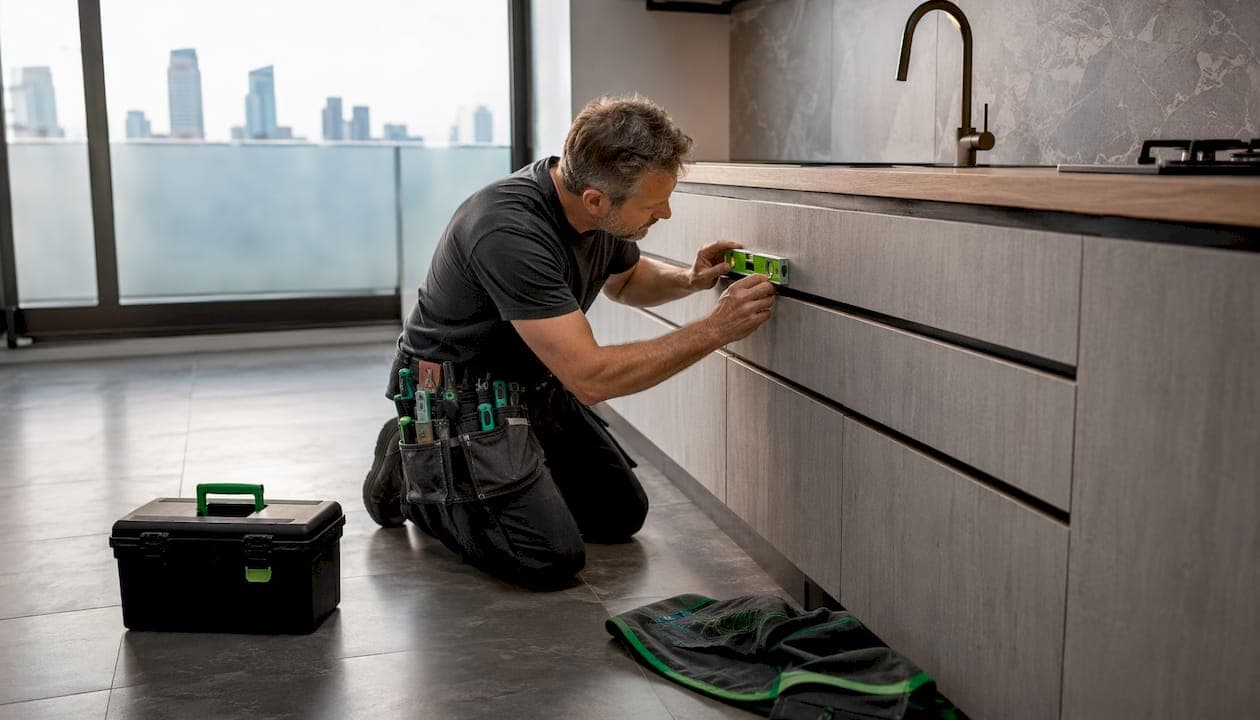
A handyman's workmanship warranty is a contractor's promise that the labor was performed in a competent, professional manner — and if it wasn't, they'll come back and fix it at no charge. It covers defects in how the work was done, not the materials themselves or normal wear over time. Your first move: get the warranty terms in writing before any work begins, and photograph the finished job the day it's completed.
Pro Tip: Snap time-stamped photos of every completed job. If a problem surfaces six months later, those photos are your strongest evidence that the defect wasn't caused by something you did.
Table of Contents
- What a workmanship warranty is and how it differs from other guarantees
- What workmanship warranties typically cover and what they don't
- How handymen provide warranties: written, implied, and how long they last
- Step-by-step claims checklist when workmanship issues appear
- What to get in writing before you hire a handyman
- If a warranty is denied: enforcement options and legal basics
- Key Takeaways
- Why a written warranty changes everything
- Honestbuilders: workmanship-backed handyman service
- Authoritative sources and where to learn more
What a workmanship warranty is and how it differs from other guarantees
A workmanship warranty commits a contractor to performing work in a "good and workmanlike manner" — meaning with the skill and proficiency the trade requires, consistent with industry standards. It does not promise perfection. A tile installer who leaves grout lines uneven or fails to properly prepare the substrate owns that defect. A cracked tile that came out of the box defective? That's on the manufacturer.

Most U.S. jurisdictions recognize an implied warranty of workmanship automatically, even without a written contract. This is separate from the implied warranty of habitability, which covers whether a home is safe and livable. The workmanship warranty is narrower: it's about the quality of the contractor's performance on a specific job.
Express vs. implied warranties at a glance:
| Type | How it arises | What it covers | Who enforces it |
|---|---|---|---|
| Express (written) | Stated in the contract | Specific scope, duration, and remedy | Homeowner per contract terms |
| Implied (workmanship) | Automatic by law in most states | Reasonable skill and competence | Homeowner via legal claim |
| Manufacturer warranty | Stated by product maker | Product defects, not installation | Homeowner per product terms |
Pro Tip: Always ask for the manufacturer's warranty documentation on any materials the handyman installs. File it separately from the workmanship warranty — they cover different problems and have different claim processes.
What workmanship warranties typically cover and what they don't
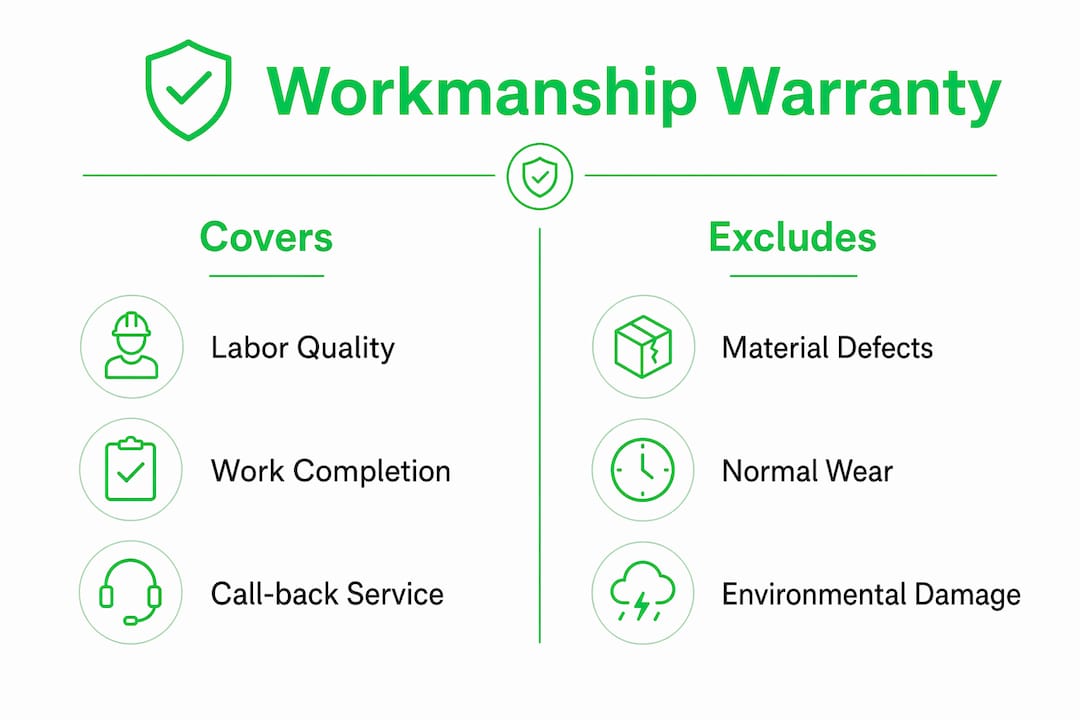
The core coverage is straightforward: if the handyman did the work incorrectly, they fix it. That includes loose cabinet hardware that wasn't properly secured, tiles that pop because the substrate wasn't prepped right, or a door that won't close because it was hung out of plumb. If a subcontractor did the work, the general contractor still bears responsibility for call-back repairs.
Typical inclusions:
- Defects caused directly by the installation or repair method
- Incorrect assembly of furniture, fixtures, or hardware
- Call-back repairs for items that fail due to poor technique
- Labor to correct work that doesn't meet the agreed scope
Common exclusions — watch for these in the contract:
- Normal wear and tear over time
- Damage from homeowner misuse or neglect
- Failures in materials or products (directed to the manufacturer)
- Work altered by the homeowner or a third party after completion
- Pre-existing conditions the handyman couldn't have known about
- Cosmetic issues like minor scuffs that don't affect function
- Caulking, sealants, and grout on existing tile (often excluded due to substrate variables)
A call-back provision with defined response times is one of the most practical enforcement tools you can have. Common frameworks call for a 24-hour response for emergencies and a 72-hour reply for non-emergency issues. If that language isn't in your contract, ask for it.
How handymen provide warranties: written, implied, and how long they last
Written warranties carry far more weight than oral promises in any dispute. A clear written clause eliminates the "he-said-she-said" problem and establishes enforceable remedies before you ever need them. An oral promise that work will be "taken care of" is nearly impossible to enforce.
Warranty periods vary widely in practice. Some handymen offer short guarantees — typically 30 to 90 days — but many trades use a callback window of one year as standard. For specialty work like roofing or structural elements, warranty periods often extend to two years or up to ten years, depending on the contract.
The warranty period almost always begins on the date of substantial completion, meaning the day the job is finished and handed over to you. Transferability is rarely automatic. Most handyman warranties, like the one offered by Gillespie Handyman Services, are non-transferable and apply only to the original customer at the original service address. If you're selling your home, don't assume the warranty passes to the buyer unless the contract says so explicitly.
Pro Tip: Ask the contractor to date and sign the warranty document. A warranty with no start date is a warranty with no end date — and that ambiguity rarely benefits you.
Step-by-step claims checklist when workmanship issues appear
Acting quickly and methodically is what separates a resolved claim from a drawn-out dispute.
- Document immediately. Take photos and video of the defect the moment you notice it. Note the date and time. Don't attempt any repairs yourself — that can void coverage.
- Pull out your contract. Confirm the warranty period is still active and review the exact claim procedure the contractor specified.
- Notify in writing. Send a message by email or text (not just a phone call) so there's a record. Include your name, the service address, the job date, a description of the defect, and attach your photos.
- Give a reasonable deadline. Reference any response-time language in the contract. If none exists, 72 hours for a non-emergency reply is a reasonable standard to state.
- Keep a log. Record every communication: date, method, what was said or written, and any commitments made.
Evidence checklist for a warranty claim:
- Original invoice or contract with warranty language
- Photos/video of the defect (time-stamped)
- Written record of your notification to the contractor
- Any written response from the contractor
- Photos of the original completed work (taken at job completion)
If the contractor doesn't respond, escalate in this order: a formal written demand letter, a complaint to your state's contractor licensing board, small claims court for amounts within your state's limit, and mediation or arbitration if the contract requires it. Replacing a door yourself after a DIY door replacement goes wrong is a common scenario where having a written warranty from a pro would have changed the outcome entirely.
What to get in writing before you hire a handyman
The time to negotiate warranty terms is before the job starts, not after something goes wrong.
Questions to ask every contractor:
- What does your workmanship warranty cover, and what does it exclude?
- How long is the warranty period, and when does it start?
- What's your response time for warranty claims?
- Is the warranty transferable if I sell the home?
- What's the remedy: repair, replacement, or refund?
Red flags that predict poor post-job support:
- Warranty offered verbally only, with no written documentation
- Vague language like "we stand behind our work" with no defined scope or timeframe
- Refusal to specify response times or a call-back window in writing
- No mention of who pays for access costs (moving furniture, drywall repair) if a fix requires it
Recommended contract elements to request:
- Warranty period (start date, end date, or duration)
- Explicit inclusions and exclusions
- Response time commitment (24 hours for emergencies, 72 hours for non-emergencies)
- Remedy options (repair, replace, or partial refund)
- Who bears secondary costs (access, cleanup, related repairs)
- Claim notification method (email preferred for documentation)
- Transferability clause (or explicit statement that it's non-transferable)
A short workmanship warranty clause you can request in writing:
"Contractor warrants that all labor performed under this agreement will be completed in a good and workmanlike manner. This warranty covers defects in workmanship for [X days/months] from the date of substantial completion. Contractor will respond to warranty claims within [24/72] hours and schedule corrective work within [14] days. This warranty does not cover materials, normal wear and tear, or damage caused by misuse or third-party modifications."
Courts scrutinize broad disclaimers. Vague "as-is" clauses usually fail to remove implied protections unless very specific language is used — so a contractor who hands you a blanket disclaimer without defined scope may not be protected the way they think they are.
Pro Tip: For common jobs like interior door replacement, ask specifically whether the warranty covers the door's operation and hardware alignment, not just the installation labor. Scope clarity prevents disputes.
If a warranty is denied: enforcement options and legal basics
When a handyman refuses to honor a warranty, you have real options — though each takes time and documentation.
Enforcement routes, roughly in order of effort:
- Negotiated repair. A direct conversation or written request citing the contract terms. Many disputes resolve here.
- Formal demand letter. A written letter stating the defect, the contract language, and a deadline for response. Keep it factual and cite specific dates.
- State contractor licensing board complaint. Most states license contractors and accept consumer complaints. A complaint can trigger an investigation and, in some states, access to a recovery fund.
- Small claims court. Appropriate for lower-dollar disputes. Limits vary by state, typically ranging from $5,000 to $25,000.
- Mediation or arbitration. Required by some contracts before litigation. Faster and cheaper than court, but outcomes vary.
- Civil litigation. For larger claims, an attorney experienced in construction disputes can advise on breach of contract or implied warranty claims.
Documentation matters more than anything else here. Statutes of limitations on contract claims vary by state, typically running two to six years, but the warranty period itself is shorter. Missing the warranty window doesn't necessarily eliminate all legal remedies, but it weakens your position significantly.
Bullet reminders for enforcement:
- Always send notices in writing, not just by phone
- Keep copies of every document, photo, and message
- Check your state's contractor licensing board website for complaint procedures
- Contact your state's consumer protection office for local rules on implied warranties
- Consult an attorney before filing in court if the amount is significant
State laws vary considerably. What applies in California may differ from Texas or Florida. The implied warranty of workmanship exists in most jurisdictions, but its scope and enforcement path depend on local statutes and case law. Always verify current rules with your state's contractor licensing agency or a licensed attorney.
This article is general information, not legal advice. Confirm current rules with your state's contractor licensing board or a qualified attorney for your specific situation.
Key Takeaways
A written workmanship warranty is the single most effective tool homeowners have for ensuring a handyman stands behind their labor — get it in writing, know what it covers, and document everything.
| Point | Details |
|---|---|
| Get it in writing | A written warranty is far more enforceable than an oral promise in any dispute or arbitration. |
| Know the typical timeframe | General handyman warranties are typically 30 to 90 days, while general remodeling and most trades use a one-year standard. Specialty trades, such as roofing or structural work, may offer longer periods (two to ten years). |
| Understand what's excluded | Materials, normal wear, homeowner misuse, and third-party modifications are almost always excluded. |
| Document defects immediately | Time-stamped photos and written notices are your strongest evidence when filing a claim. |
| Honestbuilders | Honestbuilders is built on workmanship and accountability — standing behind every project with no hidden charges. |
Why a written warranty changes everything
Most homeowners treat a warranty as a formality. It isn't. A written workmanship guarantee changes contractor behavior before the job even starts. When a handyman knows they're on the hook for call-backs, they inspect their own work more carefully, supervise any helpers more closely, and are less likely to cut corners on prep work. That quality-control effect is real and documented — requiring a written warranty acts as an incentive for contractors to get it right the first time.
The other thing most homeowners underestimate is how much easier a written warranty makes the claims process. An explicit, written warranty provides a pre-negotiated roadmap: who to call, what to send, what the remedy is, and how long the contractor has to respond. Without it, you're left trying to prove what a "reasonable professional standard" looks like in court — a much harder argument. A written warranty clause also signals something about the contractor's financial stability. A handyman who won't put a warranty in writing is often one who can't afford to stand behind the work.
Store your warranty documents digitally and physically. A simple folder labeled by contractor, job date, and scope works fine. Keep a short repairs log: date of work, what was done, who did it, and any follow-up. If you sell the home, that log becomes part of your disclosure documentation and can support your asking price.
Honestbuilders: workmanship-backed handyman service

If this article made one thing clear, it's that the warranty is only as good as the contractor behind it. Honestbuilders was built on exactly that premise: workmanship and accountability, not just a promise on paper. Every handyman service covers furniture assembly, installation, and home repairs with no hidden charges and no runaround — and the team shows up, does the job right, and stands behind it.
For homeowners who've read this far and want a contractor they don't have to chase, WhatsApp Honestbuilders at +65 9447 9696 for a free, no-obligation quote.
Authoritative sources and where to learn more
For deeper research and state-specific rules, these are the most reliable starting points:
- LegalClarity: Implied Warranty of Workmanship — Plain-language explanation of implied warranty rights, limits, and deadlines across U.S. jurisdictions.
- LegalClarity: Handyman Contract Template — What to include in a handyman contract, including warranty language.
- CheckLicensed: Contractor Warranties — Industry norms for warranty periods by trade type.
- Integrity Surety: Workmanship Warranties Explained — Overview of express warranties and their commercial role.
- Your state's contractor licensing board — The primary source for complaint procedures, license verification, and recovery fund eligibility. Search "[your state] contractor licensing board" to find the relevant agency.
- Your state's consumer protection office — Handles disputes involving deceptive trade practices and can advise on implied warranty enforcement locally.
| Resource | Best for |
|---|---|
| State contractor licensing board | License checks, complaints, recovery funds |
| State consumer protection office | Implied warranty enforcement, deceptive practices |
| LegalClarity (legalclarity.org) | Plain-language warranty law explanations |
| CheckLicensed (checklicensed.com) | Trade-specific warranty period norms |
| Small claims court (local) | Low-cost dispute resolution for smaller claims |