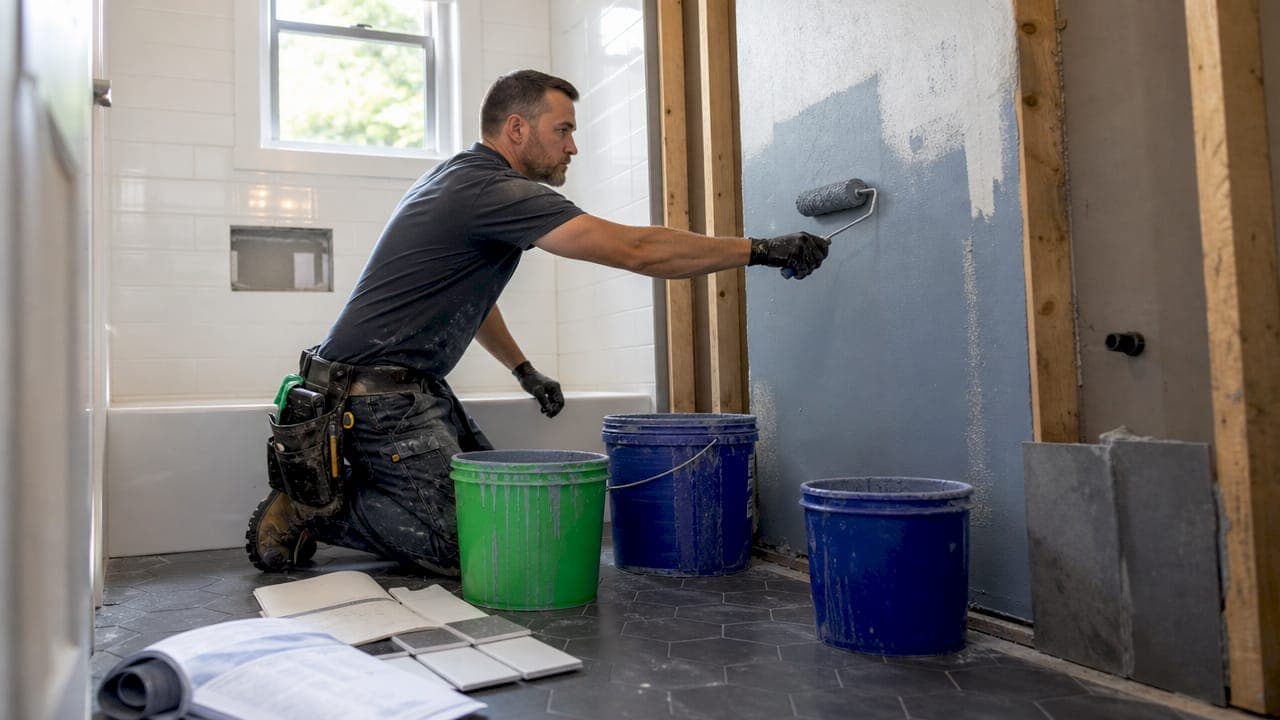
Bathroom waterproofing is defined as the system of membranes, liners, and barriers installed behind tiles and fixtures to block water from reaching structural materials. The role of waterproofing in bathroom renovation goes far beyond aesthetics. Professional waterproofing represents only 2–3% of total renovation costs, yet failures in this system account for over 80% of bathroom-related insurance claims. That single statistic tells you everything about where renovation risk actually lives. Skipping or rushing waterproofing is not a shortcut. It is a guaranteed path to mold, rot, and expensive structural repairs within a few years.
How does waterproofing protect your bathroom and home?
Waterproofing creates a continuous physical barrier between water and the structural materials beneath your bathroom surfaces. Without it, water follows gravity through grout lines, tile edges, and fixture penetrations until it reaches wood framing, concrete slabs, or the ceiling of the room below.
The damage pathways are predictable and well-documented:
- Wood rot: Water that reaches floor joists or wall studs causes rot within months. Replacing structural timber costs far more than the waterproofing that would have prevented it.
- Mold growth: Moisture trapped behind tiles creates the dark, damp conditions mold needs. Mold spreads to adjacent rooms and poses serious health risks.
- Tile failure: Without a stable, dry substrate, tiles crack and grout crumbles. The finish you paid for fails long before its time.
- Ceiling damage: Water migrating through a bathroom floor damages the ceiling below, which often means full ceiling replacement and repainting.
Proper waterproofing systems reduce the risk of water damage by 70–90% according to IRC 2024 building code standards. That reduction reflects the difference between a bathroom that lasts decades and one that needs a full gut renovation within five years. The importance of bathroom waterproofing becomes obvious the moment you see what moisture does to an unprotected structure.
Pro Tip: Ask your contractor to show you the waterproofing membrane before tiling begins. If they cannot point to a continuous membrane covering all walls, floors, and corners in the wet zone, the work is incomplete.
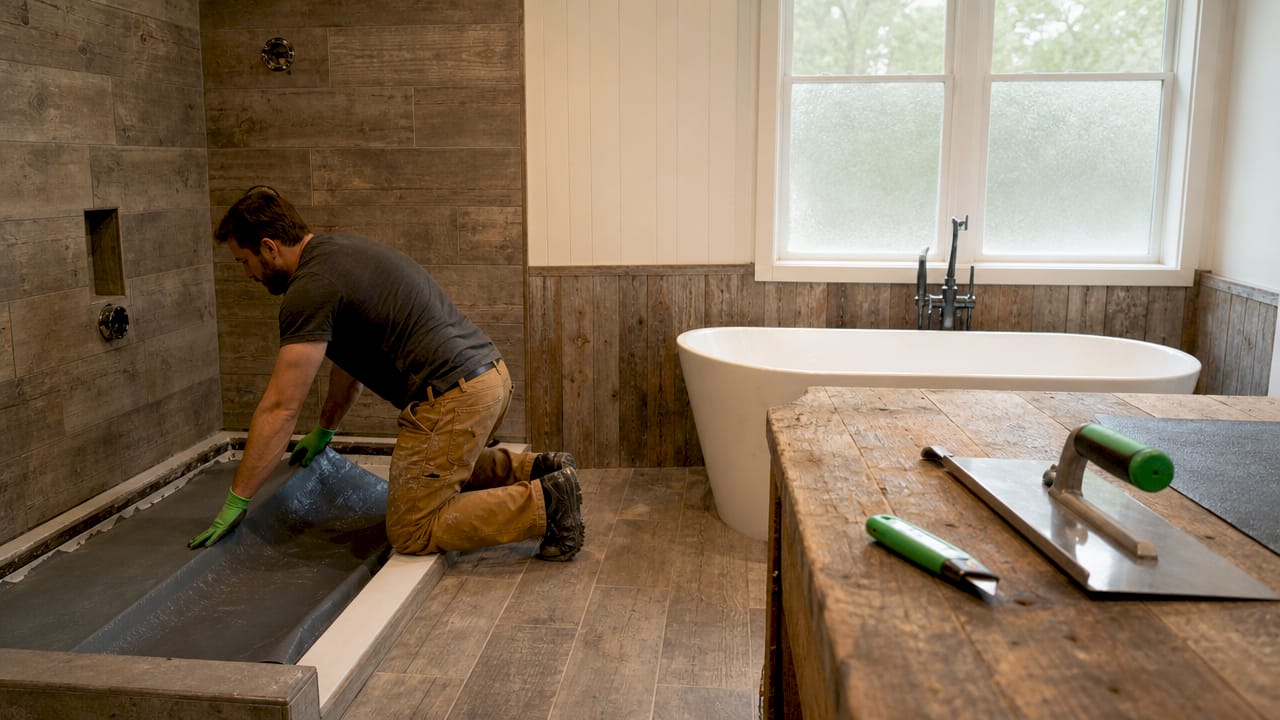
What are the common waterproofing failure points and homeowner misconceptions?
Most waterproofing failures trace back to two sources: wrong assumptions about what tiles do, and shortcuts taken during installation. Both are avoidable with the right information.
The biggest misconception homeowners carry into a renovation is that tile and grout are waterproof. Tiles are finish layers; grout is water-resistant at best. Neither material stops water from migrating through to the substrate beneath. The actual waterproof barrier sits behind the tiles, not on the surface. Homeowners who believe otherwise often approve budgets that skip the membrane entirely, then wonder why their bathroom shows water damage within a few years.
The second major failure point is the shower drain connection. Drain seal failures cause leaks within 3–7 years when the connection between the membrane and the drain body is not mechanically clamped or bonded. Mortar beds shift slightly over time. Without a mechanical clamp or bonded flange at the drain, that movement opens a gap and water escapes directly into the subfloor.
Other common failure points include:
- Corners and seams: Flat membrane application misses the stress points where walls meet floors. Fabric reinforcement tape embedded in liquid membrane is required at every internal corner.
- Pipe penetrations: Every pipe that passes through a waterproofed surface needs a collar seal. A gap of even a few millimeters allows water to track along the pipe into the wall cavity.
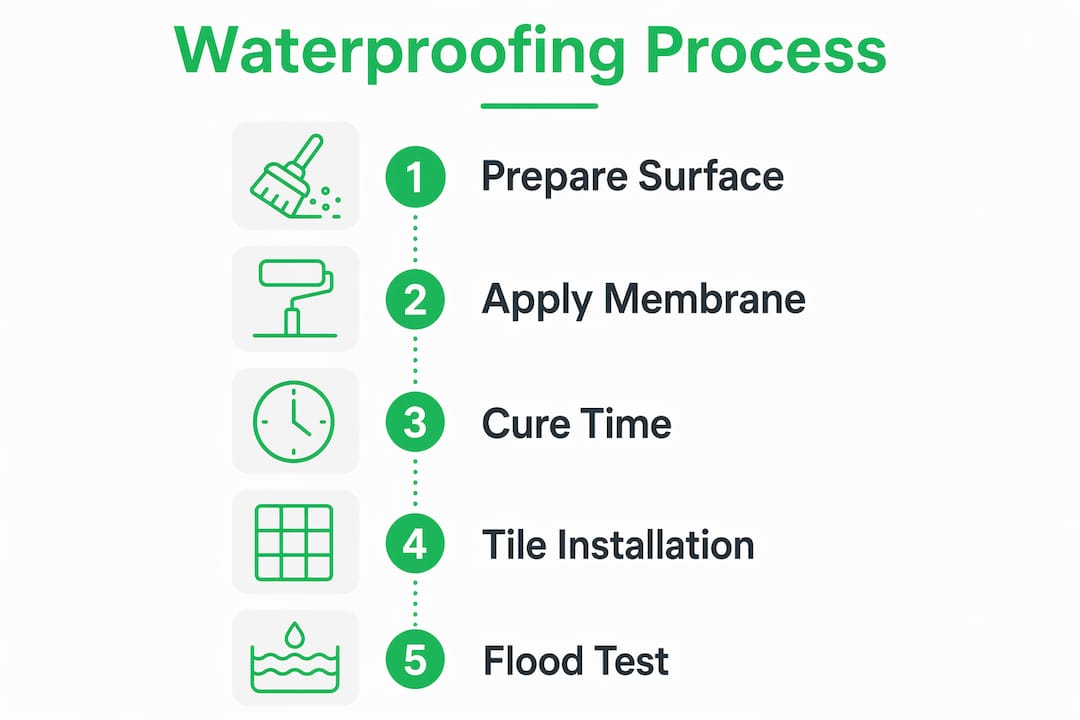
- Rushed curing: Waterproofing failure often results from tiling before the membrane has fully cured. Liquid-applied membranes need 24–48 hours between coats and before tile adhesive is applied.
- DIY installation: Improper waterproofing can void insurance policies and create legal liability. Licensed installation protects you on both fronts.
Pro Tip: Never allow tiling to begin the same day waterproofing is applied. Curing time is not optional. If your contractor pushes to tile immediately, that is a red flag.
Which waterproofing methods and materials are most effective for bathrooms?
Waterproofing is a system, not a single product. Continuous membranes must cover all corners, seams, and penetrations to prevent hidden rot. The choice of system depends on the wet zone, the substrate, and the finish material being applied over it.
Liquid-applied membranes
Liquid-applied membranes are brushed or rolled directly onto prepared surfaces in two or more coats. They conform to any shape, which makes them ideal for shower floors, wall-floor junctions, and areas with complex geometry. Brands like Mapei Mapelastic and Laticrete Hydro Ban are widely used in residential bathrooms. These systems require fabric reinforcement at corners and around penetrations to prevent cracking as the building moves.
Sheet membranes
Sheet membranes are pre-formed panels bonded to the substrate before tiling. They offer consistent thickness and faster installation compared to liquid systems. Products like Schluter-KERDI are common in shower enclosures. Sheet membranes work best on flat, even surfaces and require careful seaming at joints.
Shower pan liners
Shower pan liners sit beneath the mortar bed on shower floors. They require a minimum slope of 1/4 inch per foot toward the drain and must integrate with a clamping drain assembly. The liner material, typically PVC or CPE, must extend up the walls at least 3 inches above the finished curb height.
Vapor barriers and moisture-resistant drywall
Outside the direct wet zone, vapor barriers and moisture-resistant drywall (commonly called cement board or greenboard) protect wall cavities from humidity. These materials do not replace membrane waterproofing in shower areas but reduce ambient moisture damage in the broader bathroom space.
| Material | Best application | Key benefit |
|---|---|---|
| Liquid-applied membrane | Shower walls, floors, complex shapes | Conforms to any geometry |
| Sheet membrane | Flat shower enclosures | Consistent thickness, fast install |
| Shower pan liner | Below mortar bed on shower floors | Durable, integrates with drain clamp |
| Cement board | Wall substrate outside wet zone | Resists swelling from humidity |
| Vapor barrier | Wall cavities, non-shower areas | Reduces ambient moisture damage |
Pro Tip: Use liquid membrane on floors and sheet membrane on walls if your contractor offers the combination. Each material performs best in its intended application, and mixing systems correctly gives you the strongest overall result.
How can homeowners ensure successful waterproofing during their renovation?
Homeowners who treat waterproofing as a passive process, something the contractor handles invisibly, end up with the most problems. Active oversight at key stages protects your investment.
-
Hire a licensed waterproofing specialist. In Singapore and many other jurisdictions, waterproofing in wet areas must be performed by a licensed tradesperson. Licensed professionals provide formal waterproofing certification and warranty documentation, which protects you if an insurance claim arises later. Verify the license before signing any contract.
-
Require a 24-hour flood test before tiling. IRC 2024 mandates a flood test with 2 inches of water held for 24 hours to confirm membrane integrity. Visual inspection alone misses pinhole failures and seam gaps. The flood test catches them before tiles go down and make repairs ten times harder.
-
Document every stage. Photograph the membrane before tiling, the drain connection before the mortar bed is poured, and the completed wet zone before fixtures are installed. These photos protect you if a dispute arises with your contractor or insurer.
-
Verify curing time compliance. Liquid membranes need full curing before tile adhesive is applied. Ask your contractor for the product data sheet and confirm the curing schedule matches what is actually happening on site.
-
Get a written warranty. A reputable contractor provides a written warranty covering both materials and workmanship. Properly installed waterproofing lasts 20–30 years. A contractor who will not warrant their work for at least five years is not confident in what they installed.
Understanding the wet works renovation process gives you the vocabulary to ask the right questions and recognize when a contractor is cutting corners.
Key Takeaways
Proper waterproofing is the single most cost-effective protection in any bathroom renovation, covering 2–3% of the budget while preventing over 80% of water-related insurance claims.
| Point | Details |
|---|---|
| Waterproofing is a system | Continuous membranes must cover all corners, seams, and penetrations, not just flat surfaces. |
| Tile and grout are not waterproof | The actual barrier sits behind the tiles; grout only resists surface moisture. |
| Drain connection is the top failure point | Mechanical clamping or bonded flanges at the drain prevent leaks within 3–7 years. |
| Flood testing is mandatory | IRC 2024 requires a 24-hour flood test before tiling to catch hidden membrane failures. |
| Licensed installation protects you | Certified professionals provide documentation and warranties that support insurance claims. |
Waterproofing is the one place I never let homeowners cut corners
Every renovation has trade-offs. You can choose a less expensive tile, skip the heated floor, or delay the vanity upgrade. Waterproofing is not on that list.
I have seen bathrooms that looked perfect from the outside start showing mold at the grout lines within 18 months. In every case, the membrane was either missing, incomplete, or tiled over before it cured. The homeowners had no idea because the problem was invisible until it was not. By then, the repair bill was three to five times what proper waterproofing would have cost.
The part that frustrates me most is the "out of sight, out of mind" logic that drives these decisions. Homeowners focus on what they can see: tiles, fixtures, lighting. Waterproofing sits behind all of it, which makes it easy to approve a budget that quietly skips it. That logic works right up until the ceiling below your bathroom starts staining.
Treat waterproofing as the foundation of your renovation, not a line item to negotiate down. The bathroom renovation checklist I recommend to every homeowner puts waterproofing at the top, before tiles, before fixtures, before anything else. That order is not arbitrary. It reflects where the real risk lives.
— Rayner
Honestbuilders waterproofing services for your bathroom renovation
Honestbuilders handles bathroom waterproofing as part of a complete residential renovation service for HDB, condo, and landed properties across Singapore. Every waterproofing job follows licensed trade standards, includes proper membrane application at all corners and penetrations, and is verified before tiling begins.

Honestbuilders provides written documentation and workmanship accountability on every project. No hidden charges, no runaround. If you are planning a bathroom renovation and want waterproofing done right the first time, WhatsApp Honestbuilders at +65 9447 9696 for a free, no-obligation quote.
FAQ
What is the role of waterproofing in bathroom renovation?
Waterproofing creates a continuous barrier behind tiles and fixtures that prevents water from reaching structural materials. Without it, moisture causes wood rot, mold, and tile failure within a few years.
Does tile and grout waterproof a bathroom?
Tile and grout are not waterproof. Grout resists surface moisture but allows water to pass through over time. The actual waterproof barrier is the membrane installed behind the tiles.
How long does bathroom waterproofing last?
Properly installed waterproofing systems last 20–30 years. Poor installation causes failures within 2–5 years, typically at drain connections, corners, or areas where curing was rushed.
What is a flood test and why does it matter?
A flood test fills the shower pan with 2 inches of water and holds it for 24 hours to verify the membrane has no leaks. IRC 2024 mandates this test before tile installation because visual inspection alone misses pinhole failures.
Can I waterproof my bathroom myself?
DIY waterproofing is discouraged and in many jurisdictions is restricted to licensed tradespeople. Improper installation can void your home insurance and create personal liability for water damage to adjacent properties.