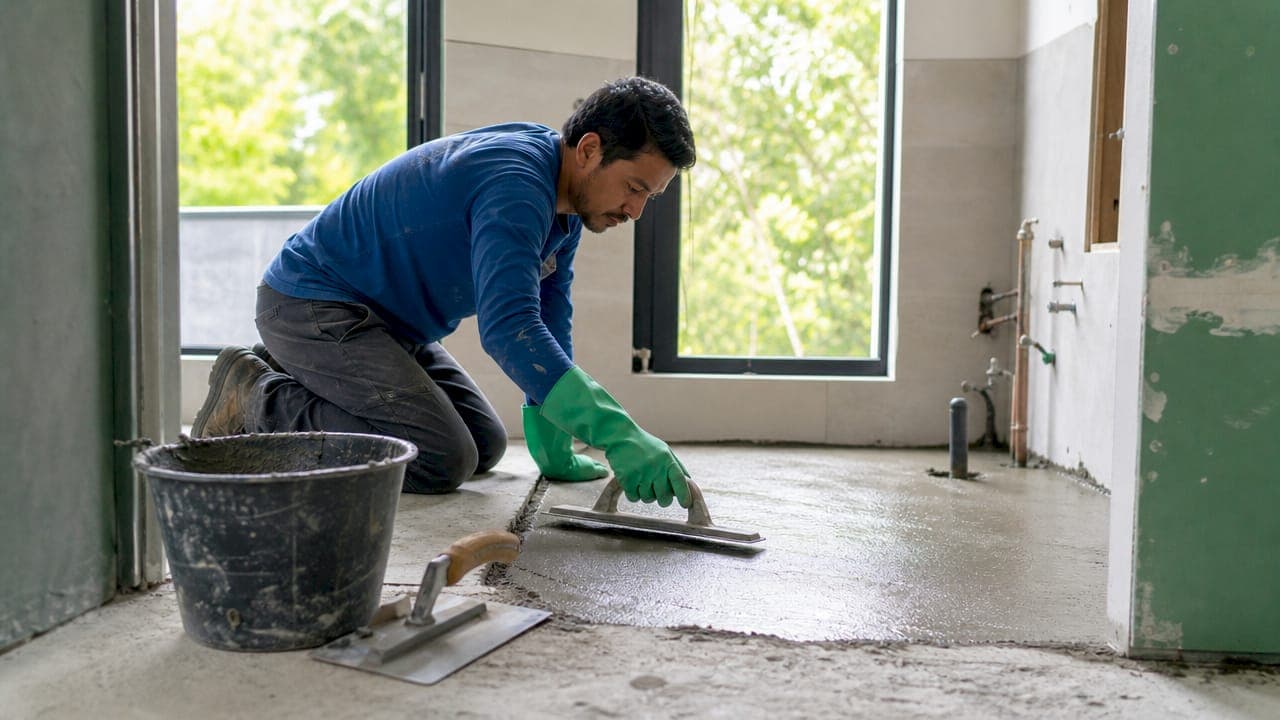
Wet works renovation is defined as any construction activity involving water, cement, or liquid mixtures that must cure and harden before the next phase begins. The industry term is "wet trades," covering plastering, concrete flooring, tiling, waterproofing, and screeding. These tasks form the foundational phase of renovation, and they are critical for structural integrity. Get them wrong, and fixing the problem almost always requires demolition. Honestbuilders handles wet works for HDB flats, condos, landed homes, and commercial properties across Singapore, and the guidance below reflects what actually happens on site.
What is wet works renovation, and what does it include?
Wet works renovation covers every task where a liquid or paste material is applied and then left to harden through a chemical or physical curing process. The defining characteristic is that the material changes state: it goes from workable to rigid. Once cured, it cannot be adjusted without breaking it apart.
Common wet works tasks include:
- Plastering: Applying cement or gypsum plaster to walls and ceilings to create a smooth, paintable surface.
- Concrete flooring and screeding: Pouring and leveling a cement base layer before tiles or other floor finishes go down.
- Tiling: Setting ceramic, porcelain, or stone tiles in cement-based adhesive mortar.
- Waterproofing: Applying liquid membranes or cementitious coatings to wet areas before tiles are laid.
- Hacking: Breaking up existing concrete or tile to prepare surfaces for new wet works.
- Grouting: Filling joints between tiles with a cement or epoxy mixture.
Wet works differ from dry works, which include carpentry, painting, false ceilings, and electrical fitting. Dry works use pre-manufactured components fixed mechanically. Wet works require mixing, application, and curing time on site. The two phases must run in sequence: wet works first, dry works after.
Pro Tip: Never schedule carpentry installation until wet works are fully cured. Moisture trapped behind cabinetry causes warping and mold within months.
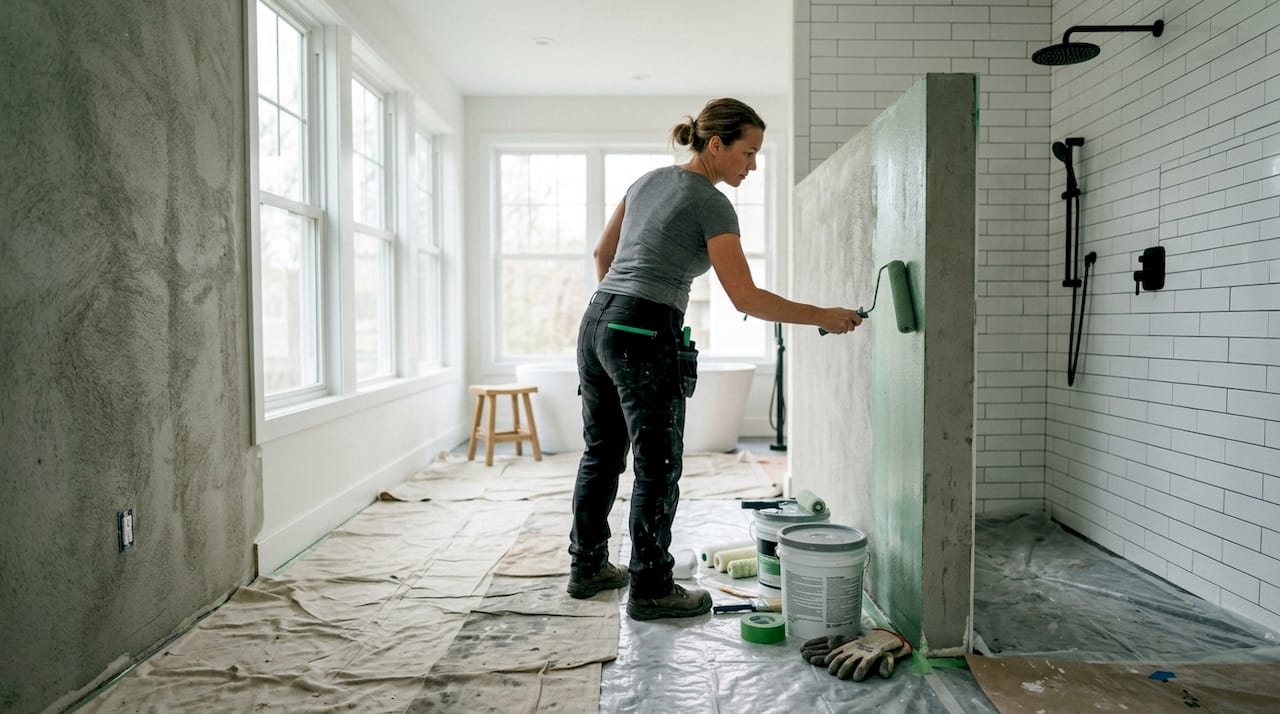
Why is waterproofing the most critical part of wet works?
Waterproofing is the single wet works task where failure is invisible until it becomes catastrophic. A cracked plaster wall is obvious. A failed waterproof membrane under your bathroom tiles shows up six months later as a damp patch on your neighbor's ceiling below.

Skipping or poor waterproofing is the most common cause of catastrophic renovation failures, costing 200–300% more to fix later than if done correctly from the start. That cost multiplier exists because fixing a failed membrane means removing all the tiles, stripping the screed, reapplying the membrane, and retiling. Every layer must come off.
The areas that require waterproofing in a standard residential renovation include:
- Bathroom floors and walls up to at least 1.8 meters high
- Kitchen floors and the area behind the sink
- Balcony and yard floors
- Any wet area directly above a habitable room
Professional waterproofing uses either a liquid-applied membrane, a cementitious two-component coating, or a sheet membrane system. Each method suits different substrates and exposure levels. The membrane must cure fully before any tile adhesive is applied on top. Rushing this step voids the protection entirely.
Pro Tip: Ask your contractor to do a flood test: dam the bathroom floor with a temporary seal and fill it with water for 24 hours before tiling. Any drop in water level reveals a leak before tiles cover it permanently.
What risks and challenges come with wet works renovation?
Wet works carry higher risks of structural and water damage than any other renovation phase. The risks are not theoretical. They show up as cracked floors, seeping walls, and failed tile adhesion when the work is rushed or poorly supervised.
The four most common failure points are:
- Insufficient curing time. Curing time for cement-based materials typically runs 3–7 days depending on humidity and temperature. Rushed drying degrades material quality and reduces long-term durability. Contractors under schedule pressure often move to the next phase too early.
- Poor surface preparation. Applying plaster or tile adhesive over a dusty, oily, or wet substrate breaks the bond. The tile or plaster lifts within a year.
- Inadequate waterproofing coverage. Membrane applied too thin, or missing at wall-to-floor junctions, creates a direct path for water to travel into the structure.
- No formal wet work permits or valve tagging. In commercial and multi-unit residential projects, wet work permits and valve tags are proactive management tools that prevent accidental water release during construction. Skipping them on larger projects is a compliance and liability issue.
Singapore's tropical climate adds another layer of difficulty. High ambient humidity slows curing and can cause surface carbonation on fresh plaster if conditions are not controlled. Experienced contractors account for this by scheduling wet works during cooler morning hours and protecting fresh surfaces from direct sun and rain.
How does wet works renovation differ by project type?
Wet works look different depending on whether you are renovating a single bathroom or managing a large commercial fit-out. The core tasks are the same, but the scale, oversight, and legal requirements change significantly.
| Project type | Typical wet works scope | Key considerations |
|---|---|---|
| HDB or condo bathroom | Waterproofing, tiling, screeding | Wet-over-dry rule, building board approval |
| Landed home full renovation | Plastering, concrete, waterproofing, tiling | Curing schedules, coordination with carpentry |
| Commercial fit-out | Screeding, industrial flooring, waterproofing | Permits, inspections, timeline compression |
| Large-scale or marine projects | Land reclamation, structural concrete | Specialized insurance, engineering oversight |
For homeowners in multi-unit buildings, the Wet-Over-Dry rule is a critical constraint. Building boards in many jurisdictions restrict placing wet areas directly above dry rooms to minimize leak risk. This rule is governed by local bylaws, not a universal building code, so you must check with your building management before redesigning bathroom or kitchen layouts.
For large commercial or marine projects, the complexity increases sharply. Land reclamation and large commercial wet works carry additional marine and environmental risks. Insurers often exclude "normal action of the sea," requiring technical engineering evidence for coverage. Property managers overseeing commercial renovations should confirm that their contractor carries appropriate professional indemnity and public liability insurance before wet works begin.
What should homeowners know to plan wet works successfully?
Good planning prevents the majority of wet works failures. The most expensive renovation mistakes come from treating wet works as a fast, interchangeable phase rather than a precision sequence with fixed timing.
Follow these practices before and during your wet works renovation:
- Confirm your curing schedule upfront. Ask your contractor to provide a written timeline that shows when each wet works layer will be applied and how long each curing period lasts. A realistic curing schedule of 3–7 days per layer is normal and non-negotiable.
- Sequence wet and dry works correctly. All plastering, screeding, and waterproofing must be complete and fully cured before carpentry, cabinetry, or electrical fittings begin. Poor coordination between wet and dry teams is one of the most frequent causes of project delays.
- Check local building regulations. For multi-unit buildings, verify whether the Wet-Over-Dry rule applies to your unit and whether your renovation plan requires prior approval from the building management or relevant authority.
- Inspect before concealment. Once tiles go down or walls are plastered over, defects become invisible. Walk through the site with your contractor after each wet works phase and before the next layer is applied.
- Plan for post-renovation monitoring. Check wet areas for hairline cracks, grout discoloration, or damp patches in the three months after completion. Early detection of a failed joint or membrane costs a fraction of what full remediation costs later.
Pro Tip: For bathroom renovation projects, always request a written waterproofing warranty from your contractor. A confident contractor will offer one. One who hesitates is telling you something.
Key takeaways
Wet works renovation is the phase that determines whether a renovation lasts 5 years or 30 years, and no amount of good carpentry or paint fixes a failed waterproof membrane underneath.
| Point | Details |
|---|---|
| Wet works come first | Plastering, waterproofing, and tiling must cure fully before dry works begin. |
| Waterproofing is non-negotiable | Poor waterproofing costs 200–300% more to fix later than getting it right initially. |
| Curing takes 3–7 days | Rushing curing degrades material strength and causes cracks, lifting tiles, and water seepage. |
| Check local bylaws | The Wet-Over-Dry rule in multi-unit buildings may restrict your renovation layout options. |
| Permits reduce risk | Wet work permits and valve tagging prevent accidental water damage in larger projects. |
The part most homeowners get wrong
I have seen hundreds of renovation projects across Singapore, and the pattern is consistent. Homeowners spend weeks choosing tile colors and cabinet finishes, then rush through the wet works phase because it looks unglamorous. It is just gray cement and plastic sheeting. Nothing to photograph.
That mindset is exactly what leads to a flooded unit two years later. The wet works phase is where the real value of a renovation is built or destroyed. A beautiful kitchen with failed waterproofing under the sink is a liability, not an asset.
The contractors who do this well are not the fastest ones. They are the ones who refuse to tile over a membrane that has not cured, who insist on a flood test before closing up the floor, and who coordinate their schedule with the carpentry team so nothing gets installed over damp substrate. Patience in the wet works phase is not a delay. It is the investment that makes everything else last.
Choose your contractor based on how they talk about curing times and waterproofing, not just their portfolio photos.
— Rayner
Wet works done right, from the start
Wet works renovation is where the structural foundation of your home is either secured or compromised. Getting it right requires experienced tradespeople who understand curing, waterproofing, and sequencing, not just speed.

Honestbuilders provides full residential renovation services across Singapore, covering all wet works phases including hacking, plastering, tiling, waterproofing, and screeding for HDB flats, condos, landed homes, and commercial spaces. Every project is managed with clear timelines, no hidden charges, and a commitment to workmanship that holds up long after the tiles are laid. WhatsApp Honestbuilders at +65 9447 9696 for a free, no-obligation quote.
FAQ
What does wet works include in a renovation?
Wet works includes plastering, concrete screeding, tiling, waterproofing, grouting, and hacking. These are all tasks where a liquid or paste material is applied and must cure before the next phase begins.
How long does wet works renovation take to cure?
Curing time for cement-based wet works materials typically runs 3–7 days per layer, depending on ambient humidity and temperature. Rushing this period causes cracks, tile lifting, and water seepage.
What is the difference between wet works and dry works?
Wet works use water-based materials like cement and adhesive mortar that harden through curing. Dry works use pre-manufactured components such as cabinets, false ceilings, and electrical fittings that are installed mechanically without curing time.
Why is waterproofing so important in wet works?
Failed waterproofing is the leading cause of water seepage, mold, and structural damage in renovated homes. Fixing a failed membrane after tiling costs 200–300% more than applying it correctly the first time.
Do I need approval before starting wet works in a condo or HDB?
Many multi-unit buildings enforce a Wet-Over-Dry rule that restricts placing wet areas above dry rooms. Check with your building management or relevant authority before redesigning bathroom or kitchen layouts, as approval may be required before work begins.