Carpentry in renovation is the skilled trade of constructing, installing, maintaining, and repairing wood and wood-substitute structures that form both the bones and the finish of a property. Renovation carpentry covers framing, floors, ceilings, doors, stairs, trim, and cabinetry. It is not a single task. It is a sequence of interconnected phases that run from the first day of demolition through to the final coat of paint. Every homeowner and property developer who plans a remodel needs to understand what carpentry actually does, because it touches nearly every part of a project.
What is carpentry in renovation, and what does it cover?
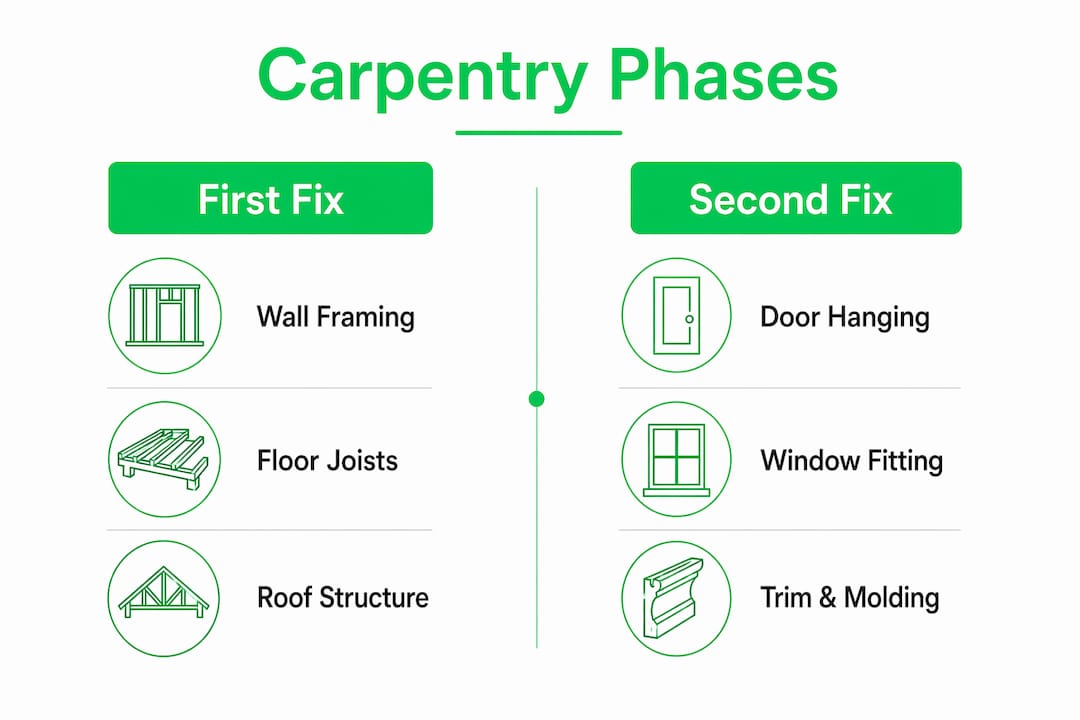
Carpentry in renovation is divided into two distinct phases: first fix and second fix. First fix carpentry covers all structural work done before plastering, including wall framing, floor joists, roof structures, and rough openings for doors and windows. Second fix carpentry covers everything visible after the walls are closed, including doors, skirting boards, architraves, built-in cabinetry, and decorative molding.
The industry terms for these phases matter. "First fix" and "second fix" are the recognized professional labels used by carpenters, contractors, and project managers across residential and commercial renovation. Knowing them helps you communicate clearly with your trades and avoid scope confusion when requesting quotes.
Carpenters read blueprints and follow building codes at every stage. Precision in layout and measurement is not optional. It determines whether doors hang straight, floors sit level, and trim aligns cleanly at corners.

What are the main phases of carpentry in renovation?
First fix: structural work before the walls close
First fix carpentry sets the physical structure of a renovation. This phase includes framing new or modified walls, installing floor and ceiling joists, building stud partitions, and creating rough openings for windows and doors. In larger projects, first fix may also involve rebuilding roof structures or raising ceiling heights, which adds significant complexity to both the timeline and the budget.
First fix work happens before electricians and plumbers complete their rough-in work. The sequencing is deliberate. Carpenters frame the walls, then electricians and plumbers run cables and pipes through the structure, and only then does plastering begin. Getting this order wrong forces costly rework.
Second fix: finishing work after the walls close
Second fix carpentry is what most homeowners picture when they think of a renovation. This phase covers door hanging, window casing, skirting boards, stair balustrades, built-in wardrobes, kitchen cabinetry, and all decorative trim. Second fix quality depends directly on how accurately the first fix was executed. A wall framed even slightly out of plumb will cause gaps in skirting boards and doors that refuse to close flush.
Pro Tip: Plan both carpentry phases before any work begins. Knowing which walls will be framed, where built-ins will sit, and what trim profiles you want lets your carpenter order materials in advance and reduces on-site delays by days, sometimes weeks.
Key tasks in each phase:
- First fix: wall framing, stud partitions, floor joists, roof structures, rough door and window openings
- Second fix: door hanging, window casings, skirting boards, architraves, built-in cabinetry, staircases, decorative molding
How does carpentry affect both structure and finish in a renovation?
Carpentry in renovation serves two roles that are equally important but often confused. Structural carpentry keeps a building safe and sound. Finish carpentry makes it look and feel complete.
| Component | Structural carpentry | Finish carpentry |
|---|---|---|
| Walls | Timber framing, stud partitions | Skirting boards, architraves |
| Floors | Floor joists, subfloor sheeting | Hardwood flooring, threshold strips |
| Ceilings | Ceiling joists, bulkheads | Cornice, cove molding |
| Openings | Rough frames for doors and windows | Door hanging, window casings |
| Storage | Structural backing for heavy units | Built-in wardrobes, kitchen cabinetry |
| Stairs | Structural stringers and treads | Balustrades, handrails, nosing trim |
Structural carpentry errors are expensive to fix after the walls close. A beam installed at the wrong height or a floor joist spaced incorrectly can require opening up finished surfaces to correct. Coordinating carpentry with other trades during the structural phase prevents these problems from reaching the finishing stage.
Finish carpentry, by contrast, is where the investment in quality becomes visible. Tight miter joints on crown molding, flush-fitting cabinet doors, and a staircase with no squeaks are all signs of a skilled second fix carpenter. These details directly affect how a completed renovation feels to live in and how it holds its value over time.
What renovation carpentry tasks should homeowners and developers expect?
Typical renovation carpentry tasks include installing doors and windows, laying and refinishing floors, fitting trim and molding, building staircases, and constructing built-in furniture. Repair and restoration work also falls under renovation carpentry, covering rotted timber replacement, structural reinforcement, and refinishing damaged woodwork.
The scope of carpentry work shifts significantly with the scale of the renovation. A cosmetic refresh might only require second fix tasks like new skirting boards and a fresh set of interior doors. A full gut renovation of an HDB flat or landed property will involve both first fix framing and a complete second fix fit-out.
Common renovation carpentry tasks by category:
- Door and window work: installation of new door frames and leaves, window casings, hardware fitting, and repair of warped or damaged frames
- Flooring: laying solid timber, engineered wood, or laminate flooring; installing threshold strips and stair nosings
- Trim and molding: baseboards, architraves, crown molding, and feature wall paneling
- Built-in carpentry: custom wardrobes, kitchen cabinetry, TV feature walls, and study shelving
- Structural repairs: replacing rotted joists or beams, reinforcing subfloors, and repairing stair stringers
- Custom woodworking: bespoke furniture pieces, window seats, and storage solutions built to fit non-standard spaces
Custom carpentry for renovations adds the most value in spaces where off-the-shelf furniture simply does not fit. A built-in wardrobe designed around an awkward alcove, or a kitchen island sized to a specific floor plan, delivers both function and a finish that standard products cannot match.
How can understanding carpentry improve your renovation planning?
Knowing the scope of carpentry work before a project starts protects your budget and your timeline. Clarifying upfront whether a renovation involves structural timber work or only finish carpentry prevents budget misunderstandings and ensures the right trades are booked at the right time.
A practical planning approach for homeowners and developers:
- Define the carpentry scope early. Walk through the space with your contractor and identify every element that requires carpentry work, from new partition walls to built-in cabinetry. A clear scope prevents late additions that blow the budget.
- Schedule carpentry around other trades. Coordinated scheduling of carpentry with electrical, plumbing, and finishing trades reduces clashes and delays. First fix carpentry must complete before rough-in work begins. Second fix carpentry starts only after plastering and painting are done.
- Check measurements before ordering materials. Carpenters work to tolerances of a few millimeters. Ordering doors, flooring, or trim before final measurements are confirmed leads to waste and reordering delays.
- Budget separately for structural and finish carpentry. These are different scopes with different labor and material costs. Grouping them into a single line item makes it harder to track where money is going.
- Allow time for preassembly and dry-fitting. Carpenters often preassemble components like window casings on the floor or off-site to check fit and alignment before installation. This step reduces on-site adjustments and improves the final finish.
Pro Tip: Before your carpenter installs any trim or molding, ask for a dry-fit run. Seeing the profile against the wall in context costs nothing and prevents the frustration of removing and reattaching trim that looked different in the showroom.
Good space planning in renovation also feeds directly into carpentry decisions. Where you place partitions, built-ins, and storage units determines how much carpentry work the project actually needs.
Key Takeaways
Renovation carpentry is the single trade that touches both the structural safety and the visual finish of a property, making it the most consequential skill set in any remodeling project.
| Point | Details |
|---|---|
| Two distinct phases | First fix covers structural framing; second fix covers visible finishing work after plastering. |
| First fix quality drives second fix results | Poor alignment in framing causes gaps in trim and doors that will not close flush. |
| Scope varies by project scale | Cosmetic renovations need only second fix work; full gut renovations require both phases. |
| Schedule carpentry around other trades | Carpentry must be coordinated with electrical and plumbing to avoid rework and delays. |
| Custom carpentry adds lasting value | Built-in cabinetry and bespoke joinery deliver function and finish that standard products cannot match. |
Why carpentry is the trade most homeowners underestimate
Most homeowners budget for carpentry as a line item and move on. That is the mistake I see most often. Carpentry is not one task. It is the connective tissue of a renovation, and when it goes wrong in the first fix, every trade that follows pays the price.
I have seen plastering crews work around a wall framed two degrees out of plumb, only for the skirting board carpenter to arrive weeks later and find a gap that no amount of caulk can hide cleanly. The structural carpenter was long gone. The fix cost more than getting it right the first time would have.
The other misconception I encounter regularly is that finish carpentry is decorative and therefore optional. It is not. Skirting boards protect wall bases from moisture and impact. Door casings seal the gap between the rough frame and the finished wall. A staircase balustrade is a safety requirement, not an aesthetic choice. Every piece of second fix carpentry serves a function, even when it looks purely visual.
My advice to any homeowner or developer planning a renovation: spend time with your carpenter before work begins. Walk the space together. Discuss the importance of carpentry in remodeling at every stage, not just the finish. A carpenter who understands the full scope of your project from day one will deliver a result that holds up for decades.
— Rayner
Carpentry services from Honestbuilders for your next renovation
Honestbuilders handles carpentry as part of full residential and commercial renovation projects across Singapore, covering HDB flats, condos, landed properties, and commercial spaces.

Whether your project needs first fix framing, custom built-in cabinetry, door and window installation, or detailed trim work, Honestbuilders brings the same standard of workmanship to every phase. The team coordinates carpentry alongside electrical, plumbing, tiling, and painting so your project runs on schedule without costly trade clashes. No hidden charges, no runaround. Visit Honestbuilders to request a free, no-obligation quote, or WhatsApp directly at +65 9447 9696.
FAQ
What does a carpenter do in a renovation?
A carpenter constructs, installs, and repairs wood and wood-substitute structures including framing, floors, doors, trim, and cabinetry. The role covers both structural work before plastering and visible finishing work after.
What is the difference between first fix and second fix carpentry?
First fix carpentry covers structural work done before plastering, such as wall framing and floor joists. Second fix covers visible finishing elements installed after plastering, including doors, skirting boards, and built-ins.
Does every renovation require structural carpentry?
Not every renovation requires structural carpentry. Many renovations involve only second fix finish work such as new doors, trim, and cabinetry, while full gut renovations require both structural and finish carpentry phases.
How does carpentry affect renovation costs?
Structural and finish carpentry carry different labor and material costs. Clarifying the scope of each phase upfront prevents budget surprises and helps homeowners allocate funds accurately across the full project.
What are examples of carpentry repair works in renovation?
Common carpentry repair tasks include replacing rotted floor joists or beams, repairing warped door frames, reinforcing subfloors, and restoring damaged stair stringers. These repairs often uncover during demolition and must be addressed before finish work begins.