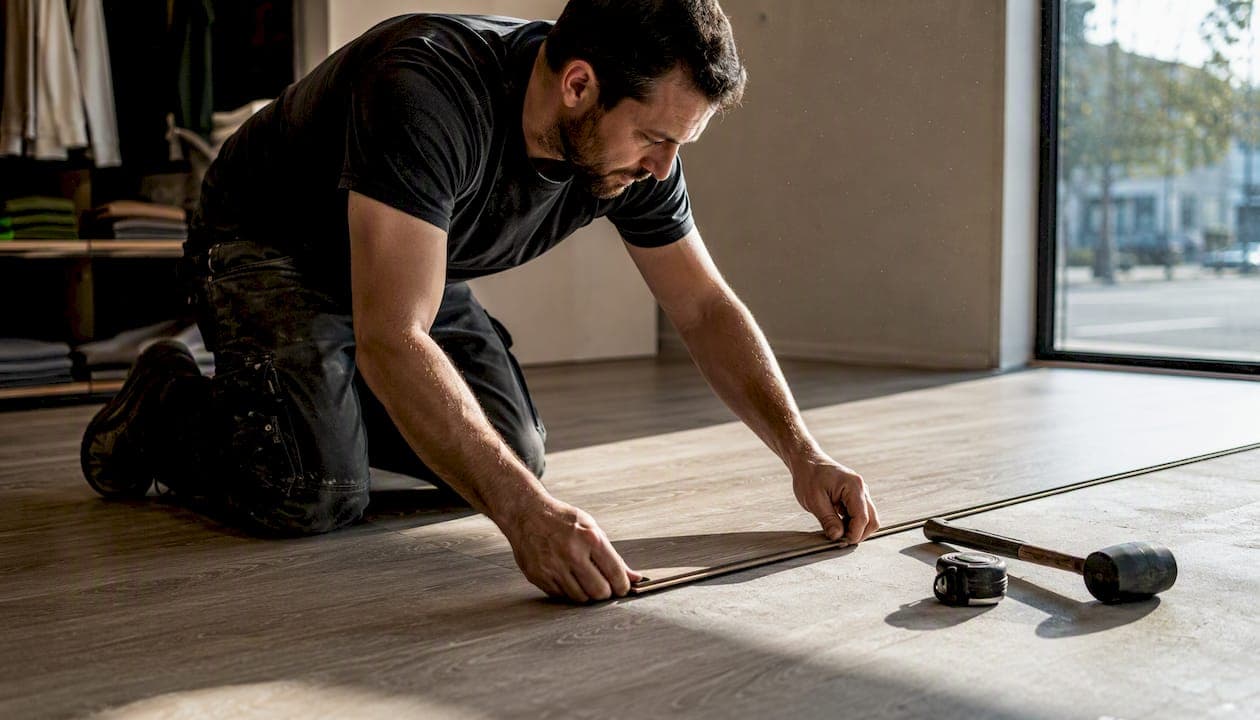
For most retail fit-outs, engineered panels (FRP, fibre cement, or click-lock systems) are the top wall cladding options for shop interiors because they combine impact resistance, fast installation, and easy cleaning. Timber veneer works best for boutique branding; metal for industrial or luxury aesthetics; glass and resin for high-end display walls; PVC and laminate for budget rollouts; acoustic panels for experience-driven stores; and interior film for overnight rebrands with zero demolition.
Quick material picks:
- Engineered panels (FRP, fibre cement, click-lock): High-traffic shops, F&B, checkouts, back-of-house
- Timber and wood veneer: Fashion boutiques, coffee shops, luxury retail feature walls
- Metal (aluminum, stainless steel): Electronics, industrial-brand stores, service counters
- Glass and resin panels: High-end display walls, jewelry, cosmetics
- PVC, MDF, and laminate: Pop-ups, budget fit-outs, multi-location chains
- Acoustic and upholstered panels: Experience stores, music retailers, noisy food halls
- Interior film and vinyl wraps: Seasonal rebrands, fixture refreshes, overnight rollouts
Two numbers worth knowing before you go further: Clicwall panels deliver impact resistance up to 20N versus roughly 5N for standard plasterboard, and Porcelanosa Fitwall panels are available in large-format sizes allowing expansive coverage and fewer joints., enabling faster wall coverage per panel. Honestbuilders handles fast, low-disruption installation and interior film application for retail refits.
Table of Contents
- What are the best engineered panels for retail walls?
- When does timber or wood-veneer cladding make sense for a shop?
- Why do shops choose metal cladding, and when should you avoid it?
- Are glass and resin panels worth it for retail display walls?
- PVC, MDF, and laminate panels: the practical case for budget and mid-range shop fit-outs
- How do acoustic panels improve the retail experience?
- Interior film and large-format vinyl wraps: the fastest way to refresh a shop
- How do you choose the right cladding for your shop?
- What US codes and fire ratings apply to shop wall cladding?
- Which cladding works best for each type of shop?
- Key Takeaways
- The detail most cladding guides skip
- Honestbuilders handles the fit-out so your shop reopens fast
- Useful sources and standards to check before you specify
What are the best engineered panels for retail walls?
Engineered panels are the first choice for high-traffic, hygiene-sensitive, or quick-refit shops. They balance impact resistance, cleanability, and fast installation in a way that most natural materials simply cannot match at commercial scale.
Clicwall's Uniclic® click-lock profile installs dust-free and panels can be dismantled and reused multiple times, which matters when a shop needs to stay open during a refit. Hygienic cladding systems like Proclad-type panels are marketed as 100% waterproof, stain-resistant, and quick to fit, making them a standard specification for food-adjacent retail zones.
| Metric | Clicwall (engineered panel) | Standard plasterboard |
|---|---|---|
| Impact resistance | Up to 20N | ~5N |
| Installation method | Click-lock, dust-free | Wet trade (screws, skim) |
| Reusability | Multiple dismantles | Single use |
| Moisture resistance | High (panel-dependent) | Low |
Pros:
- High impact resistance for cart and trolley zones
- Wipe-clean surfaces reduce cleaning labor
- Click-lock systems allow phased or overnight installs
- Large-format options minimize visible joints
Cons:
- Higher upfront material cost than drywall
- Some engineered panels require specific substrate prep
- Fire-rating varies by product; always request the test report
Best uses: checkout runs, aisle walls, back-of-house, shop-in-shop partitions, and any zone where a cart or trolley regularly contacts the wall.
Pro Tip: Before specifying any engineered panel, ask the manufacturer for the actual fire-test report (not just a product brochure claim) and confirm the substrate your contractor plans to use is compatible with the panel's warranty conditions.
When does timber or wood-veneer cladding make sense for a shop?
Timber and veneer deliver warmth and brand character that no engineered panel replicates. The trade-off is that the wrong species or finish in a high-moisture or high-traffic zone will look tired within a year.
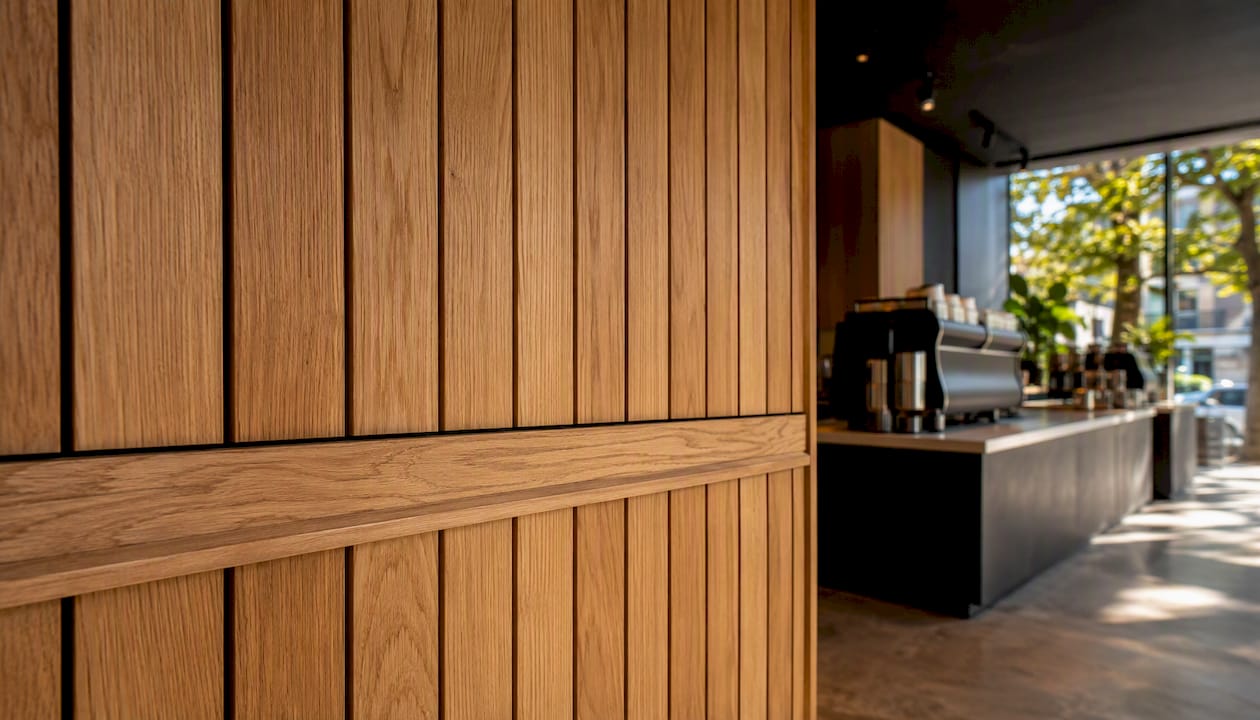
Wood cladding ranges from budget softwoods like pine to premium hardwoods like oak and walnut, plus specialist charred finishes such as Yakisugi. Each step up the price ladder brings better durability and a more distinct aesthetic, but also tighter maintenance requirements. Slatted oak behind a coffee counter reads as premium without the cost of solid panels. A walnut feature wall in a luxury boutique justifies its price because it photographs well and ages gracefully. Sealed cedar or thermally modified timber handles humidity better than untreated softwood, making it usable in areas with occasional moisture exposure.
Engineered veneer (a thin real-wood face over an MDF or plywood core) is the practical middle ground: it costs less than solid timber, stays more dimensionally stable in air-conditioned retail environments, and can be refinished once or twice before replacement. Solid timber is harder to justify unless the brand story specifically demands it.
For matching timber wall finishes with complementary door and millwork species, interior door finish guides are a useful reference when coordinating a full shop fit-out.
Maintenance note: Seal all timber cladding with a commercial-grade finish before opening. Wax-based finishes look beautiful but require quarterly re-application in high-touch zones. Hard lacquer or UV-cured oil is lower maintenance and holds up better under daily cleaning.
Why do shops choose metal cladding, and when should you avoid it?
Metal panels are ideal where a sleek, durable, low-maintenance finish is the priority. Electronics retailers, luxury goods stores, and industrial-brand concepts all use metal to signal precision and permanence.
Best uses:
- Feature walls and accent bands in contemporary or luxury retail
- Splashbacks and service counter surrounds
- High-end display backdrops where a reflective or brushed finish amplifies product presentation
Pros:
- Excellent durability and scratch resistance (stainless steel especially)
- Wipe-clean and hygienic
- Matte powder-coat finishes eliminate glare issues
- Aluminum panels are lightweight and easy to handle on-site
Cons:
- Corrugated or ribbed metal amplifies ambient noise, a real problem in already-loud retail environments
- Thin aluminum dents under direct impact; specify a heavier gauge for cart-contact zones
- Polished finishes show fingerprints constantly and require daily maintenance
- Cold visual temperature can work against warm, approachable brand positioning
Installation requires concealed fastener systems, precise edge trims, and a flat, rigid substrate. A contractor who has not worked with metal panels before will likely leave visible gaps or misaligned joints. Ask for examples of previous metal panel installs before signing off.
Are glass and resin panels worth it for retail display walls?
Glass and resin deliver a high-reflective, premium look that genuinely elevates product displays. The catch is cost, weight, and the non-negotiable safety requirements.
Back-painted glass is the most common choice: it comes in any color, cleans easily, and creates a seamless backdrop for product shelving. Ceramic-coated glass adds texture. High-gloss resin panels are lighter than glass and can be backlit, which makes them a strong option behind display cases in jewelry or cosmetics retail.
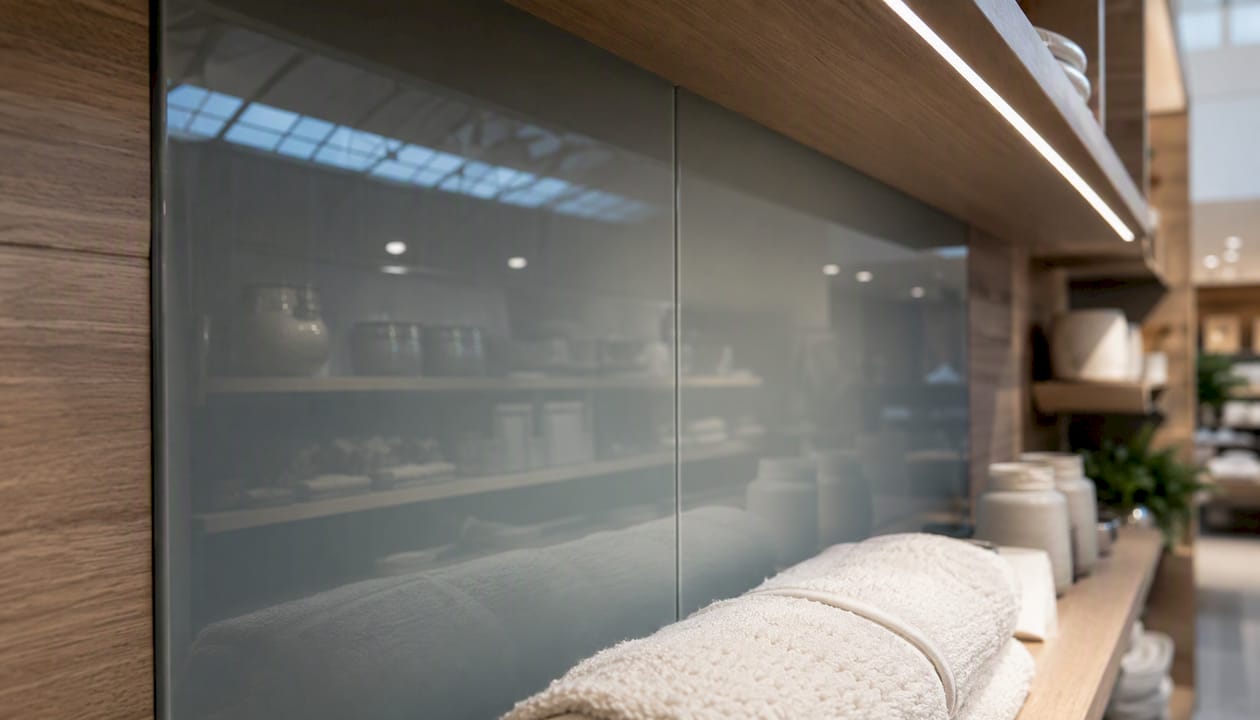
Safety is not optional. Any glass used in a retail wall application must be tempered or laminated to meet ANSI Z97.1 and ASTM C1048 standards for safety glazing. Confirm compliance with your glazing supplier before ordering; a standard glass panel that shatters in a busy store is a liability issue, not just a design problem.
Pros:
- Scratch-resistant (tempered glass)
- Hygienic and easy to clean
- Backlighting through resin panels increases perceived product value
Cons:
- Higher cost per square foot than most panel alternatives
- Heavy; substrate and fixing system must be engineered for the load
- Glare from polished glass can interfere with product visibility under certain lighting angles
- Chips and cracks are not repairable; full panel replacement required
Design tip: Position resin or back-painted glass panels behind key product displays and use warm LED strip lighting behind or above the panel. The reflected light makes products appear more premium without additional display fixtures.
PVC, MDF, and laminate panels: the practical case for budget and mid-range shop fit-outs
PVC, MDF, and decorative laminate panels are cost-effective and fast to install. They remain the dominant choice for pop-up shops, franchise rollouts, and any project where speed and budget outweigh long-term durability.
Current trends point toward textured PVC, 3D MDF, and sustainable materials like recycled MDF and bamboo as the direction for design-forward retail in 2026. The finish options have improved significantly; a well-specified laminate panel can convincingly mimic timber, stone, or concrete at a fraction of the material cost.
Pros:
- Lowest installed cost of any panel category
- Fast to cut and fix; minimal specialist labor required
- Wide range of printed and textured finishes
- Moisture-resistant PVC works in bathrooms and wet-area retail
Cons:
- MDF swells and delaminates in humid or wet conditions if not properly sealed
- PVC can yellow under prolonged UV exposure near windows
- Lower impact resistance than engineered panels; not suitable for cart-contact zones
- Cheaper laminates show surface wear within 18–24 months in high-traffic areas
Cost is driven primarily by finish quality and panel thickness. A basic PVC panel costs a fraction of a premium laminate with a textured stone finish. For commercial renovation budget planning, factor in replacement cycles: a cheaper panel replaced every two years may cost more over five years than a mid-range engineered panel installed once.
How do acoustic panels improve the retail experience?
Acoustic and upholstered panels improve comfort and perceived quality in busy retail spaces. In a loud food hall or a music store, uncontrolled reverberation makes the space feel chaotic and drives customers out faster.
The key specification metric is the Noise Reduction Coefficient (NRC). An NRC of 0.0 means a surface reflects all sound; 1.0 means it absorbs all sound. Most fabric-wrapped acoustic panels for retail applications fall in the 0.65–0.90 NRC range, which is enough to noticeably reduce echo in a mid-sized retail space. Acoustic panels should be specified using NRC values and flame-retardant fabrics in public retail spaces; removable covers make long-term hygiene management practical.
Pros:
- Measurable reduction in ambient noise and reverberation
- Fabric and felt finishes can be printed or colored to match brand identity
- Perforated wood panels combine acoustic absorption with a natural aesthetic
Cons:
- Fabric surfaces absorb spills and odors; not suitable for food-contact zones without protective covers
- Flame-retardant fabric certification (NFPA 701 or equivalent) is required in commercial spaces; confirm before ordering
- Higher maintenance than hard-surface panels; covers need periodic cleaning or replacement
For experience-driven retail, acoustic panels on the upper wall or ceiling perimeter combined with hard-surface cladding at dado height is a practical combination: you get the acoustic benefit without sacrificing cleanability at the zones customers touch.
Interior film and large-format vinyl wraps: the fastest way to refresh a shop
Interior film application is the fastest low-disruption surface upgrade available for shop walls, fixtures, and furniture. A skilled team can complete a full fixture wrap or accent wall overnight, with the shop open for business the next morning.
Porcelanosa Fitwall panels are available in large-format sizes allowing expansive coverage and fewer joints., enabling fast surface coverage with minimal joints. Interior film achieves a similar visual continuity on existing surfaces without demolition or wet trades.
When interior film is the right call:
- Seasonal rebrands or campaign-specific wall graphics that need to change every few months
- Fixture and furniture refreshes where replacing the substrate is not cost-justified
- Accent walls in leased spaces where permanent cladding would violate lease terms
- Multi-location rollouts where consistency and speed matter more than longevity
- Budget-constrained projects where the visual result needs to match a higher-cost material
Limitations: Film is not recommended over surfaces with active moisture ingress, structural damage, or significant texture variation. It also has a finite lifespan (typically 5–7 years for quality cast vinyl in interior applications) and is not a substitute for structural cladding in high-impact zones.
For projects where minimizing disruption during warehouse or commercial space refurbishment is the priority, film and click-lock panel systems are the two fastest options available.
How do you choose the right cladding for your shop?
Pick the material family that aligns with your primary constraint first (downtime, impact resistance, hygiene, or branding), then refine for finish and budget. Everything else is a secondary decision.
Decision checklist:
- Downtime tolerance: Can you close for a full fit-out, or do you need overnight/phased installs? Click-lock and film systems are the only realistic options for live-trading refits.
- Impact zones: Map where carts, trolleys, or high foot traffic contact the wall. Specify engineered panels or metal at those points; timber or glass elsewhere.
- Hygiene and moisture: Food-adjacent zones need waterproof, wipe-clean surfaces with confirmed fire ratings. Wet areas need moisture-rated panels, not MDF.
- Fire and code compliance: Request the actual test report, not a brochure claim. Confirm the product meets your local building code and AHJ (Authority Having Jurisdiction) requirements.
- Maintenance plan: Who cleans it, how often, and with what products? A beautiful material with a high-maintenance finish is a liability in a busy shop.
- Budget and lifecycle: Compare installed cost plus replacement cycle, not just material price.
- Acoustic needs: If the space is loud, add NRC-rated panels to the spec before finalizing the layout.
- Design and branding: Confirm finish samples in-situ under your actual store lighting before ordering full quantities.
Questions to ask contractors:
- Can you provide the fire-rating test report for this specific product?
- What is the impact resistance rating, and do you have manufacturer data to support it?
- What is the warranty, and what voids it?
- What is the realistic installation timeline, and can it be phased or done off-hours?
- What substrate prep is required, and is it included in your quote?
Red flags: A contractor who cannot produce a fire-rating document, offers a vague warranty, insists on a full shutdown when click-lock systems exist, or cannot explain the substrate requirements for the material they are recommending.
What US codes and fire ratings apply to shop wall cladding?
Verify material fire classification and safety glazing compliance before specifying. Missing documentation is not a minor paperwork issue; it can halt an inspection, void your insurance, or require costly rework after installation.
Key standards to request:
- UL listings: Request the UL product listing number for any panel claiming a fire rating. Verify it at UL Product iQ.
For food and beverage retail, also confirm NSF/ANSI 2 compliance for any surface in food-contact or food-adjacent zones. Wipe-clean surfaces need to be verified against the cleaning agents your staff will actually use; some commercial cleaners degrade panel finishes or void warranties.
Honestbuilders coordinates fire-documentation retrieval and confirms code compliance as part of the specification and installation process for commercial fit-outs.
Which cladding works best for each type of shop?
The fastest way to narrow your shortlist: match the material to the shop's primary operational demand.
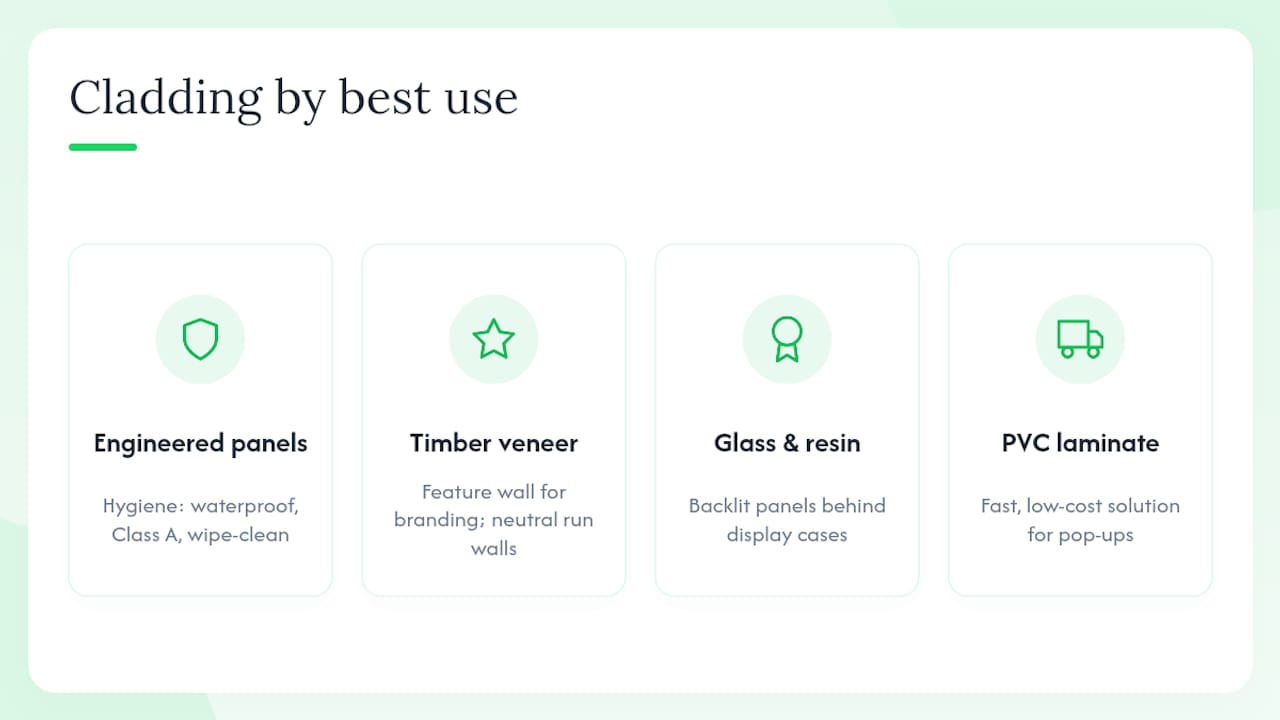
Grocery and F&B: Engineered panels (FRP or hygienic PVC cladding) at full wall height, with a stainless steel or solid surface splashback at food-prep zones. Prioritize waterproof, Class A fire-rated, and wipe-clean above everything else.
Fashion boutique: Timber veneer or slatted wood feature wall behind the cash desk; engineered panel or painted plaster on run walls. The feature wall carries the brand; the run walls just need to be durable and neutral.
Electronics retail: Metal accent panels or back-painted glass on display walls; engineered panels on high-traffic run walls. Cladding choices like stone, timber slats, and metal interact directly with lighting strategies to raise perceived product value, and electronics retail depends on that effect more than most categories.
High-end jewelry or cosmetics: Back-painted glass or resin panels behind display cases, backlit. Acoustic panels on upper walls to reduce ambient noise and create a quieter, more considered shopping experience.
Pop-up or seasonal store: PVC or laminate panels for speed and cost; interior film for fixture wraps and brand graphics. Cladding can serve as a cost-effective alternative to expensive timber or tile finishes, which matters when the fit-out budget for a pop-up is tight.
Service counters (pharmacy, bank, service desk): Engineered panels for impact resistance; metal or glass accent panels for the counter face. Acoustic panels behind the counter improve speech intelligibility.
Combination approach: Engineered panel base (dado height) plus timber veneer accent above works in most mid-range retail categories. It gives you durability where it matters and warmth where it shows. For experience stores, add acoustic panels on the upper wall perimeter and a resin or glass display back on the feature wall.
Phasing: If budget or downtime is a constraint, start with interior film on fixtures and feature walls in the first phase, then replace with permanent panels in a second phase during a planned closure. This approach keeps the shop trading and spreads the capital cost.
Key Takeaways
The single most important decision in any shop cladding project is matching the material to your primary constraint: downtime, impact resistance, hygiene, or branding — everything else follows from that.
| Point | Details |
|---|---|
| Match material to primary constraint | Identify whether downtime, impact resistance, hygiene, or branding drives your spec before comparing finishes or prices. |
| Request fire and impact documentation | Ask for the ASTM E84 test report and impact resistance data before signing off on any material; brochure claims are not sufficient. |
| Use click-lock or film for live-trading refits | Clicwall-type panels (up to 20N impact resistance and reusable up to 10 times) and interior film allow dust-free, overnight installs that keep the shop open. |
| Plan maintenance before you specify | Confirm cleaning agents, frequency, and who is responsible; a high-maintenance finish in a busy shop will look worn within months. |
| Honestbuilders for fast commercial fit-outs | Honestbuilders handles engineered panel installs, interior film application, and off-hours staged work for retail refits across commercial properties. |
The detail most cladding guides skip
Most articles on interior shop cladding designs treat material selection as a design decision. It is actually a logistics decision that happens to have design consequences.
The shops that end up with the wrong cladding are almost never the ones that picked the wrong aesthetic. They are the ones that specified a beautiful material without asking two questions: who installs it in a live trading environment, and who maintains it for the next five years?
Timber veneer looks extraordinary in a boutique. It also requires a contractor who knows how to sequence the install around trading hours, seal the panels correctly for commercial cleaning, and handle the inevitable scratch or dent without replacing the entire wall. A contractor who has only done residential timber work will get the aesthetics right and miss every one of those operational details.
The same logic applies to acoustic panels in food retail. The NRC value is real and measurable. But fabric-wrapped panels in a food hall without removable, washable covers become a hygiene problem within six months. The acoustic performance does not matter if the panels cannot be maintained.
The practical sequence that works: decide on the material family based on operational constraints, then choose the finish, then confirm the contractor has commercial retail experience with that specific material category. Sample approvals in-situ under store lighting, not in a showroom. And keep the manufacturer's test reports and warranty documents in the project folder before the first panel goes up.
Honestbuilders handles the fit-out so your shop reopens fast
Choosing the right cladding material is half the job. The other half is finding a team that can install it without shutting your shop down for a week.
Honestbuilders specializes in fast, low-disruption commercial fit-outs: engineered panel installs, interior film application, and staged overnight work for retail spaces that need to keep trading. The service covers site survey, material sourcing, fire-document coordination, and off-hours installation, with no hidden charges and a clear timeline before work starts.

For shop owners who need a quick turnaround, interior film application can refresh walls, fixtures, and furniture in a single overnight session. For longer refits, Honestbuilders stages the work around your trading hours so revenue loss is minimal.
Request a site quote and ask for sample swatches at Honestbuilders.sg. WhatsApp +65 9447 9696 for a free, no-obligation quote.
Useful sources and standards to check before you specify
Before finalizing any material specification, pull the actual test reports, not just product pages.
- Clicwall wall panels for retail | Unilin Panels
- Clicwall wall panels for retail | Unilin Panels
- Fitwall® in the retail sector: décor for shops and commercial spaces - | PORCELANOSA
- Proclad Wall & Ceiling Panels For Retail
- Interior Wood Cladding Ideas for Interior
- Interior Wall Cladding Materials for Modern Hotel and Retail Spaces
- Wall panel design ideas (DesignCafe)
- Wall cladding (RoomCrafty)
- 23 Best Interior Wall Cladding Designs & Ideas
Pro Tip: Scan and save every manufacturer test report and warranty document to a shared project folder before installation begins. If an inspector asks for fire-rating documentation on-site and you cannot produce it, work stops.