
Warehouse renovation requirements are the set of regulations, design parameters, and operational standards that govern safe, compliant, and efficient facility upgrades. Getting these wrong does not just delay your project. It can trigger shutdowns, failed inspections, and costly rework. This guide covers the full scope of warehouse renovation requirements explained for business owners and facility managers: mandatory permits, structural design standards, cost tiers, and the execution pitfalls that derail even well-funded projects. Whether you are renovating a warehouse for the first time or managing a complex phased overhaul, the decisions you make before breaking ground determine everything.
What regulatory permits and safety standards apply to warehouse renovations?
Warehouse renovation standards begin with permits, and the list is longer than most facility managers expect. A single renovation project can require building permits for structural changes, fire protection approvals, zoning clearances, and operational compatibility reviews. Comprehensive permitting goes well beyond a standard construction permit and requires coordinated submissions to multiple authorities. Missing one submission can halt the entire project.
Fire safety codes and occupancy permits are non-negotiable. Any change to a warehouse's layout, load-bearing elements, or mechanical systems triggers a fresh review of fire suppression coverage and emergency egress. A No Objection Certificate (NOC) or equivalent approval is often mandatory before renovation work can legally proceed in many jurisdictions.

Racking systems carry their own compliance track. Under AS 4084.2:2023, all industrial racking systems require a mandatory annual audit by a qualified person. That audit catches structural dangers like dented uprights or twisted beams before they cause a collapse. Any renovation that adds, moves, or modifies racking must reset this audit cycle.
OSHA sets the baseline for workplace safety across warehouse operations. OSHA mandates at least eight core standards for warehouse environments, including forklift operator certification every three years with documentation kept on file. Renovation projects that change traffic routes, floor surfaces, or equipment access points must be re-evaluated against these standards before reopening affected areas.
Key permit and compliance items to track:
- Building permits for structural, electrical, and plumbing changes
- Fire protection and suppression system approvals
- Zoning and land-use clearances
- NOC or equivalent authority sign-off
- Racking system audit under AS 4084.2:2023
- OSHA forklift certification and safety documentation
- Occupancy permit updates after layout changes
Pro Tip: Assign one person on your team as the permit coordinator. Fragmented permit tracking across departments is the single most common reason warehouse renovation timelines slip by weeks.
How should structural and design considerations shape your renovation plan?
Structural integrity is the foundation of every warehouse renovation. Floor load capacity must be verified before any new racking, equipment, or mezzanine is installed. A floor rated for a certain load per square foot may not support modern high-density storage systems without reinforcement. Skipping this verification is one of the most expensive mistakes a facility manager can make.
Clear height is a defining factor in modern warehousing. Facilities with 32 feet or more of clear height can accommodate high-bay racking and automated storage systems that dramatically increase throughput. Older warehouses often fall short of this threshold, and raising roof structures or lowering floor grades is a significant but frequently justified investment.
Seismic retrofits matter in earthquake-prone regions. Foundation reinforcements and moment frames protect both the structure and the people inside it. Any renovation in a seismic zone that touches the building envelope or load-bearing elements requires a structural engineer's sign-off before permits are issued.
Mechanical systems upgrades are where space planning and engineering intersect. HVAC systems sized for an older, lower-occupancy layout will underperform in a modernized facility. Fire suppression coverage must be recalculated whenever ceiling heights or storage configurations change. LED lighting retrofits improve both safety and energy costs and are among the highest-return upgrades available.
Design elements to address in your warehouse remodeling checklist:
- Floor load capacity verification and reinforcement
- Clear height assessment and potential structural lift
- Seismic retrofit requirements based on location
- HVAC recalculation for new occupancy and layout
- Fire suppression system redesign
- LED lighting upgrade
- Electrical capacity for automation and charging stations
- Pedestrian and forklift traffic segregation
Pro Tip: Commission a structural engineer's report before finalizing your renovation budget. Discovering a load capacity problem mid-project costs three to five times more to fix than catching it during the assessment phase.
What are the typical cost tiers for warehouse renovation projects?
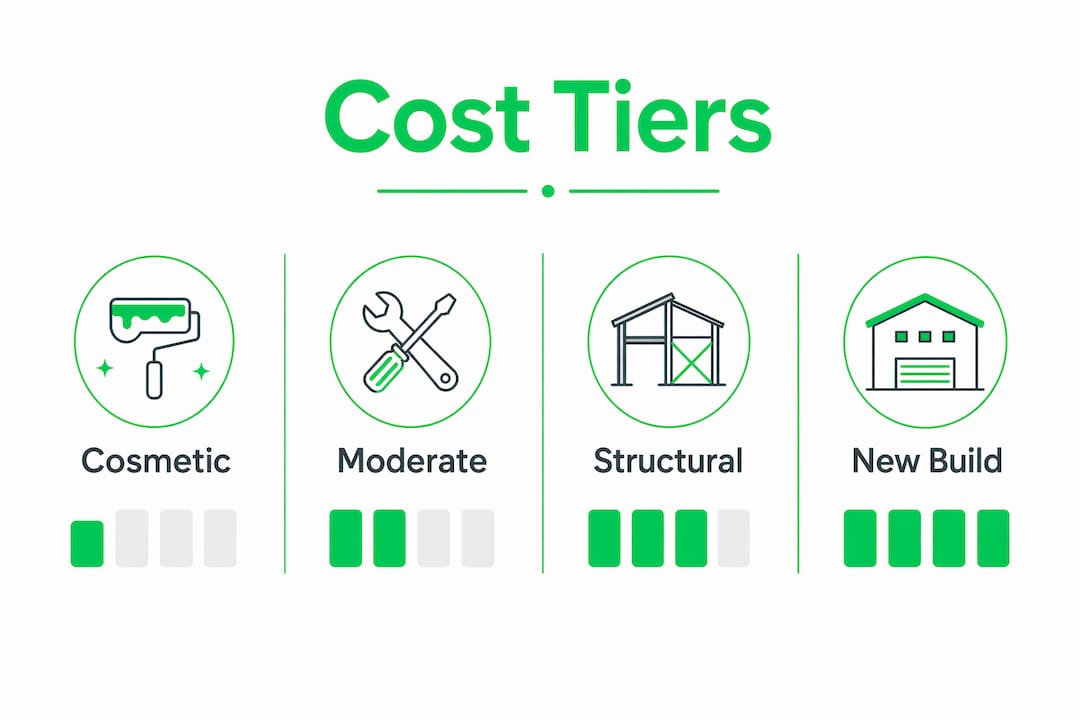
Renovation costs follow a clear three-tier structure based on project scope. Understanding these tiers helps facility managers set realistic budgets and avoid the trap of underestimating complexity.
| Renovation tier | Scope | Approximate cost per SF |
|---|---|---|
| Minor cosmetic refresh | Paint, flooring, lighting, minor repairs | $20–$60 |
| Moderate retrofit | Layout changes, systems upgrades, racking | $75–$120 |
| Major overhaul | Structural reinforcement, automation, full rebuild | $120–$150+ |
These cost tiers reflect the reality that warehouse renovation costs scale sharply with structural complexity. A cosmetic refresh is a maintenance expense. A major overhaul is a capital investment that changes the asset's value and operational capacity.
Renovation versus new construction is a comparison every facility manager should run early. Renovating an existing warehouse typically costs 30–60% less than new construction when seismic compliance, electrical capacity, and clear height are planned correctly. That gap is large enough to justify a thorough feasibility study before any new-build decision is made.
One investment area that consistently outperforms expectations is the office component. Office-area modernizations such as updated break rooms, restrooms, and admin suites yield higher tenant retention and rental premiums than warehouse-floor cosmetic work alone. Facility managers often overlook this because the warehouse floor feels like the priority. The data says otherwise.
Phased rollouts protect cash flow and reduce operational disruption. Rather than shutting down an entire facility for a full overhaul, phasing the work by zone keeps throughput moving and spreads capital expenditure across multiple budget cycles. Budget 3–6 months of operating cash reserves to cover unexpected permit delays or compliance changes. That buffer is not optional. It is the difference between a project that finishes on schedule and one that stalls at a critical milestone.
What are the best practices and common pitfalls in warehouse renovation execution?
Thorough property assessment before any work begins separates successful projects from costly failures. A baseline audit of the existing structure, mechanical systems, and compliance status gives you a clear picture of what you are working with. Skipping this step means your budget is built on assumptions, and assumptions fail under pressure.
Stakeholder consultation is not a formality. Warehouse operators, logistics managers, and safety officers all have ground-level knowledge that engineers and architects miss. Their input on traffic flow, storage needs, and daily operational patterns shapes a renovation plan that actually works when the facility reopens.
Common pitfalls that derail warehouse renovation projects:
- Ignoring traffic management requirements like pedestrian segregation and load signage, which leads to failed safety inspections
- Underestimating permit timelines and failing to build buffer time into the project schedule
- Treating fire suppression as an afterthought rather than a primary design constraint
- Failing to update OSHA documentation after layout or equipment changes
- Overlooking cash reserves, which forces project pauses when unexpected compliance issues arise
Documented checklists are the operational backbone of a compliant renovation. Local building codes evolve, and a checklist that was current 18 months ago may already be outdated. Assign a compliance officer or engage a specialist contractor to track code changes throughout the project lifecycle.
Pro Tip: Schedule renovation phases around your peak and off-peak operational cycles. Renovating during your slowest quarter reduces the revenue impact of temporary capacity reductions and gives your team more flexibility to manage disruptions.
Key Takeaways
Warehouse renovation success depends on addressing regulatory, structural, and operational requirements before any physical work begins.
| Point | Details |
|---|---|
| Permits cover multiple agencies | Building, fire, zoning, and NOC approvals are all required before work can legally start. |
| Racking audits reset with changes | AS 4084.2:2023 requires annual audits; any racking modification restarts the compliance cycle. |
| Renovation beats new construction | Renovating typically costs 30–60% less than building new when planned correctly from the start. |
| Office upgrades drive tenant value | Modernizing break rooms and admin areas yields higher retention and rental premiums than floor work alone. |
| Cash reserves prevent project stalls | Budget 3–6 months of operating reserves to absorb permit delays and unexpected compliance costs. |
What I've learned from watching warehouse renovations go wrong
Facility managers consistently underestimate how much of a warehouse renovation is actually a compliance project. The physical construction is the easy part. The hard part is navigating overlapping permit requirements, coordinating inspections across multiple agencies, and keeping operations running while half the facility is under scaffolding.
The renovation-versus-new-build calculation almost always favors renovation when the structural bones are sound. The 30–60% cost advantage is real, but it evaporates quickly if you discover mid-project that the floor slab cannot support your new racking load or that the electrical panel needs a full replacement. Early structural and safety evaluations are not a cost. They are insurance.
Phased implementation is not just a cash flow strategy. It is an operational continuity strategy. I have seen projects where a facility manager tried to complete a full overhaul in one push, only to face a permit delay that left the entire warehouse offline for six weeks. A phased approach would have kept at least 60% of capacity running throughout.
The detail that catches most facility managers off guard is traffic management. Pedestrian and forklift segregation is not a design preference. It is a safety requirement, and failing to document it properly will get your project shut down during inspection. Treat it as a primary design constraint from day one, not a finishing detail.
— Rayner
Honestbuilders can handle your warehouse renovation from permits to completion
Warehouse renovations involve more moving parts than most commercial projects. Structural assessments, permit coordination, mechanical upgrades, and compliance documentation all need to happen in the right sequence.

Honestbuilders handles commercial renovation work across Singapore, including warehouses, shops, and offices. The team manages structural modifications, electrical and plumbing upgrades, and space planning with full accountability from first assessment to final handover. No hidden charges, no runaround. WhatsApp Honestbuilders at +65 9447 9696 for a free, no-obligation quote and get a clear picture of your project scope before committing to anything.
FAQ
What permits are needed for a warehouse renovation?
Most warehouse renovations require building permits, fire protection approvals, zoning clearances, and in many cases a No Objection Certificate (NOC) from the relevant authority. The exact requirements depend on the scope of work and local jurisdiction.
How much does it cost to renovate a warehouse?
Warehouse renovation costs fall into three tiers: minor cosmetic work runs $20–$60 per square foot, moderate retrofits run $75–$120 per square foot, and major structural overhauls run $120–$150 or more per square foot.
Is renovating a warehouse cheaper than building new?
Renovating an existing warehouse typically costs 30–60% less than new construction when seismic compliance, electrical capacity, and clear height requirements are addressed correctly during the planning phase.
How often do warehouse racking systems need to be inspected?
Under AS 4084.2:2023, all industrial racking systems require a mandatory annual safety audit by a qualified person. Any renovation that modifies racking should trigger a fresh audit cycle.
What is the biggest mistake facility managers make during warehouse renovations?
Ignoring traffic management requirements, specifically forklift and pedestrian segregation and proper load signage, is one of the most common causes of failed safety inspections and project shutdowns during warehouse renovations.