Mechanical and electrical (M&E) works are defined as the full suite of systems that make a commercial building function: HVAC, electrical power distribution, lighting, plumbing, fire safety, and building controls. The role of M&E works in commercial renovation extends far beyond installation. These systems determine whether a building meets Singapore's regulatory standards, how much energy it consumes, and whether tenants can operate without interruption. Property developers and business owners who treat M&E as an afterthought consistently face cost overruns, compliance failures, and operational disruption. Getting M&E right from the start is the single most consequential decision in any commercial renovation project.
What are the key components of commercial M&E works?
M&E engineering is no longer supporting infrastructure. It is central to building functionality, performance, and asset value. A commercial renovation without a clear M&E scope is a project without a spine.
The core systems in commercial M&E works include:
- HVAC systems: Heating, ventilation, and air conditioning control indoor climate and air quality. Modern integrated HVAC with air-to-water heat pumps can reduce energy consumption by up to 40% compared to older systems. That figure translates directly into lower utility bills and a stronger case for green lease compliance.
- Electrical power distribution: This covers the main switchboard, sub-distribution boards, cabling, and circuit protection. Electrical work follows two phases: first-fix wiring before plastering and second-fix fitting installations afterward. Compliance certification under standards like BS 7671 is mandatory at both stages.
- Lighting systems: Commercial lighting design affects productivity, safety, and energy use. LED systems with occupancy sensors and daylight harvesting controls are now standard in well-specified renovations.
- Plumbing and drainage: Covers water supply, sanitary drainage, and hot water systems. In commercial fit-outs, plumbing scope often expands to include staff amenities, kitchen facilities, and accessible restrooms.
- Fire safety systems: Sprinklers, fire alarm panels, smoke detectors, and emergency lighting are non-negotiable in Singapore's commercial buildings. These systems require separate specialist certification.
- Building controls and automation: Integrated building management systems (BMS) tie HVAC, lighting, and security into a single monitored platform.
Integration between these systems is where most projects face friction. HVAC ductwork competes with structural beams for ceiling space. Electrical conduits must route around plumbing runs. Coordinating these trades early prevents costly rework.
Pro Tip: Map all M&E system routes on a coordinated drawing before any first-fix work begins. Conflicts caught on paper cost nothing. Conflicts caught on site cost weeks.
How do regulations and compliance affect M&E works in commercial renovations?
Compliance is not optional in commercial renovation. Singapore's Building and Construction Authority (BCA) governs approvals for commercial alterations, and unauthorized works carry serious consequences.
BCA requires 2–4 weeks for simple commercial alteration approvals and 4–6 weeks for complex projects involving structural changes or change of use. That timeline means M&E design must be finalized well before construction starts. Fees range from S$200 to S$500 plus per-square-meter charges depending on project scope. Unauthorized works risk stop-work orders and costly demolition.
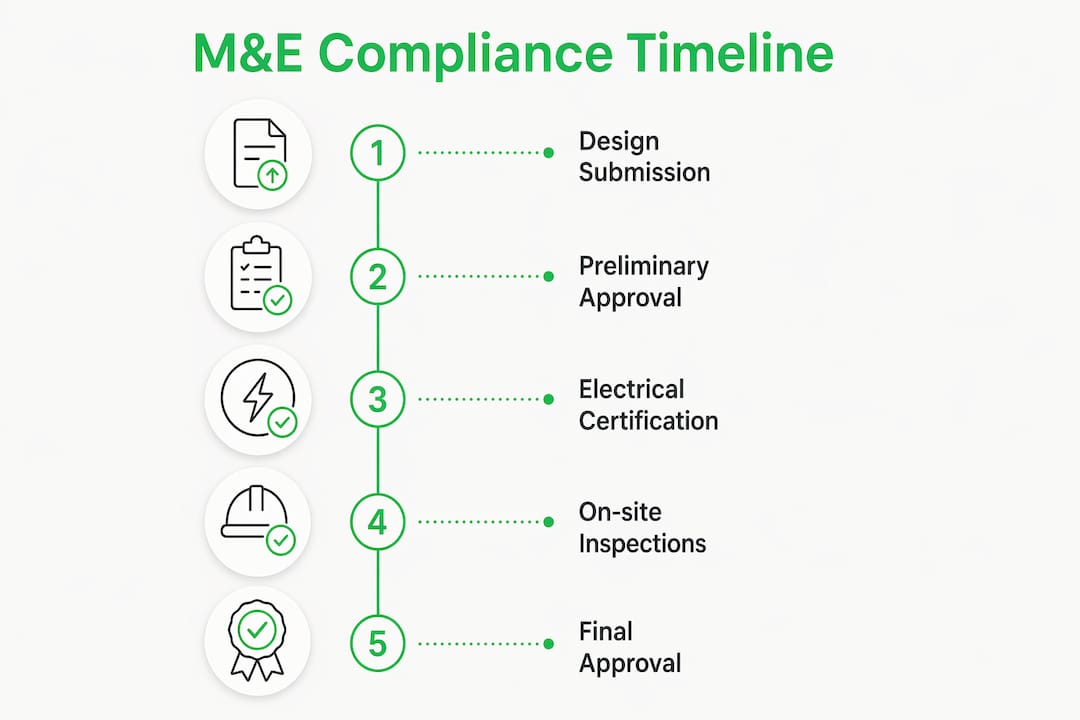
The table below outlines the typical regulatory steps for commercial M&E works in Singapore:
| Regulatory step | Typical timeline | Key requirement |
|---|---|---|
| Preliminary design submission | 2–4 weeks before application | Qualified Person (QP) endorsement |
| BCA plan approval | 2–6 weeks | Structural and M&E drawings |
| Licensed contractor appointment | Before works begin | BCA-registered contractor |
| Electrical installation inspection | Post-installation | SP Group or licensed inspector |
| Fire safety certification | Before occupation | SCDF approval |
| Temporary Occupation Permit (TOP) | Upon completion | All systems commissioned |
Certified professionals play a decisive role in this process. Engaging licensed electricians who can self-certify compliance prevents legal liabilities and insurance refusal. Work done by uncertified contractors is uninsurable and may void the building's fire certificate.
Understanding renovation payment structures also helps developers align compliance milestones with payment schedules, reducing financial exposure at each approval stage.
Pro Tip: Appoint your Qualified Person before finalizing your M&E contractor. The QP's drawings drive the approval timeline. Starting without one adds weeks of delay.
What are the best M&E strategies for efficiency and cost management?
The most effective M&E strategy for a commercial renovation starts at the design stage, not the construction stage. Early-stage M&E planning increases tenant interest because these systems directly influence comfort, air quality, and productivity. Developers who integrate M&E design with spatial planning attract stronger tenants and command higher rents.
Four strategies consistently deliver the best results:
-
Integrated design coordination: Use Building Information Modeling (BIM) to coordinate M&E systems with structural and architectural elements before construction. BIM digital twins, combined with IoT sensor monitoring and CMMS platforms, enable real-time asset tracking and compliance documentation. This approach catches clashes before they become site problems.
-
Planned Preventative Maintenance (PPM): Reactive maintenance is a failed strategy. Scheduled PPM programs can reduce emergency repairs by 60–80%, supporting business continuity and protecting asset value. A building that runs on reactive repairs accumulates costs that compound year over year.
-
Energy-efficient system selection: Specifying high-efficiency HVAC, LED lighting with smart controls, and sub-metering from the outset reduces operating costs for the life of the building. These choices also support green lease obligations, which are increasingly required by institutional tenants.
-
Post-occupancy performance monitoring: Post-occupancy data verifies that systems perform as designed and meets green lease energy monitoring obligations. Without this data, owners risk financial penalties and underperforming investments.
"Preventative maintenance should be embedded in annual budgets as a proactive financial strategy to protect long-term property values and operational stability." — The Importance of Preventative Maintenance in Commercial Buildings
Integrating space planning with M&E design from the start avoids the common mistake of finalizing floor layouts before HVAC and electrical routes are confirmed. That sequencing error forces expensive redesigns.
What are common M&E challenges in commercial projects and how to avoid them?
The most common failure in commercial M&E works is the gap between design intent and on-site delivery. Uncoordinated trade execution and disjointed installation are the primary causes of system performance issues after handover. A building that passes inspection but underperforms in operation is a liability, not an asset.
The most frequent pitfalls include:
- Design-delivery gaps: M&E drawings are produced but not enforced on site. Contractors substitute specified equipment with cheaper alternatives. Systems are installed in the wrong sequence, creating access problems for future maintenance.
- Trade coordination failures: HVAC, electrical, and plumbing contractors work from separate drawings without a coordination layer. The result is clashes discovered during installation, which cause delays and cost increases.
- Compliance oversights: Skipping certification at key milestones creates legal exposure. Uncertified electrical work is uninsurable. Fire safety systems installed without SCDF approval block the Temporary Occupation Permit.
- Inadequate site oversight: Without a dedicated M&E consultant or project manager on site, quality slips. Inspections happen too late to catch errors before they are buried in walls or ceilings.
- Ignoring maintenance access: Systems installed without service access panels or adequate clearance become expensive to maintain. This is a design error that shows up as an operational cost years later.
Pro Tip: Require weekly M&E coordination meetings between all trade contractors during the construction phase. Most site conflicts are discovered in these meetings, not during inspections.
Sustained on-site M&E consultancy is not a luxury. It is the mechanism that keeps design intent alive from drawing to commissioning. Developers who cut this cost routinely spend more fixing problems after handover than the consultancy would have cost.
Key Takeaways
M&E works are the operational backbone of any commercial renovation, and their success depends on early integration, certified professionals, and planned maintenance from day one.
| Point | Details |
|---|---|
| M&E defines building performance | HVAC, electrical, fire safety, and controls determine compliance, comfort, and operating costs. |
| Compliance timelines are fixed | BCA approvals take 2–6 weeks; appoint a Qualified Person before finalizing contractors. |
| PPM cuts emergency repair costs | Planned Preventative Maintenance reduces emergency repairs by 60–80%, protecting business continuity. |
| Early planning raises asset value | Integrating M&E design with space planning attracts stronger tenants and supports green lease obligations. |
| Site oversight prevents failures | Uncoordinated trade execution is the leading cause of M&E performance gaps after handover. |
Why M&E foresight separates good renovations from costly ones
I have seen property developers treat M&E as a line item to be cut when budgets tighten. That decision almost always costs more in the end. The systems you cannot see, the ones inside the walls and above the ceilings, are the ones that determine whether a building works or just looks finished.
The developers I have watched succeed consistently do two things differently. They appoint certified M&E engineers at the same time they appoint their architect, not after the floor plan is locked. And they build PPM into the project budget before the building is even handed over. Those two decisions alone eliminate the majority of post-occupancy problems I have seen.
There is also a tenant retention angle that rarely gets discussed. Tenants in competitive commercial markets are increasingly demanding air quality data, energy performance certificates, and BMS access as part of lease negotiations. A building with well-documented, well-maintained M&E systems commands a premium. A building with a history of reactive repairs loses tenants at renewal.
The uncomfortable truth is that M&E works are not a technical specialty you delegate entirely to contractors. As a developer or business owner, you need enough understanding to ask the right questions, hold contractors accountable, and recognize when something is being cut that should not be.
— Rayner
Honestbuilders handles the complexity of commercial M&E works
Commercial renovation projects carry real compliance risk and operational consequences when M&E systems are not handled correctly. Honestbuilders brings workmanship and accountability to every commercial project, from shops and offices to warehouses across Singapore.

Honestbuilders manages commercial renovation projects with a clear process: no hidden charges, no shortcuts on compliance, and no runaround when issues arise. Whether you need electrical works, plumbing, or a full fit-out coordinated across trades, the team shows up and does the job right. WhatsApp Honestbuilders at +65 9447 9696 for a free, no-obligation quote on your next commercial renovation.
FAQ
What does M&E stand for in commercial renovation?
M&E stands for mechanical and electrical. In commercial renovation, it covers HVAC systems, electrical power distribution, lighting, plumbing, fire safety, and building controls.
How long does BCA approval take for commercial M&E works in Singapore?
BCA requires 2–4 weeks for simple commercial alterations and 4–6 weeks for complex projects involving structural changes or change of use.
Why is Planned Preventative Maintenance important for commercial buildings?
Scheduled PPM programs reduce emergency repairs by 60–80% and extend asset life significantly. Reactive maintenance leads to higher costs and business disruption over time.
What happens if M&E works are done without proper certification?
Uncertified electrical work is uninsurable and may void a building's fire certificate. Unauthorized works also risk stop-work orders and mandatory demolition by regulatory authorities.
When should M&E planning begin in a commercial renovation project?
M&E planning should begin at the same time as architectural design. Early integration prevents costly clashes between systems and structural elements, and keeps BCA approval timelines on track.