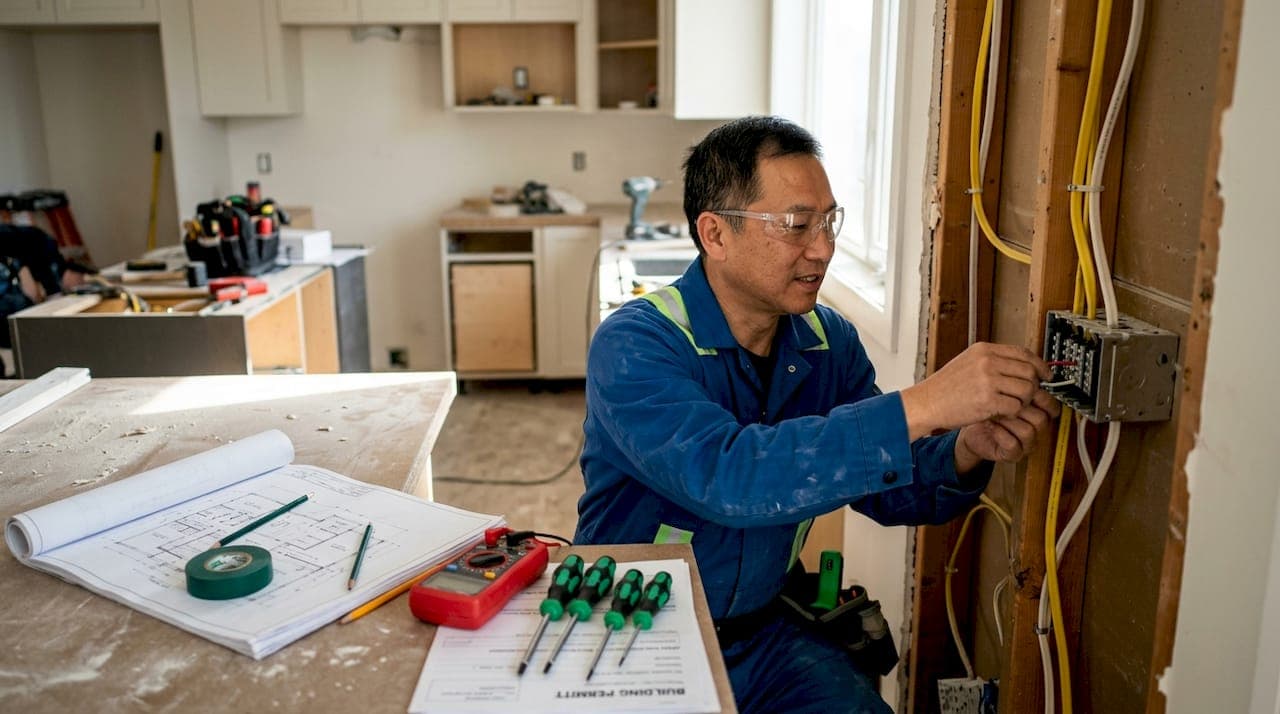
Hiring a licensed electrician for your renovation is the single most effective way to protect your home, your investment, and your family. Electrical faults cause approximately 51,000 fires and nearly 500 deaths annually in the US. That number reflects what happens when electrical work goes wrong. Licensed electricians, meaning professionals who have passed state or national board examinations and meet ongoing training requirements, are the standard the industry sets to prevent exactly those outcomes. The National Electrical Code (NEC) and local municipal codes require licensed work for permits and inspections on virtually every renovation that touches wiring.
Why hire a licensed electrician for your renovation
Licensed electricians hold credentials issued by a licensing board after completing formal apprenticeships, passing written examinations, and demonstrating hands-on competency. That process typically covers electrical theory, load calculations, grounding systems, and current NEC requirements. Unlicensed workers skip every one of those checkpoints.
The NEC updates its standards on a three-year cycle. Licensed electricians must stay current with each revision. That matters during a renovation because older homes often have wiring installed under outdated codes, and a licensed professional knows exactly where those gaps create risk.

Licensing also comes with insurance. A licensed electrician carries general liability coverage and, in most jurisdictions, workers' compensation. If something goes wrong on your property, that coverage protects you. An unlicensed worker leaves you holding the liability.
Key qualifications that separate licensed electricians from unlicensed workers:
- Completion of a formal apprenticeship program (typically 4–5 years)
- Passing a state or national licensing examination covering NEC standards
- Proof of liability insurance and workers' compensation coverage
- Ongoing continuing education tied to NEC code cycles
- A verifiable license number you can check with your local licensing board
Pro Tip: Before signing any contract, ask for the electrician's license number and verify it directly with your state or local licensing board. This takes two minutes and eliminates the most common source of renovation fraud.
How do licensed electricians keep your renovation safe?
Safety in electrical work is not about caution. It is about precision. Licensed electricians select the correct wire gauge for each circuit load, install the right breaker ratings, and follow NEC-mandated spacing and fastening requirements. Each of those details prevents overheating, arcing, and fire.
Two specific protections stand out in modern renovation work. Ground Fault Circuit Interrupter (GFCI) outlets are required in kitchens, bathrooms, garages, and outdoor areas under current NEC rules. Arc Fault Circuit Interrupter (AFCI) breakers are required in bedrooms and living areas. Both technologies exist specifically to stop electrical fires and electrocution before they happen. A licensed electrician installs them correctly and in the right locations.
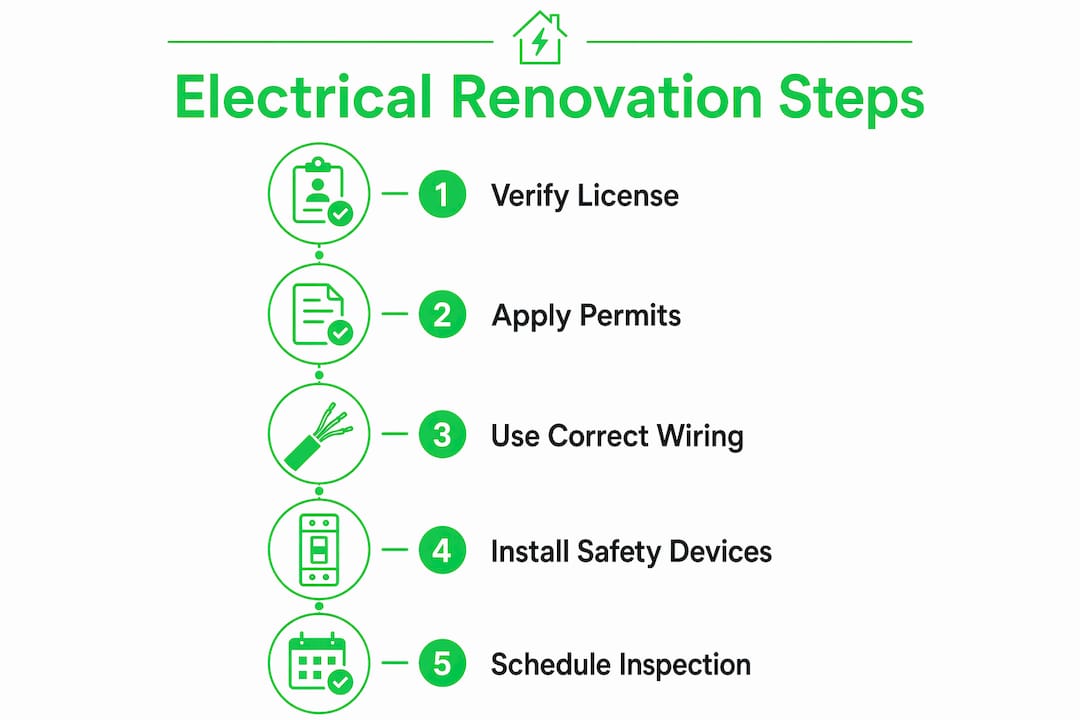
Licensed electricians also diagnose electrical systems as a whole, not just the one outlet or circuit you asked them to fix. That means they catch deteriorated wiring, loose junction boxes, and undersized panels while the walls are still open. Fixing those issues during a renovation costs a fraction of what it costs after drywall goes back up.
What a licensed electrician checks during a renovation walkthrough:
- Panel capacity and breaker condition relative to new load requirements
- Wire insulation integrity, especially in homes built before 1980
- Grounding and bonding throughout the affected circuits
- Presence and placement of GFCI and AFCI protection
- Junction box accessibility and secure connections behind walls
- Compliance of existing work with current NEC and local amendments
Pro Tip: Ask your electrician to document any pre-existing issues they find during the renovation. A written record protects you if an insurance claim or property sale comes up later.
What permits and inspections does electrical renovation work require?
Permits are required for adding circuits, moving outlets, upgrading panels, and any modification to your home's wiring under NEC and local building codes. This is not optional. Skipping permits is not a shortcut. It is a liability that follows the property, not just the owner who made the decision.
Licensed electricians manage the permit application and coordinate inspections directly with the local authority having jurisdiction (AHJ). That process protects you from two expensive outcomes: failed inspections that require tearing out finished work, and legal exposure from unpermitted modifications discovered during a property sale.
Home sales routinely require proof of permitted electrical work. Unpermitted work can delay or kill a sale entirely, forcing costly remediation under time pressure. A licensed electrician's permit history creates a documented record that survives ownership changes.
| Renovation task | Permit required? | Who pulls the permit? |
|---|---|---|
| Adding a new circuit | Yes | Licensed electrician |
| Moving or adding outlets | Yes | Licensed electrician |
| Panel upgrade or replacement | Yes | Licensed electrician |
| Replacing a like-for-like fixture | Typically no | Homeowner or electrician |
| Installing GFCI/AFCI protection | Varies by jurisdiction | Licensed electrician recommended |
The inspection itself is the final checkpoint. An inspector from the AHJ reviews the work against the approved permit drawings. Licensed electricians manage this process and shield homeowners from the rework costs that follow a failed inspection. That project management role is one of the most undervalued benefits of hiring a certified electrician.
Does hiring a licensed electrician actually save you money?
The upfront cost of a licensed electrician is higher than hiring an unlicensed worker. The total cost of ownership tells a different story. Unlicensed electrical work leads to long-term costs running 20–40% higher after corrective work and failed inspections are factored in. The initial savings disappear fast.
Licensed contractors with a permit history also improve property resale value and reduce electrical malfunctions over a 10-year ownership period. Buyers and appraisers treat documented, permitted electrical work as a positive attribute. Undocumented work raises red flags that suppress offers.
Financial benefits of hiring a licensed electrician:
- Warranty coverage on parts and labor, typically backed by the electrician's insurance
- Avoided corrective costs from failed inspections or code violations discovered later
- Preserved homeowner's insurance coverage, which may be voided by unpermitted or unsafe work
- Higher resale value from documented, permitted electrical upgrades
- Energy efficiency gains from properly sized circuits, modern panels, and LED-compatible wiring
Energy efficiency deserves a specific mention. An outdated panel running circuits at or near capacity wastes energy and creates heat. A licensed electrician who upgrades your panel and rewires high-load areas during a renovation reduces that waste. The savings show up on your utility bill every month.
Common myths about unlicensed electrical work
The most persistent myth is that unlicensed work saves money. It does not. Upfront cost differences are misleading because unlicensed work leads to mandatory corrective costs that exceed the initial savings once legal and safety issues surface.
The second myth is that DIY electrical work is sufficient for small jobs. Local codes in most jurisdictions require a licensed electrician for any work that involves the panel, new circuits, or modifications to existing wiring. "Small" jobs that touch those systems require permits regardless of who does the work.
"Insurance companies may deny claims related to non-compliant electrical incidents. Work by licensed electricians preserves homeowner insurance coverage, which may be void if work is unpermitted or unsafe. That denial can leave a homeowner covering fire damage, water damage from suppression systems, or personal injury costs entirely out of pocket."
Hidden electrical issues are the third and most dangerous consequence of unlicensed work. Problems concealed behind closed walls cost far more to fix than problems caught during an open renovation. Licensed electricians provide documented accountability. Unlicensed workers provide none.
Key Takeaways
Hiring a licensed electrician for your renovation protects your safety, preserves your insurance, and delivers better long-term value than any unlicensed alternative.
| Point | Details |
|---|---|
| Safety through precision | Licensed electricians install correct wire gauges, GFCI, and AFCI protection to prevent fires and electrocution. |
| Permit and inspection management | Licensed electricians pull permits and coordinate inspections, protecting homeowners from rework costs and legal risk. |
| Long-term cost savings | Unlicensed work costs 20–40% more over time once corrective work and failed inspections are included. |
| Insurance protection | Unpermitted or unsafe electrical work can void homeowner's insurance and result in denied claims. |
| Property value | Permitted electrical work with a documented history improves resale value and reduces buyer objections. |
What I've learned from watching homeowners skip this step
I have seen the same scenario play out more times than I can count. A homeowner hires an unlicensed worker to save a few hundred dollars on a kitchen renovation. The work looks fine. Then, two years later, they try to sell the property. The buyer's inspector flags the unpermitted panel upgrade. The sale stalls. The homeowner pays a licensed electrician to remediate and re-permit the work under time pressure, at a premium price. The total cost runs three times what the original licensed job would have cost.
The detail most homeowners miss is that a licensed electrician is not just a tradesperson. They are a compliance navigator. They know which tasks trigger permit requirements, how to read the local AHJ's interpretation of the NEC, and how to document work in a way that survives a property sale or insurance claim. That knowledge is not something you can replicate with a YouTube tutorial.
The role of a licensed electrician in a renovation is closer to a project partner than a subcontractor. They catch problems before they become emergencies. They create a paper trail that protects you for as long as you own the property. Peace of mind is not a soft benefit here. It is a documented, insurable, and financially quantifiable outcome.
— Rayner
Honestbuilders handles the electrical work your renovation demands
Electrical work is not the place to cut corners, and Honestbuilders is built on exactly that principle. As Singapore's trusted renovation specialists serving HDB, condo, landed, and commercial properties, Honestbuilders provides licensed electricians who know local code requirements, manage permit coordination, and deliver workmanship backed by accountability.

Whether you are upgrading a panel in a landed home, rewiring a condo kitchen, or handling M&E works in a commercial fit-out, Honestbuilders assigns licensed professionals who handle inspections and documentation from start to finish. No hidden charges, no runaround. Every project is completed to code, on record, and built to last. Visit Honestbuilders.sg or WhatsApp +65 9447 9696 for a free, no-obligation quote.
FAQ
Why is a licensed electrician required for renovation work?
NEC and local building codes require licensed electricians for any work involving new circuits, panel modifications, or wiring changes. Permits and inspections cannot be completed without a licensed professional.
Does unlicensed electrical work void home insurance?
Yes. Insurance companies may deny claims tied to non-compliant or unpermitted electrical work. Licensed electricians ensure your work meets the standards that keep your coverage valid.
How much more does a licensed electrician cost upfront?
Licensed electricians charge more per hour than unlicensed workers. However, unlicensed work leads to total costs running 20–40% higher once corrective work, failed inspections, and legal exposure are included.
What happens if I sell my home with unpermitted electrical work?
Unpermitted electrical work is a disclosed liability that can delay or block a property sale. Buyers and lenders require proof of permitted work, and remediation under sale pressure is significantly more expensive.
What is the difference between GFCI and AFCI protection?
GFCI outlets protect against electrocution in wet areas like kitchens and bathrooms. AFCI breakers protect against arc faults that cause fires in living areas and bedrooms. Both are required under current NEC standards and must be installed by a licensed electrician.